At a Glance
Home cleaning products and methods work best when they are matched to the surface. Fabrics need dry vacuuming first and as little moisture as possible, stone needs pH-neutral products and no acid, tiles tolerate more but grout does not, and every product has surfaces it must never meet. This guide is a map: which method suits sofas, mattresses, carpets, floors and bathrooms, which tools matter, what should never be mixed, and where to read the full guide on each.
Most cleaning damage comes from using the right effort with the wrong method. A strong cleaner on stone, a soaking on foam or a scrub on soft paint can undo years of care in one go. This page brings the core rules together in one place. If the terms cleaning, sanitizing and disinfecting are unclear, start with this guide to cleaning vs sanitizing vs disinfecting.
How to Choose the Right Cleaning Method for a Surface
The right cleaning method depends on how much moisture the material can take, how it reacts to acid and alkali, and whether the dirt sits on the surface or inside it.
| Surface | Main Risk | Safe Approach |
|---|---|---|
| Fabric sofa | Water marks, shrinkage, slow drying | HEPA vacuum first, then low-moisture cleaning only if the tag allows |
| Leather sofa | Drying out and cracking | Gentle pH-balanced wiping, then conditioning |
| Mattress | Trapped moisture and mould | Dry method: HEPA vacuuming, then UV-C on the surface |
| Carpet | Shrinkage and browning on natural fibres | Match the method to the fibre |
| Vitrified and ceramic tile | Residue film, grout wear | Mild pH-neutral cleaner and a damp mop |
| Marble and natural stone | Acid etching, standing water | pH-neutral stone cleaner and a barely damp mop |
| Bathroom tiles and fittings | Limescale from hard water | Mild acidic descaler on tile and metal, never on marble |
| Painted walls | Smearing and stains | Dry methods first, wet cleaning only if the paint allows |
Pro Tip: When in doubt, vacuum or dust first, test one hidden spot, use one product at a time and finish with the least moisture that works.
What Do Common Cleaning Terms Mean?
Common cleaning terms describe how a product or tool works, and knowing them makes it easier to follow any care label or guide. The terms that appear most often are:
- pH-neutral: a product that is neither acidic nor alkaline, which is gentle on stone, wood and most finishes
- HEPA filter: a dense filter that captures at least 99.97% of particles 0.3 microns in size
- UV-C: short-wavelength ultraviolet light that reduces live germs and mites on a surface it directly reaches
- Extraction: pulling cleaning solution and moisture back out of fabric so it dries faster
- Low-moisture shampooing: working in foam with very little water so the material is not soaked
Which Methods Suit Sofas, Mattresses and Carpets?
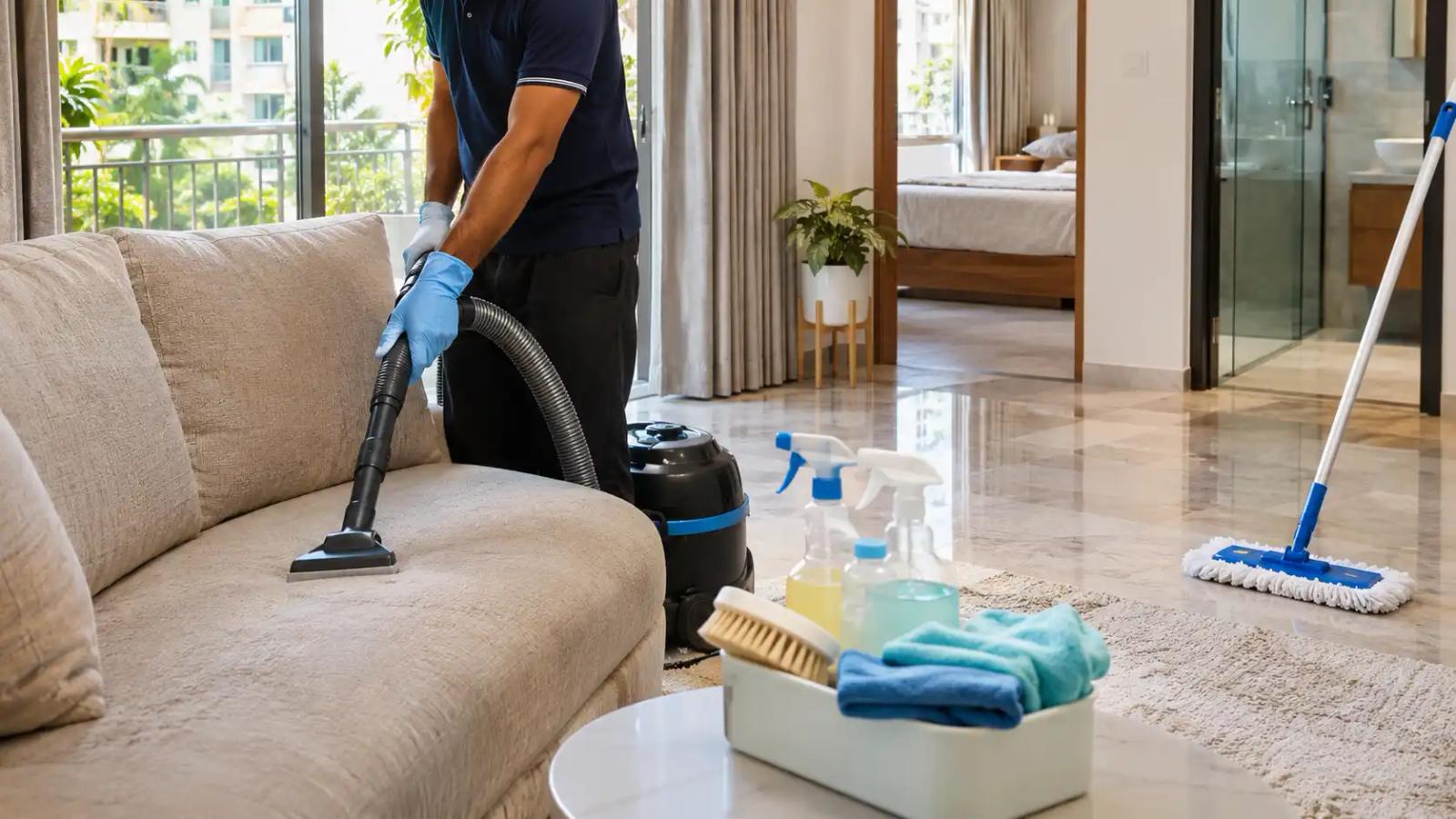
Sofas, mattresses and carpets are cleaned by matching moisture to the material: HEPA vacuuming first, low-moisture shampooing only where the fibre allows, and dry methods for anything that holds water.
HEPA-filter vacuuming removes fine dust and allergens, foam shampooing and extraction lift dirt held in fabric, UV-C sanitizes the surface afterwards, and leather gets gentle pH-balanced cleaning and conditioning instead. The full guides are:
- Sofas: sofa cleaning methods explained and sofa fabric types and how each is cleaned
- Mattresses: mattress cleaning methods and mattress types and how each is cleaned
- Carpets: how to choose a carpet cleaning method
- Technology: UV-C sanitization and what a HEPA filter is
Which Methods Suit Floors, Tiles and Grout?
Floors are cleaned with a pH-neutral product and a damp mop, with extra care for stone and wood, and grout needs gentler treatment than the tile beside it.
- How to clean different floor types: vitrified, marble, granite, Kota, mosaic and wood
- Why a floor is sticky or dull after mopping: residue, dirty water and hard water
- Grout cleaning vs regrouting vs resealing: which one a bathroom needs
- Why balconies develop green slime: moisture, shade and drainage
Which Methods Suit Bathrooms and Hard Water?
Bathrooms are descaled with a mild acid on tiles and metal fittings and with pH-neutral cleaners on marble, because the acid that dissolves limescale also etches stone. The reasoning is explained in bathroom descaling methods.
Which Tools Matter Most?
The tools that matter most are a HEPA-filter vacuum, microfibre cloths, a well-wrung mop and a soft brush, because each removes dirt without needing extra chemicals or water.
A HEPA vacuum holds fine dust instead of releasing it, and microfibre picks up more dust than cotton and needs careful washing, as set out in microfibre vs cotton cloths. A damp mop leaves less residue than a wet one, and a soft brush reaches joints and corners.
Which Products Must Never Be Mixed?
Bleach must never be mixed with vinegar, ammonia or toilet cleaners, and most other products should be used one at a time with a rinse in between. The surface damage and safety rules are covered in which cleaning products can and cannot be mixed.
Which Cleaning Problems Come From Moisture and Dust?
Most recurring household cleaning problems trace back to moisture or dust, so understanding where each comes from prevents repeat work.
- Smells and dampness: why a sofa smells after cleaning and why sofas smell musty in the monsoon
- Dirt you cannot see: dirt inside sofa cushions
- Dust: why a house gets dusty so fast, why ceiling fans collect dust and how dust enters apartments
- Windows and walls: dirty mosquito mesh and why walls turn black after Diwali
How to Plan Cleaning Across the Year
Cleaning is easiest when daily upkeep, weekly tasks and periodic deep cleans are planned separately, as laid out in the house cleaning schedule. Most homes need a deep clean about every six months, as explained in how often a house should be deep cleaned, and the difference between routine and deep cleaning is covered in deep cleaning vs regular cleaning. Households short on time can compare a maid with a professional service in maid vs professional cleaning service.
How to Choose the Right Cleaning Product or Method
The rule behind every guide here is the same: dry removal first, the gentlest product that works, one product at a time, and as little moisture as the material allows. Clean Fanatics follows it by starting sofas, mattresses and carpets with HEPA-filter vacuuming, adding low-moisture foam shampooing and extraction where the fabric allows, and using a dry HEPA and UV-C method on mattresses.
Want a home cleaned with the right method for every surface?
Frequently asked questions
Which cleaning method is safest for most surfaces?
Dry vacuuming or dusting first, then a mild pH-neutral cleaner on a damp cloth, is the safest approach for most surfaces. It removes loose dirt without soaking the material. A hidden-spot test confirms the surface can take it.
Which surfaces should never be steam cleaned?
Marble, Kota stone, mosaic, wood, laminate and leather should not be steam cleaned, because heat and water together can etch, swell or dry them out. Sealed tile and granite tolerate it better. The manufacturer's guidance should always be checked.
Can different cleaning products be mixed?
Different cleaning products should not be mixed unless the label allows it. Bleach with vinegar, ammonia or toilet cleaners is unsafe. Using one product at a time and rinsing between products is the safer habit.
Is dry or wet cleaning better for sofas and mattresses?
Dry methods suit regular upkeep and any material that holds water, while wet shampooing cleans deeper into fabric but needs controlled moisture and quick drying. The sofa tag and the mattress type decide which is safe. Humid weather favours the dry approach.
How often should a home be deep cleaned?
Most homes benefit from a deep clean about every six months, or every three to four months with pets, children or heavy cooking. Daily and weekly upkeep continues in between.
Which cleaning tools are worth having at home?
A HEPA-filter vacuum, a few microfibre cloths, a well-wrung mop and a soft brush cover most needs. Each removes dirt with little product and little water.