At a Glance
UV-C sanitization shines short-wavelength ultraviolet light over a surface to reduce live bacteria and dust mites. On sofas and mattresses it does not clean on its own. It reaches only the surface, cannot remove dust or allergens, and is blocked by dirt and shadows. That is why the fabric must be vacuumed first, with UV-C as the final hygiene step. This guide explains what UV-C sanitization for sofas and mattresses can and cannot do, and what has to happen first for it to work.
A sofa or mattress can look clean and still hold dust, dust mites and bacteria in its fabric, which is why UV-C light has become a popular sanitizing step. But UV-C is often mistaken for a cleaning method, when it only sanitizes the surface it reaches. This guide explains how it is used, what it cannot do and what must come first. For the allergens involved, see this guide to dust mites and how to reduce them.
What Is UV-C Sanitization and How Does It Work on Fabric?
UV-C sanitization is shining short-wavelength ultraviolet light, usually around 254 nanometres, on a surface to damage the DNA of bacteria, germs and dust mites so they cannot survive or multiply.
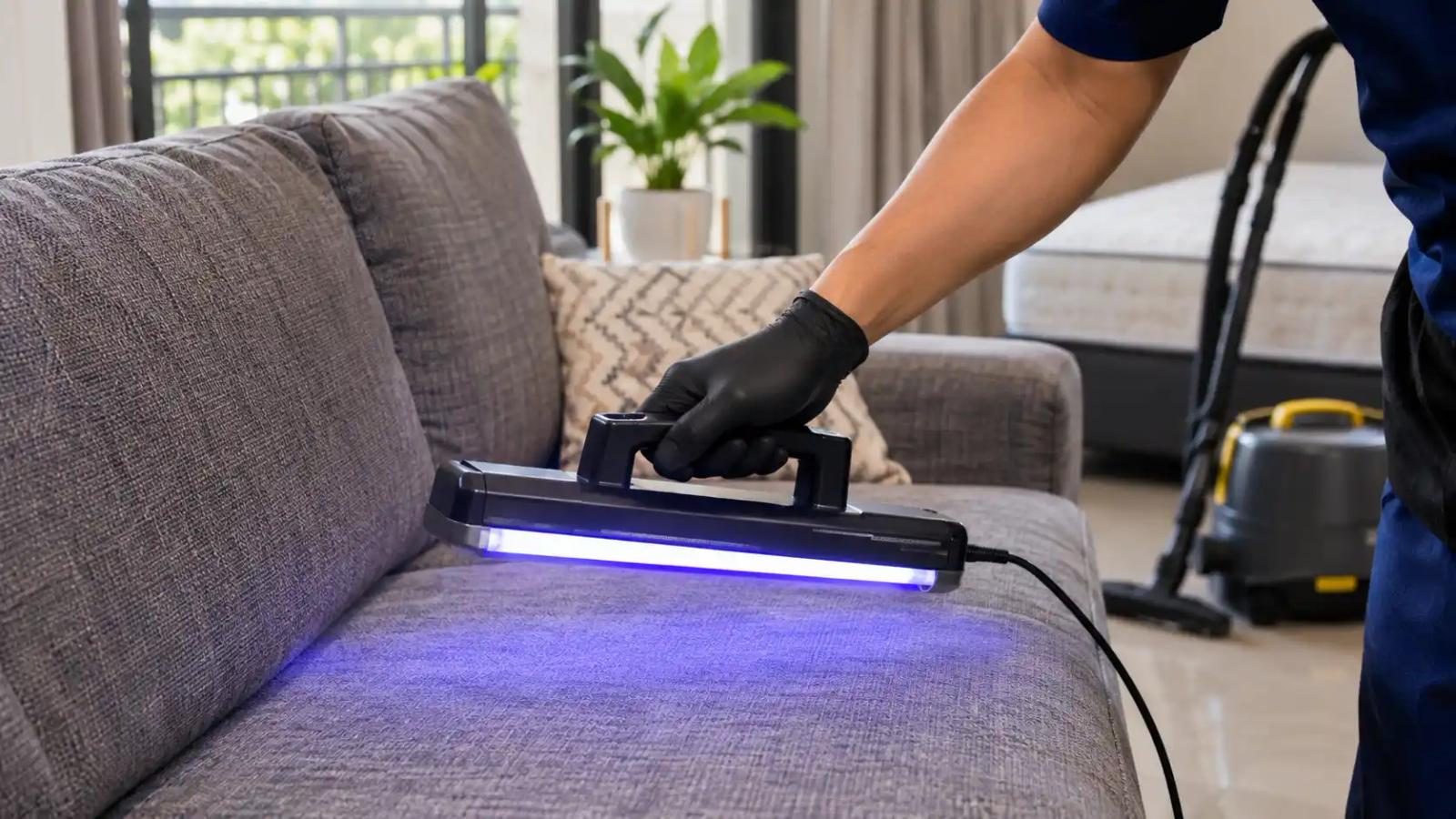
On fabric sofas and mattresses, a UV-C lamp is passed slowly over the surface, usually after vacuuming and cleaning. It uses no water and no chemicals, so the furniture can be used straight away. The key word is surface: the light affects only what it directly reaches.
Pro Tip: A UV-C pass is only as good as the surface under it. Vacuum first and treat UV-C as the finishing step, never the first.
Why Does UV-C Light Alone Not Clean a Sofa or Mattress?
UV-C light alone does not clean a sofa or mattress because it removes no dust, dirt or allergens, and it only affects what the light directly reaches.
Does UV-C Light Remove Dust and Dust-Mite Allergens?
UV-C light does not remove dust or dust-mite allergens, even though it can kill live mites on the surface. The allergens come from mite droppings and body fragments, which stay in the fabric whether the mite is alive or dead. They have to be physically removed, which is why vacuuming comes first.
How Far Does UV-C Light Reach Into a Sofa or Mattress?
UV-C light reaches only the surface of the fabric, because it travels in straight lines and cannot pass through material. A cushion or mattress is thick, so the layers below the top few millimetres get no exposure. Seams, folds and stitching can also create shadows where the light never reaches.
Why Does Dirt Reduce How Well UV-C Works?
Dirt reduces how well UV-C works because dust and debris on the fabric can block the light and shield whatever sits underneath. Anything that obstructs the light creates a shadow where sanitizing does not happen. A surface that has been vacuumed clean lets the light reach the fabric itself, which is why cleaning has to come before sanitizing.
What Has to Happen First for UV-C Sanitization to Work?
For UV-C sanitization to work, the fabric first has to be vacuumed and cleaned so dust, dead mites and debris are removed and the surface is exposed to the light.
How Is UV-C Used on a Fabric Sofa?
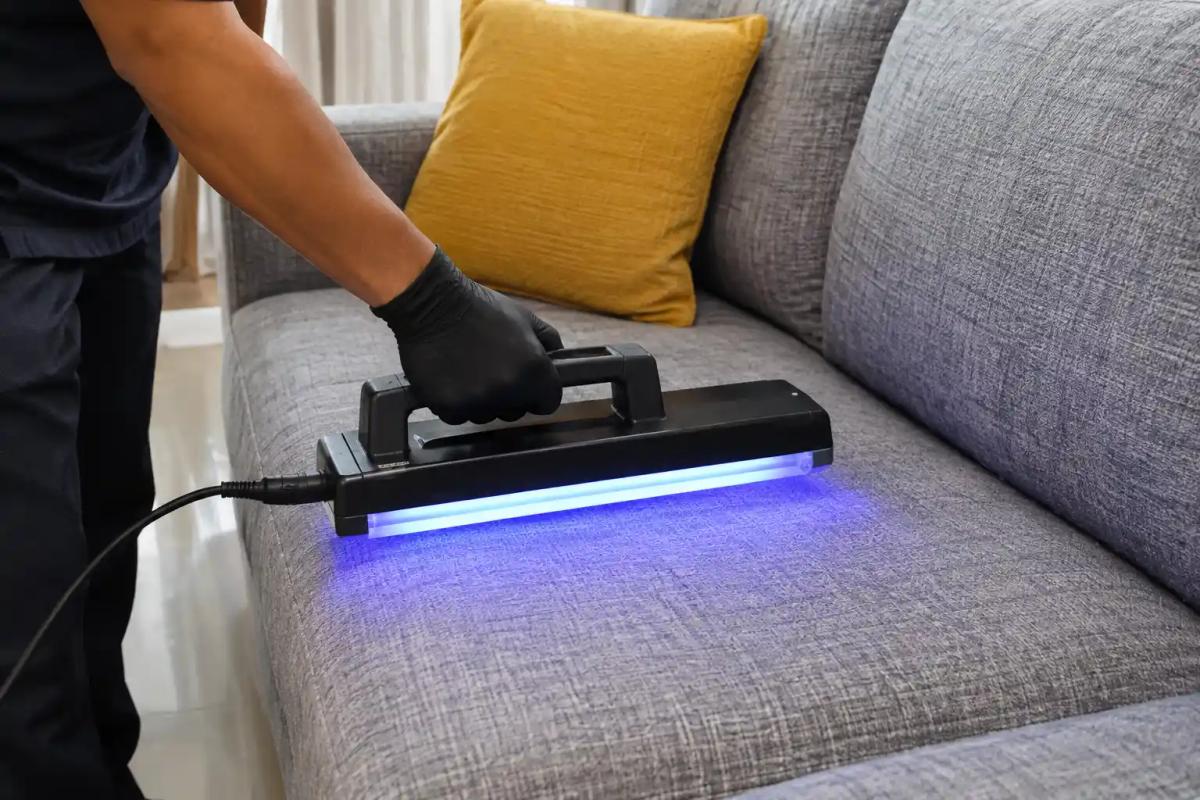
In fabric sofa cleaning, UV-C is the last of four steps, done only after the fabric has been vacuumed, shampooed and extracted. The steps run in this order, as covered in sofa cleaning methods explained.
- HEPA-filter vacuuming. This removes loose dust, dead skin, dust mites and debris, trapping fine particles instead of releasing them into the room.
- Foam-based shampooing. This lifts dirt and oils held in the fabric fibres using very little water.
- Moisture extraction. This pulls the dirty solution and moisture back out so the sofa dries quickly.
- UV-C sanitization. A final slow pass of UV-C light over the clean surface reduces live bacteria and dust mites that cleaning may leave behind.
How Is UV-C Used on a Mattress?
On a mattress, UV-C follows HEPA-filter vacuuming and is the final step of a dry clean that uses no water. Vacuuming removes loose dust, dead skin and mites from the surface and seams, and the UV-C pass then sanitizes the cleaned surface. Clean Fanatics uses this dry method for mattresses, as explained in mattress cleaning methods.
What Can UV-C Sanitization Do, and What Can It Not Do?
UV-C sanitization can reduce live bacteria and dust mites on the surface it reaches, but it cannot clean, remove allergens or reach deep into fabric.
The table below sums up its strengths and limits.
| Area | UV-C Can | UV-C Cannot |
|---|---|---|
| Germs and bacteria | Reduce live ones on the surface it reaches | Reach those hidden in shadows or deeper layers |
| Dust mites | Kill live mites it directly reaches | Remove droppings and allergens left behind |
| Dirt and dust | Nothing, it does not clean | Remove dust, dirt or stains |
| Water and drying | Work with no water, so no drying time | Replace vacuuming or deep cleaning |
Is UV-C Light Safe for Sofa and Mattress Fabric?
UV-C is safe for most fabrics in short, controlled passes, but prolonged or repeated exposure can age and fade some materials. The light can also harm eyes and skin, so it should never be aimed at people or pets and is best used by trained operators. This is another reason UV-C is a measured finishing step rather than something to repeat constantly.
Why Does UV-C Matter in Bangalore's Humid, Dusty Homes?
UV-C matters in Bangalore's humid, dusty homes because fabrics collect dust and moisture, which dust mites and bacteria thrive on, and UV-C adds a sanitizing step without adding water.
Sofas and mattresses absorb sweat, skin flakes and dust, and humid air makes it easier for mites to settle in. Water-based cleaning leaves fabric damp, which is a concern in humid weather, so a dry sanitizing step is useful. It still works only as part of full sofa cleaning and mattress cleaning, not as a replacement for them.
How to Keep Sofas and Mattresses Hygienic Between Professional Cleans
Sofas and mattresses stay hygienic between professional cleans with regular vacuuming, frequent washing of bedding and keeping fabrics dry.
- Vacuum sofas and mattresses weekly to remove dust and dead skin.
- Wash bedsheets and pillow covers regularly.
- Keep rooms ventilated and fabrics dry in humid weather.
- Book professional sofa cleaning or mattress cleaning every six months, or every three to four months with pets or children
How to Get the Most From UV-C Sanitization
The most important rule is that UV-C works only after the fabric has been cleaned, so it should be seen as the last step, not a stand-alone fix. Vacuuming removes the dust and allergens, cleaning lifts dirt from the fibres, and UV-C then sanitizes the surface. This is the approach a professional cleaning service follows, and it is why the order of the steps matters as much as the steps themselves.
Give your sofas and mattresses the care they need with proper cleaning and UV-C sanitization.
Frequently asked questions
Does UV-C light kill dust mites?
UV-C light can kill live dust mites that it directly reaches on the surface. It does not reach mites deeper in the fabric. It also does not remove the droppings and allergens, which have to be vacuumed out.
Can UV-C light clean a sofa or mattress on its own?
No, UV-C light cannot clean a sofa or mattress on its own. It removes no dust, dirt or stains. It works as a sanitizing step after vacuuming and cleaning.
Does UV-C remove dust-mite allergens?
UV-C does not remove dust-mite allergens. They come from droppings and body fragments, which stay in the fabric even when the mites are dead. Vacuuming, ideally with a HEPA filter, is what removes them.
How deep does UV-C light go into a mattress?
UV-C light goes only a few millimetres into the surface of the fabric, because it cannot pass through material. The layers below get no exposure. This is why it is used as a surface sanitizing step.
Is UV-C light safe for sofa and mattress fabric?
UV-C is generally used in short, controlled passes, since prolonged exposure can age or fade some fabrics. The light can also harm eyes and skin, so it is never aimed at people or pets. It is best used by trained operators.
Why is vacuuming done before UV-C sanitization?
Vacuuming removes the dust, dead mites and debris that block the light and carry the allergens. UV-C can then reach a cleaner surface. Doing it in this order makes the UV-C step far more effective.
What is UV-C sanitization and how does it work on fabric?
UV-C sanitization is shining short-wavelength ultraviolet light, usually around 254 nanometres, on a surface to damage the DNA of bacteria, germs and dust mites so they cannot survive or multiply. On fabric sofas and mattresses, a UV-C lamp is passed slowly over the surface, usually after vacuuming and cleaning.
How is UV-C sanitization done on a mattress?
On a mattress, UV-C follows HEPA-filter vacuuming and is the final step of mattress dry cleaning, which uses no water. Vacuuming removes loose dust, dead skin and mites from the surface and seams, and the UV-C pass then sanitizes the cleaned surface.
How often should a sofa or mattress be professionally cleaned?
Book a professional clean every six months, or every three to four months with pets or children. In between, vacuum sofas and mattresses weekly, wash bedsheets and pillow covers regularly, and keep rooms ventilated and fabrics dry in humid weather.