

At a Glance
Dirty mosquito mesh acts like a clogged filter. Dust, pollen, soot and insect residue fill the tiny openings, so less air passes through, rooms feel stuffy even with the window open, and the trapped dirt spreads onto frames, sills and floors. In damp weather, debris holding moisture can also encourage mould and corrosion. Cleaning the mesh gently, every few months in a dusty city like Bangalore, keeps air moving and homes cleaner. This guide explains what dirty mosquito mesh does and how to clean it safely.
Mosquito mesh is easy to forget, because it does its job quietly for years. But the fine openings that keep insects out also catch dust, and a layer of grime builds up that few people notice until a room feels stuffy. This guide explains how dirty mesh affects airflow and cleanliness, and how to clean it without damage. For mesh that keeps bugs out without blocking the breeze, see this guide to mesh doors and nets.
What Does a Mosquito Mesh Screen Do?
A mosquito mesh screen lets air and light into a home while keeping out mosquitoes, flies and larger bits of dust and debris.
The mesh is a fine woven barrier, commonly made of fibreglass, nylon, aluminium or stainless steel. It also works as a first filter, catching dust and pollen before they reach the room. There is a trade-off, though: a tighter weave blocks more dust but lets less air through, which is why even a clean fine mesh moves less air than an open window.
How Does Dirty Mosquito Mesh Affect Indoor Airflow?
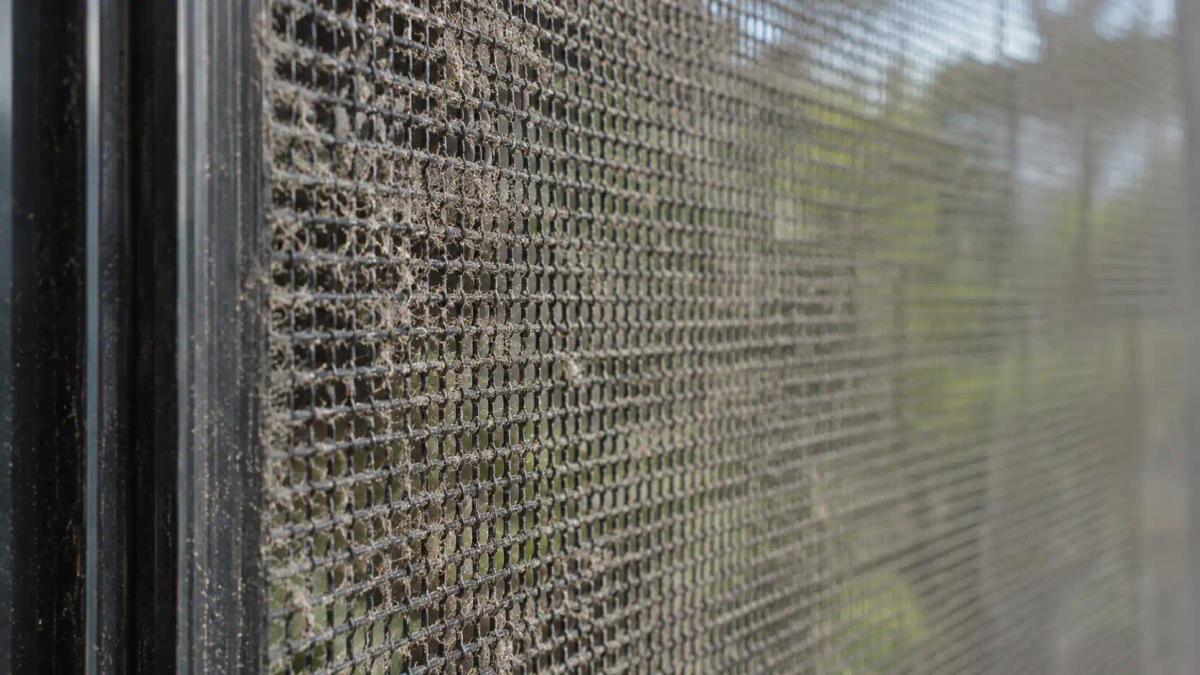
Dirty mosquito mesh reduces indoor airflow because dust and grime fill the openings, so the mesh works like a clogged filter and less air passes through.
The effect builds slowly, which is why it goes unnoticed. A room with the window open can still feel stale and stuffy when the mesh is choked. Common signs of a clogged mesh are:
- A grey or black film visible across the mesh
- Rooms that feel stuffy even with the window open
- A weaker breeze through the window than before
- Dust collecting on the sill and track after windy days
- A musty smell near the window in humid weather
Pro Tip: Hold a light behind the mesh at night. If the weave looks filled in rather than see-through, airflow is already reduced.
How Does Dirty Mosquito Mesh Affect Home Cleanliness?
Dirty mosquito mesh affects home cleanliness because it holds dirt that spreads to the frame, track and sill, encourages mould in damp weather and gives insects a place to settle.
Does Dirty Mesh Make a House Dustier?
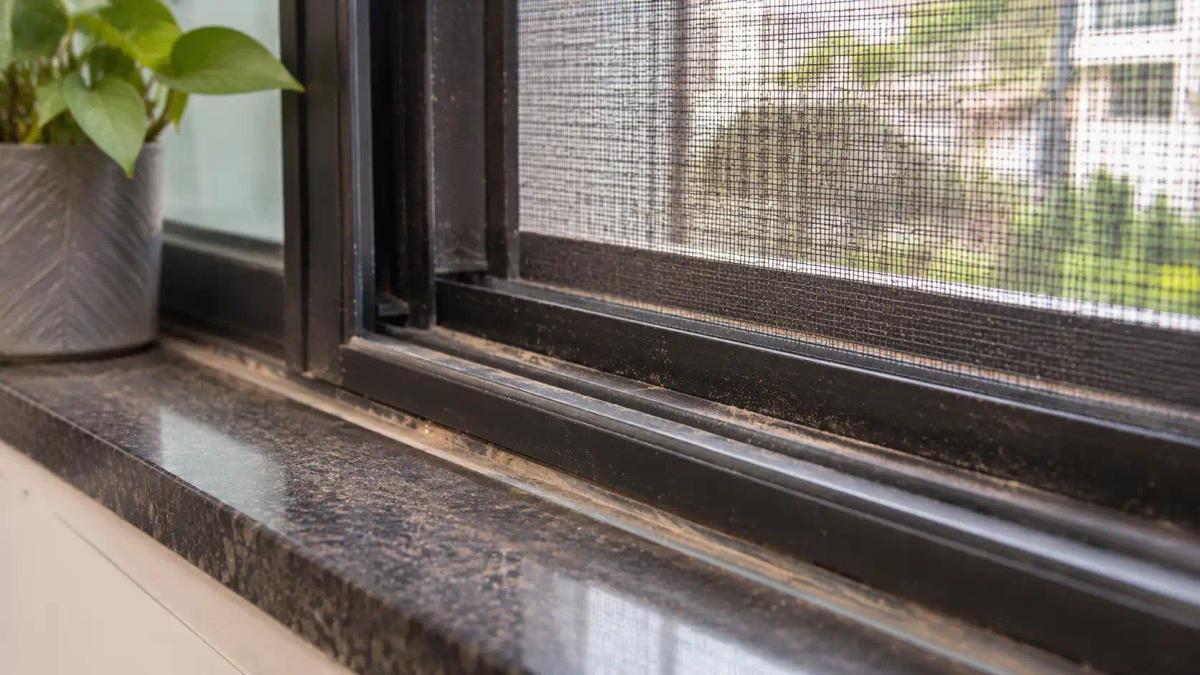
Dirty mesh can make a house dustier: as it clogs, dirt collects on the frame, track and sill, and loosened dust can fall indoors whenever the screen is touched, slid or opened. The mesh is meant to filter outdoor dust, but once it is full it stops doing that job well. Wiping the sill alone never solves the problem when the source is the mesh above it.
Can Dirty Mesh Cause Mould and Corrosion?
Dirty mesh can encourage mould and corrosion because debris holds moisture against the mesh and frame, especially in humid weather. Over time this can rust metal mesh and frames and shorten their life. Bangalore's rains make this more likely, which is why mesh belongs on the monsoon deep cleaning checklist.
Does Dirty Mesh Still Keep Mosquitoes Out?
A dirty mesh still keeps mosquitoes out. But debris gives insects a place to settle, and tears and gaps let them straight through, so a screen needs to be clean and intact.
How Often Should Mosquito Mesh Be Cleaned?
Mosquito mesh should be cleaned about every three months in dusty or polluted areas, and at least once a season elsewhere, with extra checks after storms or heavy construction nearby.
Guidance from window-screen sources puts the interval at roughly quarterly in many households, and less often in cleaner suburban areas. For Bangalore, the dust from roads and construction and the damp of the rainy season both point to the shorter end. The table below turns that into a simple guide.
| Situation | Suggested Cleaning | Why |
|---|---|---|
| Busy road or building work nearby | About every 3 months, or sooner | Dust and soot clog the weave quickly |
| Quiet residential area | Once a season | Slower buildup, but pollen and dust still collect |
| Slower buildup, but pollen and dust still collect | Check and clean | Damp debris encourages mould and rust |
| After storms or heavy dust | Check promptly | Debris can accelerate buildup |
How to Clean Mosquito Mesh Safely
Mosquito mesh is cleaned safely with gentle dry brushing, then a soft cloth and mild soapy water, and never with high pressure, bleach or hard brushes.
How to Clean Mosquito Mesh Without Removing It in 6 Steps
Most window mesh can be cleaned in place in about five minutes using six simple steps.
- Protect the sill. Place a towel under the window to catch drips.
- Dry-brush or vacuum first. Use a soft brush or a vacuum brush attachment to lift loose dust.
- Wipe with mild soapy water. Use a soft cloth and work gently across the mesh in one direction.
- Treat stubborn spots lightly. A soft toothbrush loosens stuck-on residue without tearing the mesh.
- Wipe with clean water. This removes soap residue, which would attract dirt.
- Dry and clean the frame. Wipe the frame, track and sill, ideally while cleaning the window itself.
Mesh fits easily into a regular window clean, as set out in this step-by-step window cleaning guide.
What Should Never Be Used on Mosquito Mesh?
Pressure washers, bleach, hard brushes and strong chemicals should never be used on mosquito mesh, because they stretch, tear or corrode it. High pressure can push the mesh out of shape and loosen its edges, and fibreglass tears easily. If the mesh bends or pulls loose when cleaned, it is probably worn out.
When Should Mosquito Mesh Be Removed or Replaced?
Mosquito mesh should be removed for washing when it stays clogged after cleaning in place, and replaced when it is torn, loose, bent or corroded. Removed mesh is washed flat with a soft cloth, rinsed on low pressure and dried fully before refitting. Gaps and tears let mosquitoes through, so a damaged screen is not worth cleaning.
How to Keep Mosquito Mesh Cleaner for Longer
Mosquito mesh stays cleaner for longer with light, regular wiping and attention to the frame and track, where dirt starts.
- Dry-brush the mesh lightly whenever the windows are cleaned
- Wipe the track and sill so dirt does not build up behind the mesh
- Check that the mesh fits snugly, since gaps let in extra dust and insects
- Clean it before the rains, so damp debris does not set in
- Replace worn mesh instead of repeatedly cleaning it
How to Keep Air Moving and Homes Cleaner
Clean mosquito mesh keeps air moving, keeps dust outside and keeps frames and sills cleaner, and it takes only a few minutes every few months. Adding mesh to the monthly checks in a house cleaning schedule keeps it from being forgotten. Clean Fanatics offers home deep cleaning, which covers windows, for a periodic reset.
Want windows and balconies cleaned as part of a full home deep clean?
Frequently asked questions
Does dirty mosquito mesh reduce airflow?
Dirty mosquito mesh reduces airflow, because dust and grime fill the openings and make it work like a clogged filter. A room can feel stuffy even with the window open. Cleaning the mesh restores most of the airflow.
How often should mosquito mesh be cleaned?
About every three months in dusty or polluted areas, and at least once a season elsewhere. It should also be checked after storms or heavy construction nearby.
How do I clean mosquito mesh without removing it?
Dry-brush or vacuum the mesh gently, then wipe it with a soft cloth and mild soapy water, and wipe again with clean water. A towel under the window catches drips. High-pressure water should be avoided.
Can a pressure washer be used on mosquito mesh?
A pressure washer should not be used on mosquito mesh, because high pressure can stretch or tear the mesh and bend the frame. A soft cloth and a low-pressure rinse are safer.
Why does mosquito mesh turn grey or black?
Dust, soot, pollen and insect residue build up on the mesh over time. In humid weather, moisture helps the grime cling and can encourage mould. Regular cleaning stops it hardening.
When should mosquito mesh be replaced?
Mosquito mesh should be replaced when it is torn, loose at the corners, bent, corroded or damaged by cleaning. Gaps let mosquitoes straight through, so a damaged screen no longer protects the room.
How do I know if mosquito mesh is clogged?
Common signs are a grey or black film across the mesh, rooms that feel stuffy even with the window open, a weaker breeze than before, dust collecting on the sill and track after windy days, and a musty smell near the window in humid weather. Hold a light behind the mesh at night: if the weave looks filled in rather than see-through, airflow is already reduced.
Can dirty mosquito mesh cause mould and corrosion?
Yes. Debris holds moisture against the mesh and frame, especially in humid weather, which can encourage mould and corrosion. Over time this can rust metal mesh and frames and shorten their life.
Does dirty mosquito mesh make a house dustier?
Yes. As the mesh clogs, dirt collects on the frame, track and sill, and loosened dust can fall indoors whenever the screen is touched, slid or opened. The mesh is meant to filter outdoor dust, but once it is full it stops doing that job well.