
At a Glance
Why does a house get dusty so fast? Dust enters from outside and is also made indoors by fabrics, hair, skin flakes and daily activity. Open windows, road and construction dust, air movement and dry dusting make the problem worse. Sofas, mattresses, carpets and clutter hold dust and release it back into the air. The fix is to damp wipe, vacuum, block entry points and deep clean regularly. This guide covers the causes, hidden dust sources and practical ways to reduce dust at home.
Wiping the shelves in the morning and finding a fresh layer of dust by evening is a common problem in Bangalore homes. Understanding why a house gets dusty so fast is the first step to controlling it. Dust is not only a cleaning issue, since it can also irritate the nose and eyes and worsen allergy symptoms. Read how full home deep cleaning helps prevent allergies and respiratory problems, then use this guide to cut dust at the source.
What Causes a House to Get Dusty So Fast?
A house gets dusty fast because dust enters from outside and is also created inside by fabrics, hair, skin flakes and everyday activity.
Outdoor dust comes in through windows, doors and balconies, and on shoes and clothes. Indoor dust builds up from the materials and people inside the home. Both sources add up every day, which is why surfaces look dusty again so quickly. Daily use also matters. Sitting on sofas, sleeping on beds and walking on carpets release fibres and skin flakes, so the busier a room is, the faster dust returns.
The most common causes of fast dust buildup are:
- Open windows, doors and balconies that let in road and construction dust
- Fabrics such as sofas, mattresses, carpets and curtains that shed fibres and trap dust
- Hair, pet dander and skin flakes from people and pets
- Fans and air movement that keep fine dust circulating
- Cleaning methods that spread dust instead of removing it
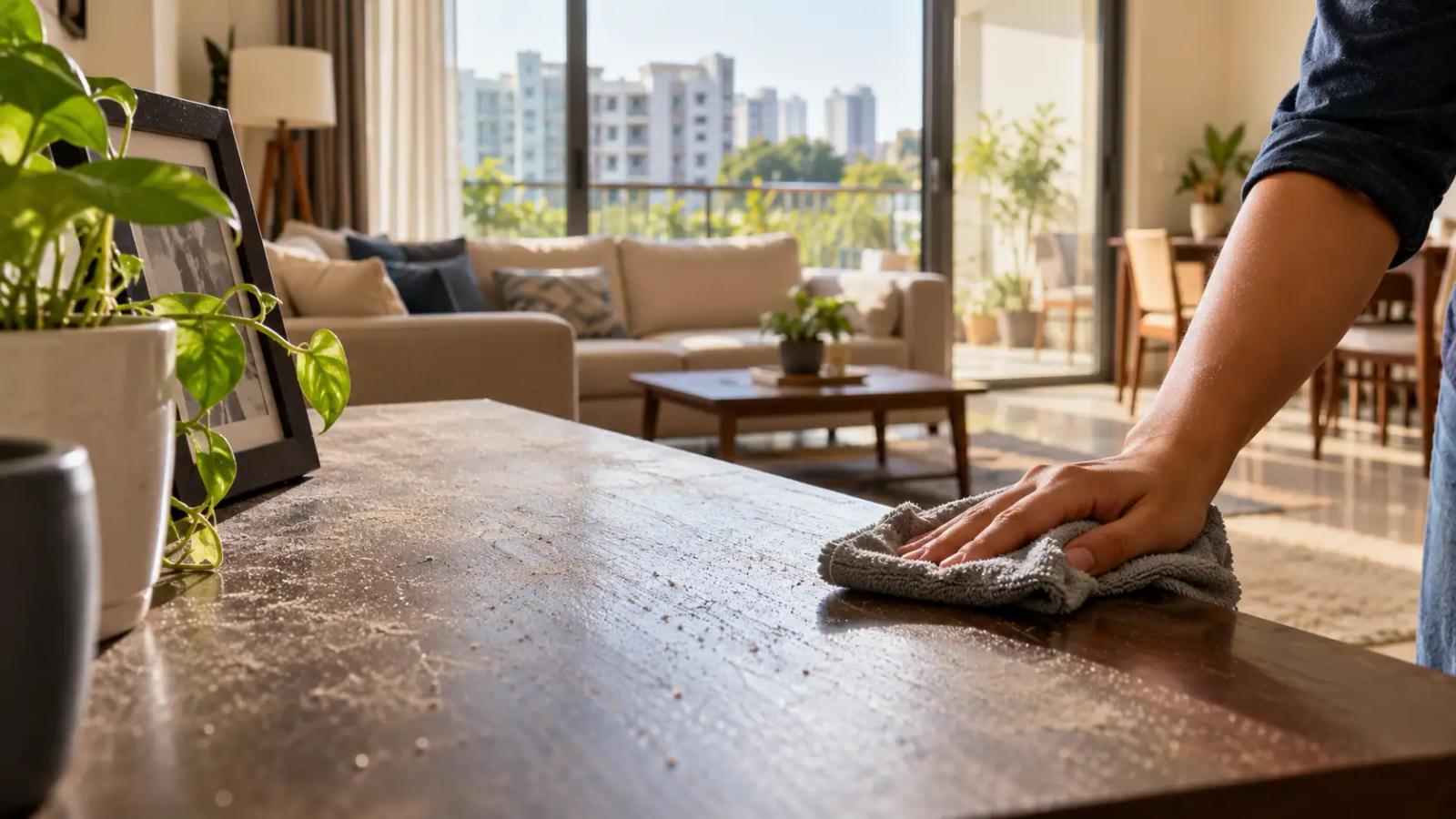
Pro Tip: Look at dark furniture or a sunlit surface to spot dust easily. These spots show where dust gathers fastest and should be cleaned first.
Why Does Dust Come Back Within a Day of Cleaning?
Dust comes back within a day when cleaning only moves dust around, or when the places that hold dust are left untouched.
Does Dry Dusting Make a House Dustier?
Dry dusting with a feather duster or dry cloth makes a house dustier because it lifts dust into the air and lets it settle again. A slightly damp microfibre cloth traps dust instead. Vacuuming floors before mopping also stops dust from being pushed into corners.
Where Does Dust Hide in a Clean House?

Dust hides on high shelves, fan blades, the tops of cabinets, behind furniture and along skirting edges. These spots are easy to miss in daily cleaning, so they keep feeding fresh dust back into the air. A regular top-to-bottom clean should include them. Checking these spots monthly prevents dust from building up unnoticed.
Does Clutter Make a House Dustier?
Clutter makes a house dustier because every extra object adds another surface for dust to settle on and another item to clean around. Books, decorative pieces and stacked storage collect dust faster than clear surfaces. Reducing clutter also makes wiping quicker, so dust gets removed more often.
What Makes Dust Worse in a Bangalore Home?
Construction work, open windows and dust-holding fabrics make dust worse in a Bangalore home.
Does Construction and Renovation Cause More Dust in Homes?
Construction and renovation cause far more dust because cutting, sanding and breaking work produces very fine particles that spread through the whole house. This dust settles in corners, fabrics and fittings and can keep returning for weeks. A thorough clean once the work finishes is the most reliable fix, as covered in the guide to post-renovation and festival deep cleaning.
Do Open Windows and Balconies Increase Dust Indoors?
Open windows and balconies increase indoor dust because outdoor air carries road dust, soil and pollution particles into the home. Dry and windy days make this worse. Keeping openings closed during those times and wiping window sills regularly reduces the amount that settles inside.
Do Sofas, Mattresses and Carpets Hold Dust?
Sofas, mattresses and carpets hold large amounts of dust because their fibres trap skin flakes, hair and fine particles. Every time someone sits or walks on them, some of that dust is released into the air. These fabrics are also where dust mites live, as explained in this guide to what dust mites are and how to get rid of them.
How to Reduce Dust in a House
Dust in a house is reduced by removing it with damp cloths and vacuuming, blocking outdoor dust and cleaning the places that hold it.
How to Reduce Dust at Home in 6 Steps
Dust in a house can be reduced with six simple steps.
- Damp wipe surfaces. Use a slightly damp microfibre cloth so dust is trapped instead of spread.
- Dust from top to bottom. Start with high shelves and fan blades, then work down and finish with the floors.
- Vacuum before mopping. Vacuum floors, sofas and carpets first, ideally with a filtered vacuum cleaner that holds fine dust.
- Block dust at the entry points. Use a door mat, keep shoes outside and close windows on dry, windy days or when construction is nearby.
- Wash bedding weekly. Wash bedsheets and pillow covers every week to remove skin flakes and dust.
- Clear clutter from open surfaces. Fewer items on shelves and tables means fewer places for dust to settle.
Does Deep Cleaning Reduce Dust in a House?
Deep cleaning reduces dust by removing buildup from fabrics, corners and surfaces that routine dusting misses. With fewer places holding old dust, new dust settles more slowly and is easier to wipe away. A deep clean every six months, combined with weekly dusting, keeps dust at a manageable level. Homes near busy roads or construction sites may benefit from deep cleaning more often.
How to Keep a House Dust Free Long Term
A house gets dusty fast because dust comes from outside and from fabrics, people and daily activity. The key rule is to remove dust instead of moving it, and to clean the places that hold it. Damp wiping, weekly vacuuming, blocked entry points and a regular deep clean keep dust under control. Small daily habits matter as much as deep cleans. For a daily plan, follow this morning house cleaning routine.
Tired of dust coming back every day?
Frequently Asked Questions
Why does a house get so dusty in Bangalore?
Bangalore homes often get dusty because of road traffic, ongoing construction and open windows that let outdoor dust in. Fibres, hair and skin flakes from inside the home add to it. Dry and windy weather increases the amount of dust that enters.
What is household dust made of?
Household dust is a mix of outdoor soil, fabric fibres, hair, pet dander and dead skin flakes. Cooking residue and pollen can add to it. The exact mix depends on the home and its surroundings.
Why does dust come back so soon after cleaning?
Dust returns quickly when dry dusting spreads it instead of removing it, or when dust-holding items such as sofas and carpets are not cleaned. Air movement from fans and open windows also brings more dust in. A deep clean removes the hidden buildup that feeds this cycle.
Do closed windows reduce dust in a house?
Closed windows reduce dust but do not stop it completely. Dust still enters through door gaps and balconies, and on shoes and clothes. Closing windows on dry, windy days gives the best results.
Can household dust affect health?
Household dust can irritate the nose, eyes and throat, and it can trigger symptoms in people with allergies or asthma. Regular cleaning lowers dust levels. Ongoing symptoms should be checked with a doctor.
How often should dusting be done to prevent dust buildup?
Most homes should be dusted once or twice a week and vacuumed at least once a week. Homes near construction or busy roads may need dusting more often. Sofas and mattresses need vacuuming on the same schedule.