
At a Glance
A sofa smells after cleaning when moisture, cleaning residue or dirt is left inside the fabric and padding. The most common cause is moisture that was not fully removed, because sofa padding dries slowly and can grow mould and mildew. Residue from sofa shampoo cleaning, dirt pushed deeper instead of lifted out, and an old spill deep in a cushion can also bring odours back. This guide explains the causes of sofa smell after cleaning, how to tell them apart and how to prevent them.
A sofa can smell fresh straight after cleaning and then turn musty a few days later. The surface dries first, while the padding underneath stays damp, and that is often where the smell comes from. Knowing the cause makes it far easier to prevent a repeat. For the basics of keeping a sofa fresh, see this guide to cleaning a sofa.
What Causes a Sofa to Smell After Cleaning?
A sofa smells after cleaning because moisture, cleaning residue or the original source of the odour is still inside the fabric or padding, even when the surface looks and feels clean. The usual causes are:
- Moisture left in the padding after cleaning
- Cleaning residue left in the fabric
- Dirt pushed deeper instead of lifted out
- An odour source deep in the cushion, such as an old spill
- Slow drying in a humid or closed room
- Fragrance used to cover a smell instead of removing its cause
More than one cause is often at work, which is why a smell can return even after a second clean.
Why Does Moisture Cause a Musty Smell After Cleaning?
Moisture causes a musty smell after cleaning because sofa padding absorbs water and dries slowly, and damp padding gives mould and mildew the conditions to grow.
Why Does Sofa Padding Stay Damp After Cleaning?
Sofa padding stays damp after cleaning because foam and fibre fill absorb water and dry slowly, so the surface can feel dry while the inside is still wet. Upholstery often dries more slowly than carpet when it has been over-wet. Using too much water, or failing to pull it back out, is the main reason moisture ends up trapped.
How Does Dampness Turn Into a Musty Smell?
Dampness turns into a musty smell when mould and mildew begin growing in wet padding and release the earthy odour. The smell is often stronger on humid days and when a cushion is warmed by sitting on it. A musty smell can show up before any mould is visible.
Why Does the Smell Come Back Days Later?
The smell comes back days later because the source was never removed, and moisture or residue left in the padding keeps feeding it. Odours do not live only on the surface. They sit beneath it, which is why a sofa can smell fine at first and worse a week later.
Can Cleaning Residue and the Wrong Products Make a Sofa Smell?
Cleaning residue and the wrong products can make a sofa smell, because leftover product stays in the fabric and padding, and fragrance only covers an odour without removing its cause.
Without extraction, loosened dirt, body oils and cleaning product can be pushed deeper into the sofa rather than removed. Strong perfumes can hide a smell for a day or two, but the cause is still there. DIY products are a common culprit, as explained in why sofas get greasy armrests.
How to Tell What Is Causing a Sofa Smell
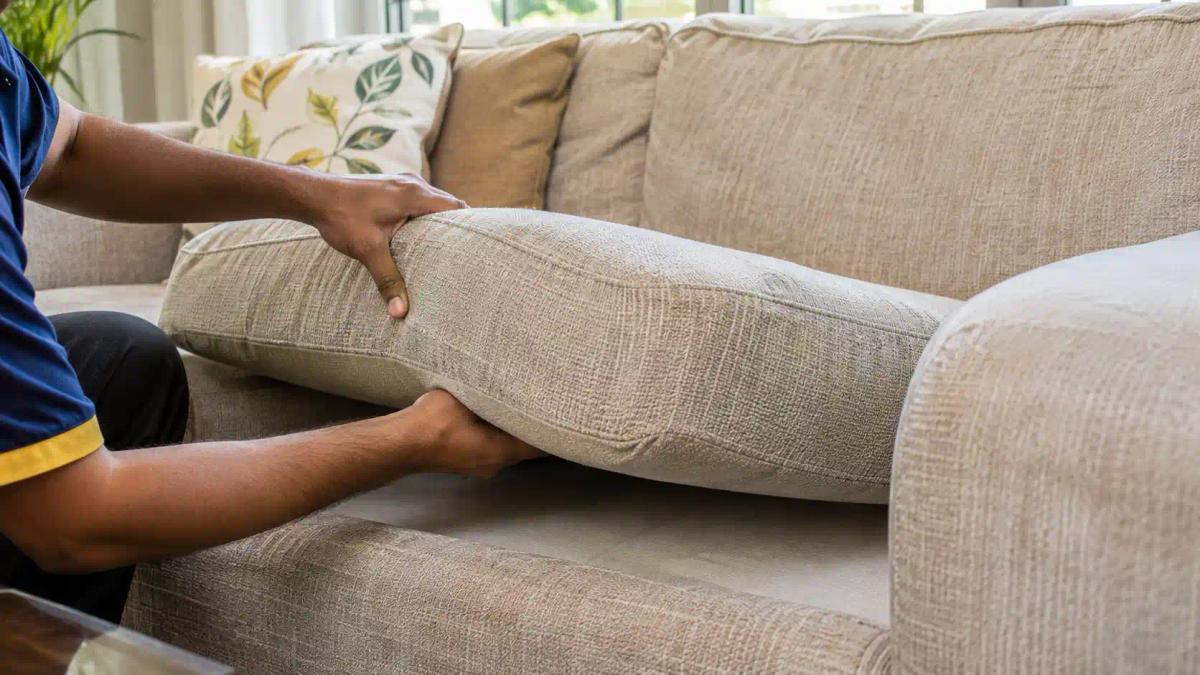
The type of smell and when it appears point to the cause, as the table below shows.
| Clue | Likely Cause | What Helps |
|---|---|---|
| Musty, earthy smell that is stronger on humid days | Moisture or mildew in the padding | Thorough drying with good airflow |
| Stale smell when sitting, stronger when warm | Sweat or a spill held deep in the cushion | Cleaning that reaches the source |
| Smell that fades and then returns | A source below the surface | Removing the source, not covering it |
| Chemical or perfumed smell | Leftover product or fragrance | Extraction to lift residue out |
Pro Tip: Smell each cushion separately, then the frame. A smell that is stronger in one cushion points to a local source, such as a spill, while a smell across the whole sofa points to moisture or humidity.
How to Stop a Sofa Smelling After Cleaning
A sofa stops smelling after cleaning when moisture is kept low, loosened dirt is removed and the sofa dries completely, and the steps below put that into practice.
How to Prevent Sofa Odours After Cleaning in 6 Steps
Sofa odours after cleaning are prevented by limiting moisture, removing what is loosened and drying the sofa fully.
- Use as little water as possible. Over-wetting pushes moisture into the padding, where it dries slowly.
- Extract moisture and residue. Pulling the solution back out leaves the sofa damp rather than wet and removes loosened dirt.
- Dry the sofa with airflow. Open windows or run a fan near the cushions, and stand removable cushions upright.
- Ventilate the room in humid weather. Moving air dries fabric faster and slows mould.
- Do not rely on fragrance. Scented sprays cover odours without removing the cause.
- Deal with spills early. Blot spills quickly so they do not soak into the cushion.
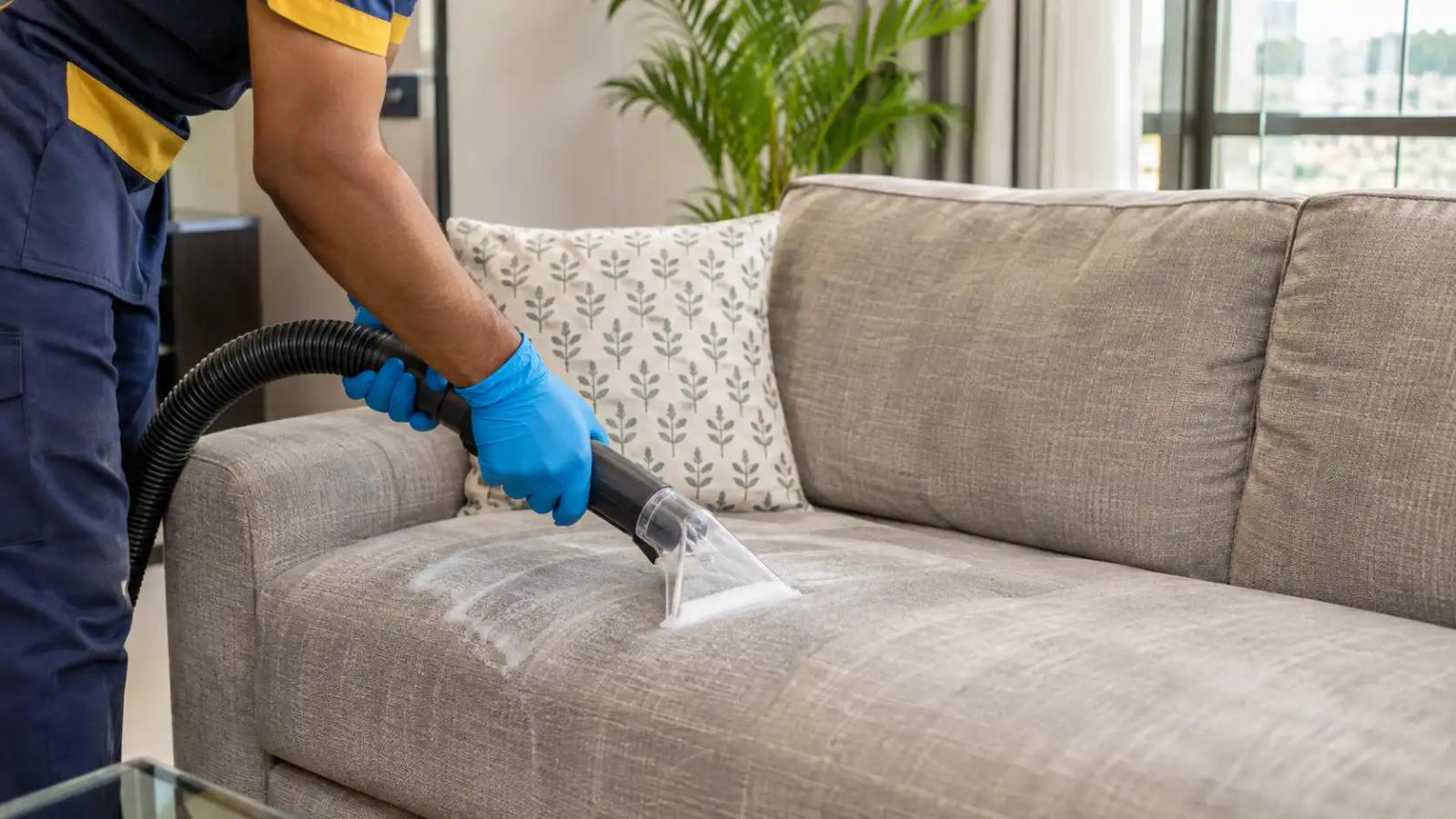
Clean Fanatics cleans fabric sofas with low-moisture foam shampooing and moisture extraction, so the sofa stays damp rather than wet and dries faster. The steps are explained in sofa cleaning methods explained.
When Is a Sofa Smell Beyond Cleaning?
A sofa smell is beyond cleaning when it keeps returning after thorough cleaning and drying, which usually means the foam itself holds moisture or contamination that cleaning cannot fully remove.
Older, heavily soiled or repeatedly soaked cushions are the most likely to reach this point. No cleaning method can promise to remove every odour from a foam core, so a persistent smell may eventually mean the cushion needs replacing. Sofa cleaning still removes the dirt that odours feed on, and it helps most when done before the problem sets in.
How to Keep a Sofa Fresh Long Term
A sofa stays fresh when moisture is controlled, dirt is lifted out instead of pushed in, and the sofa is dried fully after any cleaning. These habits matter most in humid weather, when padding dries slowest, as covered in why sofas develop a musty smell in Bangalore's monsoon.
Want a sofa cleaned with low moisture and proper extraction?
Frequently asked questions
Why does my sofa smell worse after cleaning?
A sofa often smells worse after cleaning when moisture stays trapped in the padding or cleaning residue is left behind. Wet padding can grow mould and mildew, which smell musty. The smell is usually stronger on humid days and when the cushion is warm.
How long does a sofa take to dry after cleaning?
Drying time depends on how much water was used, the padding and the airflow, so there is no single answer. Foam padding dries slowly, especially in humid weather. The sofa should not be covered or used heavily until it is completely dry.
Why does a sofa smell musty days after cleaning?
A musty smell days later usually means moisture was left inside the padding, where mould and mildew can start to grow. Over-wetting and poor extraction are the common causes. Less water and better airflow prevent a repeat.
Can a sofa smell go away on its own?
A smell caused by light dampness can fade as the sofa dries fully with good airflow. A smell from mould or a deep spill usually returns, because the source is still in the padding.
Do scented sprays fix a smelly sofa?
Scented sprays only cover a smell without removing its cause, and the added moisture can make the problem worse. Removing the source and drying the sofa fully is what stops a smell.
When should a smelly sofa be replaced?
A sofa may need replacing when the smell keeps returning after thorough cleaning and drying, because the foam may be holding moisture or contamination for good. Older, heavily soiled cushions are the most likely to reach this point.
How can a sofa be stopped from smelling after cleaning?
Use as little water as possible, extract moisture and residue, dry the sofa with airflow, ventilate the room in humid weather, do not rely on fragrance and deal with spills early.
How can I tell what is causing a sofa smell?
The type of smell and when it appears point to the cause. A musty, earthy smell that is stronger on humid days points to moisture or mildew in the padding. A stale smell when sitting, stronger when warm, points to sweat or a spill held deep in the cushion. A smell that fades and then returns points to a source below the surface. A chemical or perfumed smell points to leftover product or fragrance.