
At a Glance
Sofas develop a musty smell during Bangalore’s monsoon because humid air is absorbed by the fabric and padding, which dry slowly and let mould and mildew grow. Indoor humidity above about 60 percent, closed rooms, and sofas pushed against damp walls make it worse. Cotton, linen and thick foam hold the most moisture. The answer is to control moisture first, through ventilation, airflow, regular vacuuming and thorough drying. This guide explains the causes of a musty smell during Bangalore’s monsoon and how to prevent it.
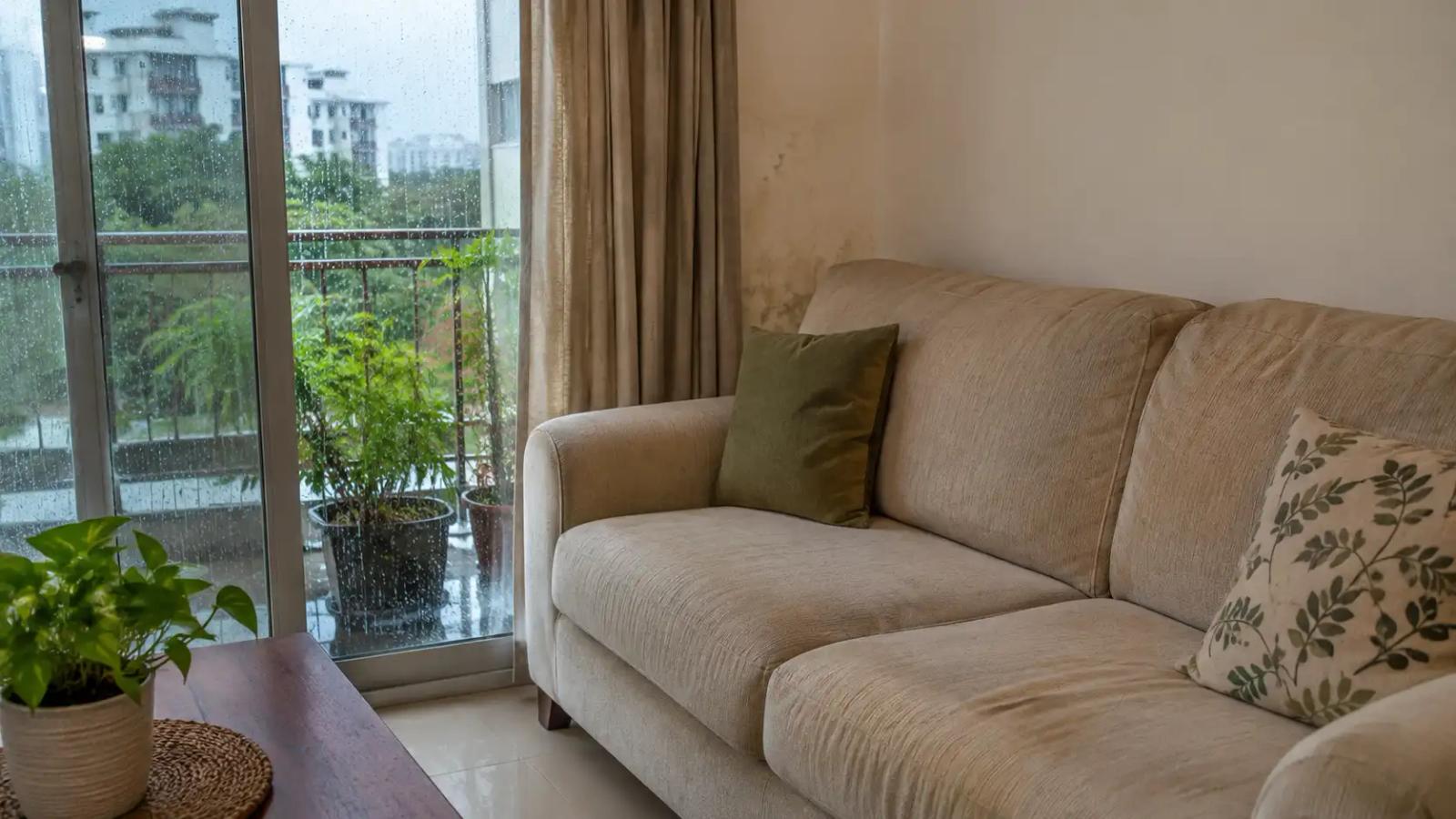
Every monsoon, many Bangalore homes notice the same thing: a sofa that was fine in summer starts to smell stale and damp. The smell is not only about dirt. It is a sign that the fabric and padding are holding moisture. This guide explains why it happens and how to stop it. For the wider home, see this monsoon deep cleaning checklist for Bangalore homes.
What Causes a Musty Smell in Sofas During the Monsoon?
A musty smell in sofas during the monsoon is caused by moisture from humid air being absorbed into the fabric and padding, where mould and mildew can start to grow.
Mould needs four things: moisture, warmth, still air and something organic to feed on. The monsoon supplies the moisture, and a sofa supplies the rest, since dust, skin flakes and body oils collect in the fabric. The main contributing factors are:
- High indoor humidity, which is commonly advised to stay below about 60 percent
- Fabric and foam that absorb and hold moisture
- Closed rooms and poor airflow
- Sofas pushed against damp walls
- Dust, body oils and crumbs that mould can feed on
- Washed covers fitted back before they are fully dry
Because the monsoon lasts for months, moisture tends to build up in a sofa gradually rather than all at once, so the smell often appears well before anything looks wrong.
Why Does Humidity Make Sofas Smell?
Humidity makes sofas smell because fabric and padding absorb moisture from the air, and damp organic material is where mould, mildew and dust mites thrive.
At What Humidity Does Mould Start to Grow on Sofas?
Mould is more likely to grow on sofas when indoor humidity stays above about 60 percent for long periods, which monsoon weather can easily cause. Common guidance is to keep indoor humidity between roughly 30 and 50 percent, and below 60 percent at most. Actual readings vary from home to home, and dust mites also thrive in humid conditions.
Which Sofa Fabrics Hold the Most Moisture?
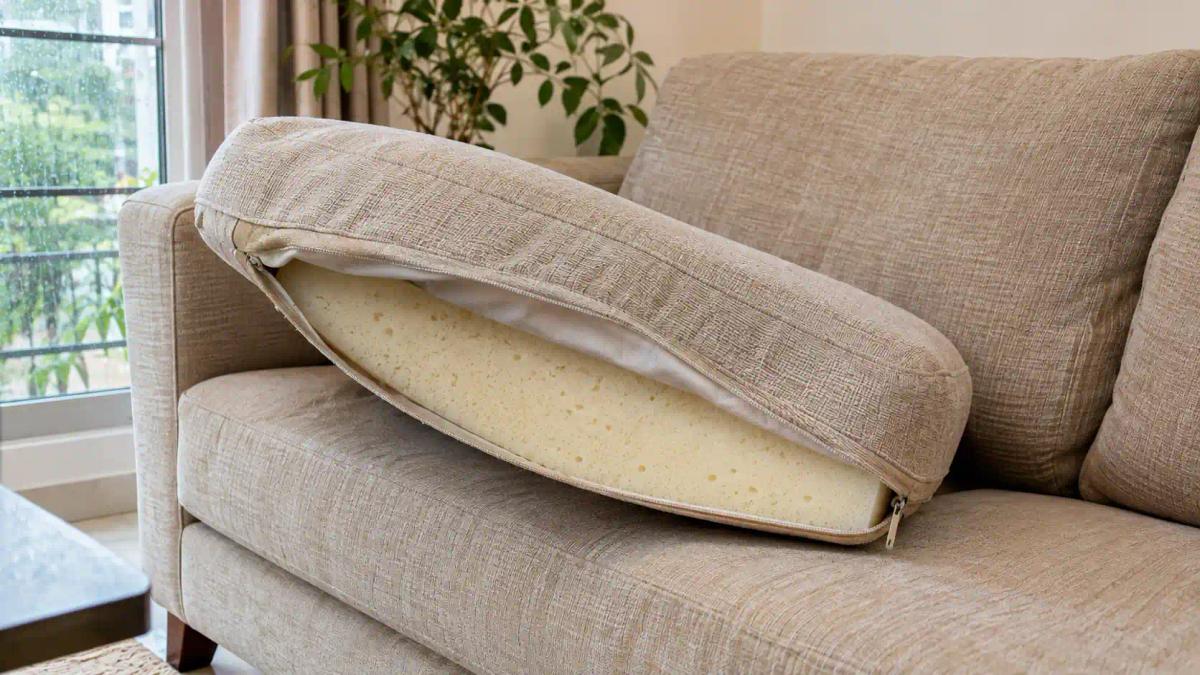
Cotton, linen and other natural fabrics absorb the most moisture, while tightly woven synthetic fabrics resist it better, and thick foam cushions stay damp the longest. A cotton sofa that feels dry on top can still hold dampness underneath. The differences are explained in sofa fabric types and how each is cleaned.
Why Do Sofas Near Walls Smell More?
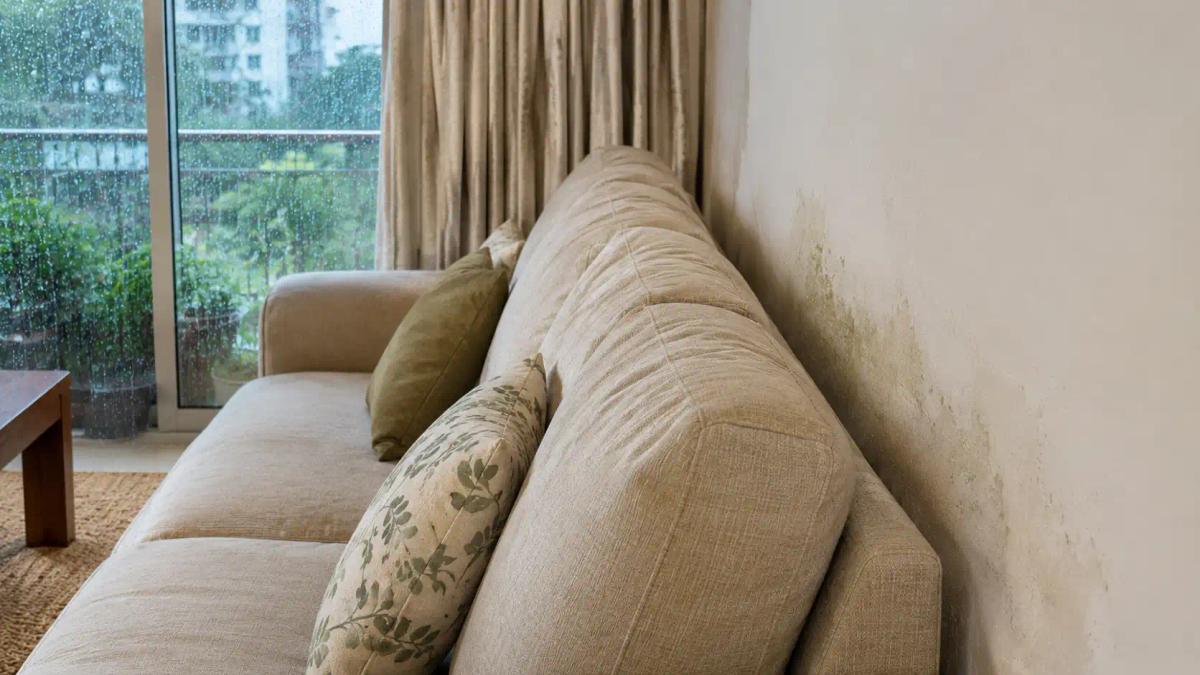
Sofas against walls smell more because walls can be damp and the tight gap blocks airflow, so moisture builds up behind and under the sofa. Even a few inches of space helps air move. If a wall feels cold or damp to the touch, the cause may be the wall itself, as covered in how to stop wall dampness.
Why Does the Smell Seem Worse on Rainy Days?
The smell seems worse on rainy days because damp air makes fabric and padding hold more moisture, which releases more odour. Warmth plays a part too, since a cushion warmed by sitting on it gives off more smell. A sofa that smells stronger on humid days is a sign that moisture is the underlying cause.
How to Prevent a Musty Sofa Smell in the Monsoon

Sofa ventilation and airflow during Bangalore monsoon
A musty sofa smell in the monsoon is prevented by moving air around the sofa, keeping moisture away from it and cleaning off the dust that mould feeds on.
How to Prevent Sofa Musty Smell in 6 Steps
A musty sofa smell is prevented by keeping air moving, keeping moisture out and removing the dust that mould feeds on.
- Keep the room ventilated. Open windows between showers and use fans or exhaust fans to keep air moving.
- Leave a gap behind the sofa. A few inches between the sofa and the wall lets air circulate and stops damp building up.
- Vacuum upholstery often. Vacuuming removes the dust and organic matter that mould feeds on.
- Dry covers completely. Damp washed covers fitted back onto foam can grow mould where it cannot be seen.
- Reduce indoor moisture. Avoid drying laundry in the living room, and use a dehumidifier if one is available.
- Clean up spills and sweat marks early. Moisture from spills and sweat feeds odours.
Should a Sofa Be Cleaned During the Monsoon?
Sofa cleaning is possible during the monsoon, but the method matters, because wet cleaning in humid weather slows drying and can leave moisture in the padding.
Cleaning removes the dust and oils that mould feeds on, which helps, but only if the sofa dries well afterwards. Low-moisture methods with proper extraction reduce the risk, and airflow after cleaning matters even more than usual. Clean Fanatics’ fabric sofa cleaning starts with HEPA vacuuming, then low-moisture foam shampooing and moisture extraction. Humid weather still slows drying, so ventilation remains important. Cleaning in a drier spell, with windows open and a fan ready, gives the sofa the best chance to dry fully.
What to Do If a Sofa Already Smells Musty
A sofa that already smells musty needs its moisture dealt with first, because a smell that keeps returning means moisture is still inside.
Moving the sofa away from the wall, airing the room, drying removable covers fully and vacuuming the upholstery are the safe first steps, and cushions that come apart should be stood upright so air reaches every side. Scented sprays only cover the smell, and added moisture can make it worse. A smell that returns after thorough drying may mean the foam is holding moisture or contamination, and no sofa cleaning can promise to remove it entirely.
How to Keep Sofas Fresh Through the Monsoon
A sofa stays fresh through the monsoon when air keeps moving around it, humidity is kept in check, and moisture never gets trapped in the padding. The same logic applies after cleaning, when a damp sofa is most at risk, as explained in why a sofa smells after cleaning. Starting these habits before the rains begin is easier than fixing a damp sofa halfway through the season.
Sofa smelling damp this monsoon?
Frequently asked questions
Why does a sofa smell musty during the rainy season?
Humid monsoon air is absorbed by the fabric and padding, which dry slowly. Mould and mildew can then grow in the damp material and give off a musty smell.
Is a musty sofa smell a sign of mould?
A musty smell usually means mould or mildew is growing in damp material, even when nothing is visible. Early mould may show only as a faint smell or discolouration. A smell that keeps returning means moisture is still present.
How can a sofa be dried during the monsoon?
Airflow does most of the work: open windows between showers, run a fan near the cushions and stand removable cushions upright. Sunlight is often limited in the monsoon, so moving air and lower humidity matter more.
Which sofa fabric is best for humid weather?
Tightly woven synthetic fabrics such as polyester and microfibre resist moisture better than cotton, linen or thick open weaves. The cleaning code on the sofa tag still decides how fabric sofa cleaning can be done.
Can a dehumidifier help a musty sofa?
Yes. A dehumidifier lowers indoor humidity, which slows mould and dust-mite growth on fabrics. It helps prevent the problem, but it does not clean a sofa that already smells.
Should a sofa be moved away from the wall in the monsoon?
Yes. A gap of a few inches behind the sofa lets air circulate, which reduces moisture buildup. It matters most next to walls that feel cold or damp.
How can a musty sofa smell be prevented in the monsoon?
A musty sofa smell in the monsoon is prevented by moving air around the sofa, keeping moisture away from it and cleaning off the dust that mould feeds on. That means keeping the room ventilated, leaving a gap behind the sofa, vacuuming often, drying covers completely, reducing indoor moisture and cleaning up spills and sweat marks early.
At what humidity does mould start to grow on sofas?
Mould is more likely to grow on sofas when indoor humidity stays above about 60 percent for long periods, which monsoon weather can easily cause. Common guidance is to keep indoor humidity between roughly 30 and 50 percent, and below 60 percent at most.
Why does a sofa smell worse on rainy days?
A sofa smells worse on rainy days because damp air makes fabric and padding hold more moisture, which releases more odour. Warmth plays a part too, since a cushion warmed by sitting on it gives off more smell.
Should a sofa be cleaned during the monsoon?
Sofa cleaning is possible during the monsoon, but the method matters, because wet cleaning in humid weather slows drying and can leave moisture in the padding. Low-moisture methods with proper extraction reduce the risk. Cleaning in a drier spell, with windows open and a fan ready, gives the sofa the best chance to dry fully.
What should be done if a sofa already smells musty?
A sofa that already smells musty needs its moisture dealt with first. Moving the sofa away from the wall, airing the room, drying removable covers fully and vacuuming the upholstery are the safe first steps, and cushions that come apart should be stood upright so air reaches every side. Scented sprays only cover the smell, and added moisture can make it worse.