
At a Glance
The right carpet cleaning method depends on the carpet's fibre. Synthetic carpets like nylon and polyester tolerate water and can be shampooed, and wool can too with gentle, low-moisture care. Natural fibres like jute, sisal, silk and viscose should not be shampooed, because water makes them shrink, brown or stain, so they are cleaned by vacuuming instead. Even the backing matters, as a jute backing can shrink under too much water. This guide explains the carpet types, which suit Indian homes and Bangalore's weather, and which can and cannot be wet cleaned.
A carpet adds warmth to a room, but it is also one of the easiest things to damage during cleaning, because different carpet fibres react very differently to water. The wrong method can shrink a carpet, turn it brown or leave permanent marks. This guide starts with the carpet types, helps choose the right one for a home, and then explains which carpets can safely be shampooed and which cannot. For a related method, see this sofa cleaning methods guide.
What Are the Main Types of Carpet?

The main carpet types are synthetic fibres like nylon and polyester, natural animal fibre like wool, and natural plant fibres like jute, sisal, silk and viscose.
Each behaves differently when it comes to dirt, wear and water. A quick guide to the common types:
- Nylon: a tough synthetic that handles heavy foot traffic and most cleaning methods
- Polyester and polypropylene: budget-friendly synthetics that resist water and dry quickly
- Wool: a soft, premium natural fibre that is durable but sensitive to heat and moisture
- Jute and sisal: natural plant fibres with a textured look, but easily damaged by water
- Silk: a delicate, luxury fibre that needs specialist care
- Viscose: a soft, silk-like fibre that is very sensitive to moisture
Which Carpet Is Best for Indian Homes?
For most Indian homes, synthetic carpets such as nylon and polyester are the most practical, because they handle daily traffic, resist stains and are easy to clean.
They suit busy family homes and are forgiving if something spills. Wool is a good premium choice for low-traffic rooms where comfort matters more than heavy use, though it costs more and needs gentler care. Natural plant fibres like jute and sisal look beautiful but are better suited to dry, low-use corners, since they stain easily and react badly to moisture. The right pick depends on the room, the foot traffic and how much upkeep a household wants.
Which Carpets Suit Bangalore's Weather?
In Bangalore's humid and monsoon-heavy climate, moisture-tolerant carpets like synthetics and well-maintained wool are the safest choice.
Damp air and monsoon moisture are hard on natural plant fibres. Jute, sisal and viscose absorb moisture easily, which can lead to musty smells, staining and mould in a humid home. Synthetic carpets dry faster and resist damp far better, which makes them a more reliable choice for most Bangalore homes. If a home does use natural-fibre carpets, keeping them in dry, well-ventilated rooms helps, and the monsoon cleaning tips for Bangalore homes apply to carpets too.
Which Carpets Are Low Maintenance and Which Are High Maintenance?
Synthetic carpets are low maintenance, wool is medium, and natural fibres like jute, sisal, silk and viscose are high maintenance.
Maintenance level is a good guide when choosing a carpet. The table below sums it up.
| Carpet Type | Maintenance Level | Why |
|---|---|---|
| Nylon, polyester, polypropylene | Low | Nylon, polyester, polypropylene |
| Wool | Medium | Durable but needs gentle, low-moisture care |
| Jute and sisal | High | Absorb water, shrink and brown easily |
| Silk | High | Delicate, needs specialist dry care |
| Viscose | High | Very moisture-sensitive, marks easily |
Pro Tip: Not sure what a carpet is made of? Check the label on the underside, or ask a professional to identify the fibre before any wet cleaning. The wrong method can cause permanent damage.
Which Carpets Can Be Shampooed, and Why?
Synthetic carpets can be shampooed, and wool can be shampooed with gentle, low-moisture care, because these fibres tolerate controlled amounts of water.
Synthetic fibres like nylon and polyester handle a water-based clean well and dry quickly, so shampooing lifts dirt without harming them. Wool can also be shampooed, but only with a neutral cleaner, minimal moisture and fast drying, since too much water or heat can make it shrink or turn yellow. The key for both is controlling the moisture and drying the carpet quickly.
This is why Clean Fanatics uses a low-moisture shampooing method, a blend of about 90% foam and 10% moisture, so carpets are cleaned deeply without being over-wetted.
Which Carpets Should Not Be Shampooed, and Why?
Jute, sisal, silk and viscose carpets should not be shampooed, because water makes these natural fibres shrink, brown, stain or lose strength.
Each reacts badly to moisture in its own way:
- Jute: Browns and weakens when it gets wet, and can shrink as it dries.
- Sisal: Discolours and shrinks easily, so the less moisture the better.
- Silk: Is delicate and can shrink, warp or develop mould if wet cleaned.
- Viscose: Marks and loses its finish with even small amounts of water.
There is also a hidden risk: many carpets have a jute backing, even when the top fibre is synthetic. Too much water can make that backing shrink and bleed a brown stain up into the carpet face. This is why the fibre and the backing both need checking before any wet cleaning.
For these water-sensitive carpets, Clean Fanatics cleans by vacuuming rather than shampooing, so the fibres are refreshed without the risk of water damage.
How Does Clean Fanatics Clean Carpets?
Clean Fanatics' carpet cleaning in Bangalore matches the method to the fibre, offering both low-moisture shampooing for water-safe carpets and dry vacuuming for delicate ones.
What Is the Carpet Shampooing Process?
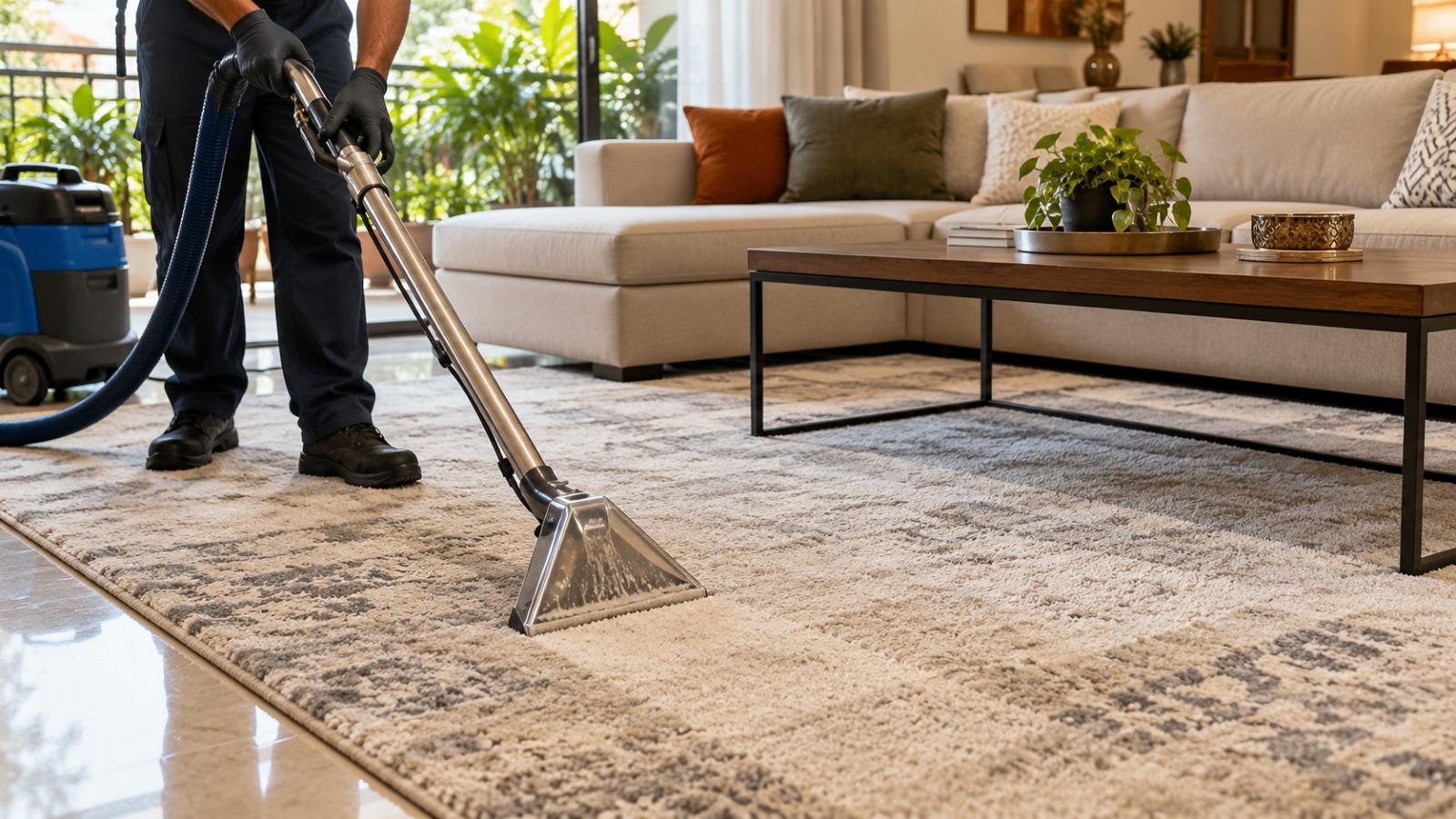
For synthetic and wool carpets, the shampooing process runs in three steps. Each prepares the carpet for the next:
What Is the Carpet Shampooing Process?
For synthetic and wool carpets, the shampooing process runs in three steps. Each prepares the carpet for the next:
- HEPA Dust Extraction: A HEPA-filter vacuum removes deeply lodged dust, debris and allergens, trapping the fine particles instead of releasing them back into the air.
- Low-Moisture Foam Shampooing: A blend of about 90% foam and 10% moisture is worked in to lift grime from the fibres without over-wetting the carpet.
- Moisture Extraction: An injection-extraction method pulls the solution and moisture back out, so the carpet dries quickly and is left soft and nearly dry to the touch.
How Are Delicate Carpets Cleaned?
Delicate, water-sensitive carpets like jute, sisal, silk and viscose are cleaned by vacuuming rather than shampooing. This removes dust and surface dirt without introducing the moisture that would damage the fibres. Matching the method to the carpet is what protects it, which is a key reason this work is best left to a professional carpet cleaning service that checks the fibre first.
How to Choose the Right Carpet Cleaning Method
Choosing the right method starts with the fibre: synthetic and wool carpets can be shampooed with controlled moisture, while jute, sisal, silk and viscose should be vacuumed, not wet cleaned. Checking the backing matters too, since a jute backing can be damaged by water even under a synthetic surface. When in doubt, the safest step is to have the fibre identified before cleaning. The same method-to-material logic applies to other soft furnishings, as covered in this mattress cleaning methods guide.
Not sure what your carpet is made of or how it should be cleaned?
Frequently asked questions
How do I know what type of carpet I have?
Check the label on the underside of the carpet. If you are not sure what it is made of, ask a professional to identify the fibre before any wet cleaning. Knowing the fibre matters because it decides the right carpet cleaning method.
Can all carpets be shampooed?
No, not all carpets can be shampooed. Synthetic carpets and wool can handle controlled wet cleaning, but jute, sisal, silk and viscose can be damaged by water and should be vacuumed instead. The fibre decides the safe method.
Why do some carpets shrink or turn brown after cleaning?
Carpets shrink or brown when they get too much water or heat, especially natural fibres like jute and sisal. Many carpets also have a jute backing, even when the top fibre is synthetic. Too much water can make that backing shrink and bleed a brown stain up into the carpet face. Controlling moisture and drying the carpet quickly helps avoid this.
Which carpet is best for a humid city like Bangalore?
Synthetic carpets suit humid cities best because they resist moisture and dry quickly. Natural plant fibres like jute and sisal absorb damp and can develop mould or stains. Wool works in low-traffic rooms with proper care.
Is vacuuming enough to clean a carpet?
It depends on the fibre. For jute, sisal, silk and viscose, vacuuming is the safe method. Synthetic and wool carpets can also be shampooed with controlled moisture to lift grime from the fibres.
How often should a carpet be deep cleaned?
Most carpets benefit from a professional deep clean every six to twelve months, or more often in homes with pets, children or heavy traffic. Regular vacuuming in between keeps dirt from settling deep into the fibres.