 Skip to content
Rheology of Texture Paint: How Polymer Thickeners Affect Spreadability & Pattern Formation
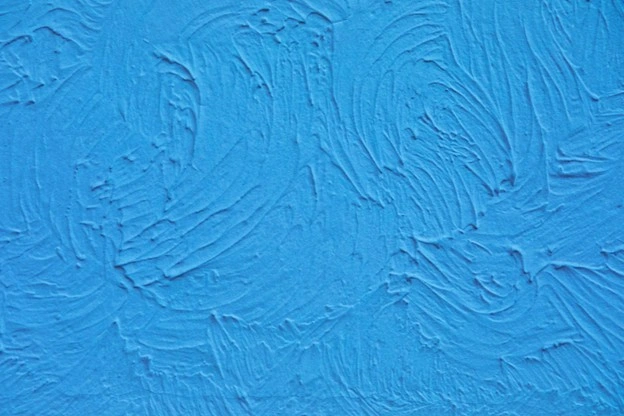
If you’ve ever worked with texture paint, you know the satisfying feeling of pulling a trowel across a wall and watching a pattern form. But behind that smooth drag (or frustrating drag!) is something deeply scientific- rheology.
Rheology determines whether your texture paint spreads easily, stays put, sags, clumps, forms crisp patterns, or collapses into an uneven mess.
And at the heart of this are polymer thickeners.
Today, let’s break down what they actually do- minus all the textbook jargon- and understand how they influence everything from trowelability to design clarity.
What Makes Texture Paint Behave the Way It Does?
Texture paint isn’t just thicker paint. It’s a carefully engineered mix of binders, aggregates, fillers, and modifiers that must remain stable in the bucket and behave predictably on the wall.
Rheology controls:
- Viscosity (how thick the paint feels)
- Flow (how it moves under pressure)
- Yield stress (the force needed before it starts moving)
- Slump resistance (whether patterns stay crisp or drip down)
In simple terms:
👉 Rheology decides whether you can create a textured pattern with ease or fight your wall all afternoon. To ensure texture paint performs consistently, maintaining dust-free and grease-free walls matters- something as simple as a professional kitchen cleaning service can make surface preparation significantly smoother.
Polymer Thickeners: The Real Architects Behind Smooth Application

Polymer thickeners- like HEC, HPMC, ASE, HASE, or PU thickeners- decide how the paint responds when you roll, brush, dab, or trowel it. Each thickener adjusts flow differently.
How Polymer Thickeners Shape Texture Paint
- Spreadability
- Higher molecular-weight polymers increase drag → good for bold textures, bad for smooth glide.
- Lower molecular-weight thickeners improve flow → easy spreading, softer patterns.
- Pattern Formation
- Higher yield stress = patterns stay crisp
- Lower yield stress = patterns soften or collapse over drying time
- Open Time & Workability
Polymers that hold water longer let you rework the pattern. Fast-drying systems leave no room for correction. - Anti-Sagging Effect
Thickeners create structural “networks” that prevent vertical slump.
So yes- your thickener literally decides whether your wall art stays art, or becomes an accidental landslide. For similarly precision-dependent surfaces, processes like marble polishing also rely on controlled material behavior to achieve smooth, uniform finishes.
Why Too Much Thickener or Too Little Can Ruin Your Texture
Texture paint defects are almost always rheology problems, not “bad workmanship.”
When Thickener Is Too Low:
- Paint slides down the wall
- Patterns look washed-out
- Heavy-texture tools leave no definition
- Dripping, sagging, uneven ridges
When Thickener Is Too High:
- Paint becomes lumpy and “stringy”
- Impossible to spread
- Trowel marks look torn
- Poor surface wetting (especially on primed walls)
- Pattern breaks instead of dragging smoothly
The Sweet Spot:
Brands use rheometers to optimize the viscoelastic window– a balance of elasticity + viscosity that gives you:
✔ smooth spread
✔ controlled drag
✔ crisp pattern edges
✔ high sag resistance
This is why professional-grade texture paints feel easier to control, they’re scientifically tuned for predictability. The same balance of formulation and technique is crucial in exterior painting, where weather exposure demands coatings with stable viscosity and strong adhesion.
How Rheology Impacts Real-World Texture Patterns

Different texture effects require different rheological profiles.
1. Sand / Fine Aggregate Textures
- Need medium viscosity
- Should allow soft flow
- Low elasticity to avoid grain clumping
2. Knockdown / Rustic / Drag Patterns
- Need higher yield stress to hold peaks
- Medium-high viscosity for ridge stability
- Higher elasticity for “lift and freeze” effect
3. Roller-Applied Texture Paints
- Require controlled leveling
- Too much thickener prevents proper roll-out
- Too little makes patterns sag or fade
4. Spray Textures
- Use low–medium viscosity systems
- Must shear-thin easily under spray pressure
- Require rapid recovery to keep splatter definition
In short: The polymer thickener decides whether a wall texture looks intentionally artistic – or unintentionally chaotic. Before applying texture, structural prep such as wall crack filling ensures the substrate is stable enough for patterns to form cleanly without distortion or surface defects.
Final Word
Texture paint is more than pigment or thickness- it’s a complete rheological ecosystem. Polymer thickeners decide whether your paint glides smoothly, drags too quickly, sags down the wall, or sets perfectly in place. Once you understand this relationship, applying texture stops feeling like trial-and-error and starts becoming predictable, controlled, and creative. And if you’re planning a textured feature wall, knowing how rheology shapes spreadability and pattern formation helps you see why professional-grade products perform so beautifully under the trowel- and at Clean Fanatics, we make sure your textured walls look as stunning as the science behind them.
FAQs
It may have high molecular-weight thickeners or water loss. Stirring sometimes helps, but extreme thickness indicates formulation imbalance.
Low yield stress or lack of elastic structure in the rheology profile.
Only small quantities. Too much water destroys rheological stability.
Different thickeners, binder ratios, and flow modifiers- all affecting rheology.
Fast drying is usually caused by low humidity, high temperature, or thickeners that don’t retain moisture well, reducing open time.
Patchiness often results from inconsistent rheological recovery, meaning the paint doesn’t regain viscosity at the same speed in every stroke.
Yes. HEC and HPMC thickeners give smoother drag, while associative thickeners (ASE/HASE) give higher resistance and sharper pattern edges.