 Skip to content
Pores, Grains, and Sanding Sequences: The Pro Workflow for Glassy Wood Finishes

Ever stared at a piece of furniture that gleamed like polished glass and thought, how do professionals make wood look that smooth?
The secret lies not just in the polish you see but in what happens long before that, inside the wood’s pores and across every stroke of sandpaper.
For homeowners and professionals in India, achieving a flawless, mirror-like finish can be tricky. Our humid climate, diverse wood types, and frequent dust exposure make wood finishing both an art and a science. But with the right workflow, understanding your wood, filling the pores, following a proper sanding sequence, and finishing correctly, you can achieve that rich, glassy look that transforms any surface into a showpiece.
Let’s break down the pro process step by step.
Reading the Wood: Open vs. Closed Grain
Before sanding or filling, you need to listen to your wood. Every type behaves differently, and the first step to a smooth finish is knowing what’s beneath your hands.
Open-grained woods – such as oak, teak, mahogany, and walnut have visible pores and texture. These pores can create small valleys across the surface. When left untreated, they absorb finish unevenly, resulting in a patchy or dull appearance.
Closed-grained woods – like maple, cherry, and birch are naturally smoother. They have tight pores and require less surface preparation to achieve a glossy result.
💡 Pro Tip: Run your palm across the surface. If you feel tiny ridges or dips, it’s open-grained. If it’s smooth and even, you’re dealing with closed grain.
Understanding this difference helps you decide whether your project needs grain filling, how much sanding to do, and what finish type will deliver the best results. For restoring old or weathered furniture, explore our expert wood polishing services that enhance grain patterns and protect wooden surfaces with a lasting shine.
Filling the Gaps: How to Get a Uniform Surface

Once you’ve identified your wood type, the next step is addressing its pores. For open-grained woods, grain filling is non-negotiable. It’s what levels the playing field, literally.
Grain filler works like a primer for wood. It fills in microscopic valleys and creates a uniform surface, ensuring that your finish coat sits evenly on top. Without it, even the best polish will look streaky or dull.
There are two main types of fillers:
- Water-based fillers: Eco-friendly, quick-drying, and easy to clean up. They’re perfect for light-colored woods or where speed is a priority.
- Oil-based fillers: Offer a richer, deeper tone but take longer to dry. Ideal for dark woods like teak or walnut.
Application Tip: Apply filler across the grain using a putty knife or cloth. Allow it to dry, then sand it lightly with fine-grit paper to smooth out the surface.
In India’s humid climate, where wood tends to expand and contract, using the right filler can also help prevent microcracks in your finish over time. If your woodwork is part of a larger home upgrade, our home renovation services cover everything from wall replastering and grouting to tile and shower enclosure replacements.
The Sanding Sequence: From Rough to Radiant
Sanding is the heartbeat of a glassy finish. It’s not just about making wood smooth, it’s about gradually refining its surface so it reflects light evenly.
The professional sanding sequence looks like this:
80 → 120 → 180 → 220 → 320 → 400
Each grit removes the scratches from the previous one, closing the wood’s pores little by little until it’s perfectly even. Skipping a grit may seem like a time-saver, but it often leaves faint lines that become painfully visible once the finish is applied.
- Start coarse (80 or 120 grit): Removes milling marks, uneven spots, and old finishes.
- Move to medium (180–220 grit): Refines the surface and smooths filler or primer.
- Finish fine (320–400 grit): Prepares the surface for polishing or sealing, ensuring that glossy, mirror-like effect.
Pro Tips:
- Always sand along the grain – never across – to avoid cross-marks.
- Use an orbital sander for large areas and hand-sanding for final touches.
- After each grit, wipe the surface with a tack cloth to remove fine dust that can scratch your next layer.
A perfectly sanded piece will already feel like satin before you even apply polish – that’s how you know you’ve done it right. To maintain a clean, dust-free workspace while sanding, our full house cleaning services – including sofa, carpet, and window cleaning – keep your environment spotless during and after woodwork.
The Final Coat: Seal, Polish, Protect
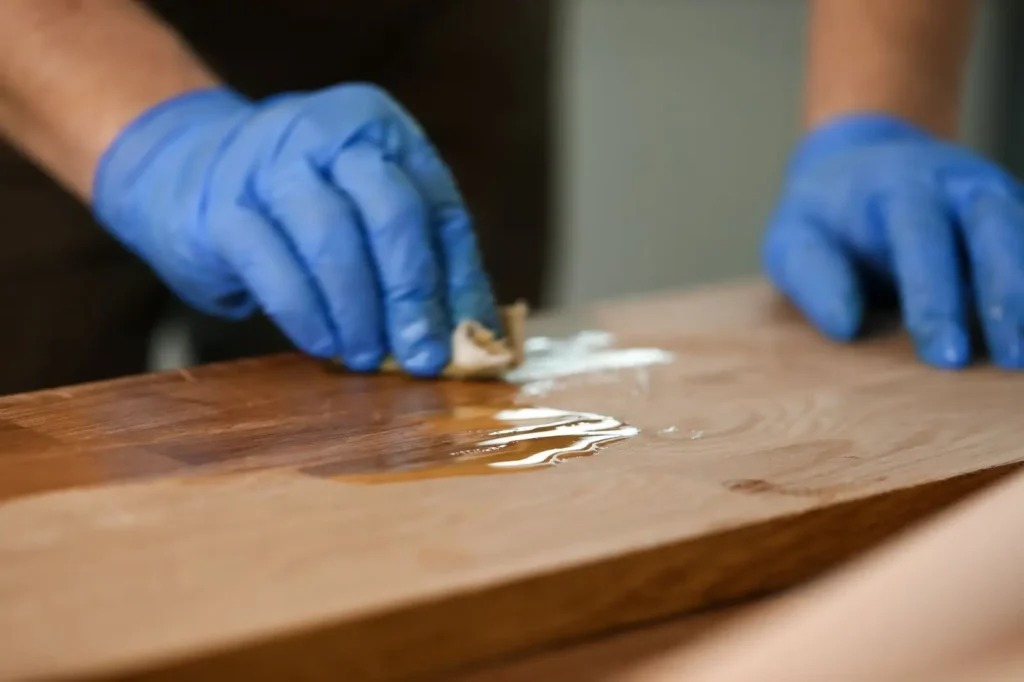
After all that preparation, it’s time to make your wood shine. The final step – sealing and polishing – locks in the smoothness and adds durability.
Start by applying a wood sealer or primer. This seals any remaining pores and ensures that the finish bonds evenly to the surface. Then, layer your chosen finish type:
- PU (Polyurethane): Extremely durable, glossy, and moisture-resistant. Great for Indian weather.
- Melamine polish: Offers a smooth, mid-gloss finish – ideal for furniture and cabinetry.
- Natural oils (linseed, tung, or Danish): Perfect for those who love organic, soft-glow finishes that highlight the grain.
Each coat should be thin and even. Allow proper drying time between layers, then sand lightly with 400–600 grit before applying the next coat.
🧽 Pro Workflow:
- Apply first coat → let dry.
- Sand lightly.
- Apply a second coat → buff with microfiber.
- Optionally, apply a wax topcoat for extra sheen. And to keep termites and wood-boring pests away from your finished furniture, our pest control services provide long-term protection against moisture and infestations.
In Indian conditions: Always opt for water-based or PU finishes if your furniture will face humidity or frequent cleaning – they resist swelling and fading far better than traditional varnishes. If your home needs a refreshed look beyond woodwork, our painting services – from interior painting to waterproofing, ensure perfectly finished walls that complement your polished furniture.
Final Word: From Pores to Perfection
A glassy wood finish isn’t just about the final shine – it’s the result of discipline, patience, and understanding the wood’s natural rhythm. Every pore you fill, every grit you pass, and every coat you apply builds toward that flawless reflection you see on premium furniture.
At Clean Fanatics, we understand that fine wood finishing is about more than just aesthetics – it’s about craftsmanship that endures. Our experts follow this precise workflow to ensure every wooden surface we restore or polish reflects perfection, durability, and the warmth of natural beauty.
So the next time you pick up sandpaper or plan a polish, remember: slow, deliberate steps make the biggest difference. In woodwork – as in life – the smoother the journey, the shinier the result.
FAQs
Start with 80-grit for rough surfaces and gradually move up to 400 for a glassy finish. Skipping grits can leave micro-scratches that appear after polishing.
No. It’s mainly needed for open-grained woods like oak, teak, and mahogany. Closed-grained woods such as maple or cherry can often skip this step.
PU or water-based finishes are ideal for humid Indian weather. They resist moisture, prevent cracking, and retain gloss longer than traditional varnish.