 Skip to content
Winter Kitchen Degreasing Chemistry: Why Grease Hardens in Cold Weather & How to Clean It Faster
If you’ve ever walked into your kitchen on a cold winter morning and wondered why your chimney filters, cooktops, and cabinets suddenly look stickier, darker, and grimier, you’re not alone. Winter doesn’t just make our hands cold, it changes the chemistry of kitchen grease. The same oily splatter that wipes off easily in summer becomes a rock-hard, stubborn stain in winter.
In this guide, we’ll break down why grease behaves differently in winter, what chemistry is happening behind the scenes, and the most effective ways to soften, break down, and remove polymerised oils and carbon deposits when temperatures drop.
Let’s get into the science, and the solution.
What Really Happens to Kitchen Grease in Winter
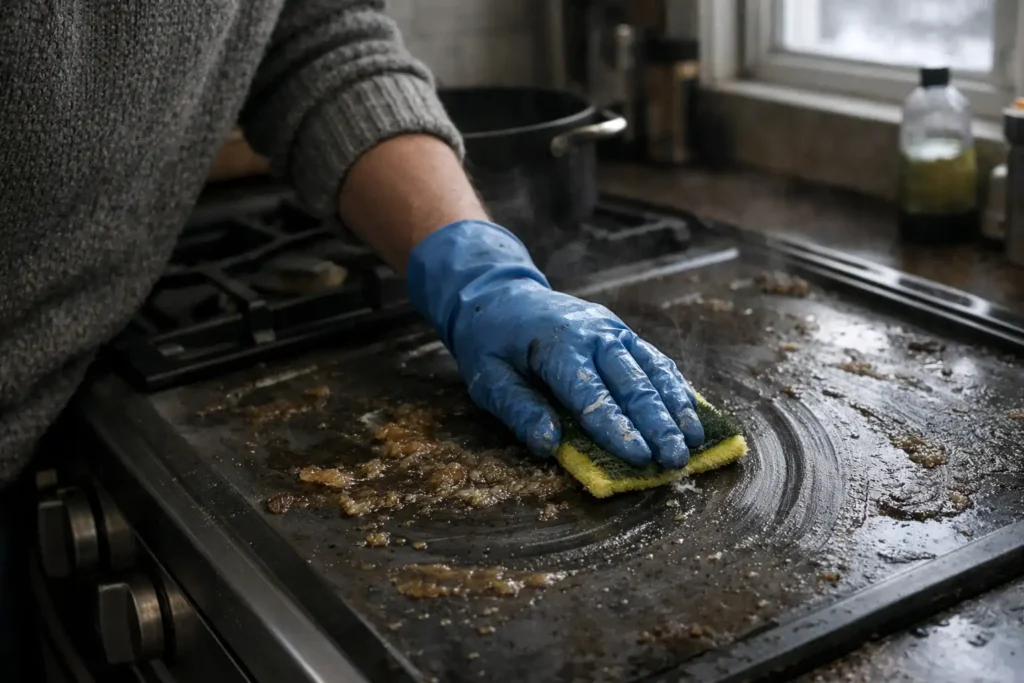
Most people assume grease hardens because it’s “cold.” The real reason is far more interesting, and far more annoying.
Here’s what actually happens:
1. Fats solidify at low temperatures
Cooking oils contain saturated and unsaturated fats.
- In summer: they remain semi-liquid.
- In winter: they solidify and crystallise, forming a waxy film that sticks to metal and wood.
2. Polymerisation speeds up with repeated heating
Every time oil gets reheated (tadka, frying, sautéing), the molecules break and recombine into thick, glue-like polymers.
These polymers:
- become harder in cold weather
- trap soot
- form the dark amber layer seen on chimneys and cabinets
3. Carbon deposits cling harder in winter
Low temperatures reduce the natural “softness” of soot. Combined with sticky polymerised grease, carbon settles faster and becomes brittle yet strongly adhesive.
4. Water & cleaners work less effectively in the cold
Cold grease repels water even more – that’s why dish soap barely cuts through winter grease unless you use hot water.
In short: winter turns liquid grease into a hardened, polymerised, carbon-loaded mess. If this winter buildup has already spread across cabinets or tiles, a quick professional kitchen cleaning service can restore surfaces without damaging the finish.
Why Your Usual Cleaning Methods Fail During Winter
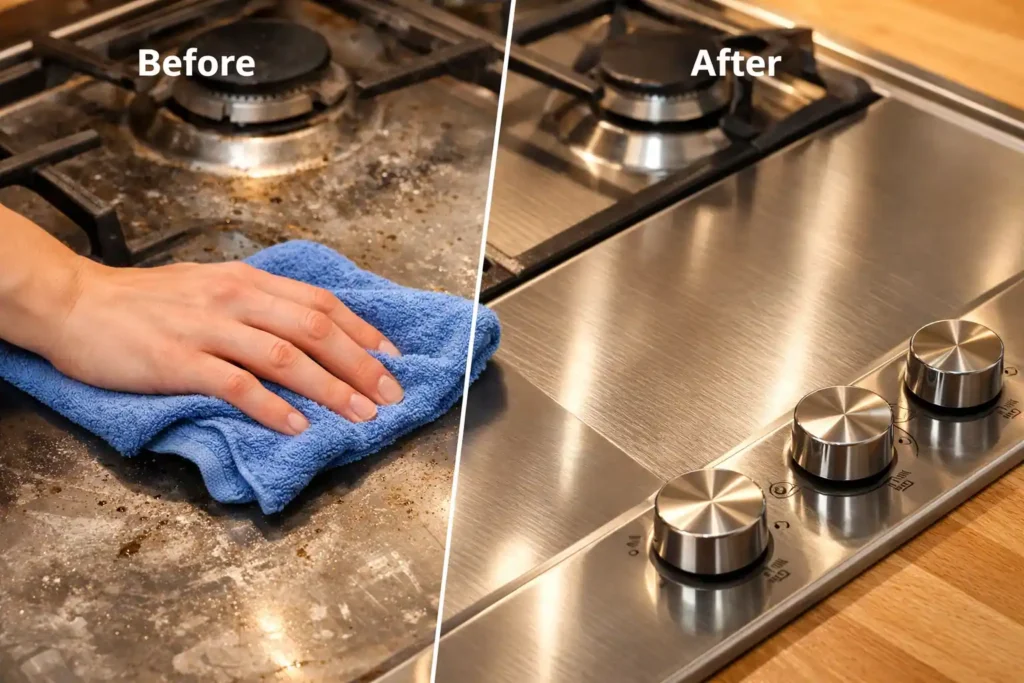
People often blame their dish soap or scrubber, but the real issue is temperature + chemistry.
1. Cold surfaces = tougher grease
Grease sticks harder when your cooktop or chimney filter is cold. Cleaning without pre-heating the surface means you’re fighting physics.
2. Surfactants need heat to activate
Most degreasers and dish soaps require warm water for the surfactant bonds to break through fat molecules.
3. Acidic cleaners weaken in winter
Vinegar, lemon water, and DIY solutions lose effectiveness on cold, polymerised grease.
4. Carbon deposits become “interlocked”
In cold weather, carbon bonds fuse tightly with the polymerised surface layer — mechanical scrubbing barely works.
This is why people search for things like:
- “How do I remove hardened grease in winter?”
- “Why does grease become sticky in cold weather?”
- “How to soften polymerised oil before cleaning?”
You’re not doing it wrong – winter is just making everything harder. For grease that refuses to budge even after multiple tries, a specialised bathroom renovation & repair service can also address cracks or gaps where winter grease often settles.
The Most Effective Winter Degreasing Strategy
This is the part most blogs miss: you must reverse the chemistry before cleaning.
STEP 1 – Pre-heat the surface
For chimneys & cooktops:
- Run the burner on low for 2-3 minutes OR
- Pour hot water over detachable filters OR
- Use a hair dryer/heat gun on cabinets & hobs (safe distance!)
Heat softens saturated fats and loosens polymerised layers. If your chimney filter is too clogged for home cleaning, consider booking a chimney cleaning service for complete degreasing and airflow restoration.
STEP 2 – Use an alkaline cleaner (the only thing that breaks polymers)
Look for cleaners with:
- Sodium carbonate
- Sodium metasilicate
- Mild alkalis
- Degreasing surfactants
Alkaline solutions break ester bonds in oils and dissolve the sticky matrix.
STEP 3 – Add a surfactant boost
Dish soap + warm water + 5 minutes of sitting time.
This helps lift the emulsified grease later.
STEP 4 – Mechanical agitation (after chemical loosening)
Use:
- Microfiber cloth for cabinets
- Scrubber + steel-safe brush for chimney filters
- Nylon scrub pad for cooktops
At this stage, the grease finally wipes off instead of smearing.
STEP 5 – Rinse with hot water
Hot water prevents re-solidification of grease during rinsing.
This 5-step routine is the fastest way to deal with winter-hardened grease – because it works exactly with the chemistry that caused the buildup. For kitchens with long-term polymerised deposits, a professional sofa cleaning service also helps remove deep-set odours and airborne grease trapped in fabrics.
How to Prevent Grease Solidification During Winter
Here’s what people search for:
- “How to stop grease from hardening?”
- “Winter kitchen maintenance tips?”
These are the most effective prevention habits.
1. Wipe hot surfaces immediately after cooking
Grease is easiest to remove when it’s fresh and still liquid.
2. Run chimney on low for 5 minutes after cooking
This pulls out vapours before they condense and polymerise.
3. Deep-clean chimney filters every 10-12 days
Especially during winter frying season.
4. Use warm water for all winter cleaning
Avoid cold-water cleaning at all costs – it resets the grease back to solid.
5. Keep your cooktop slightly warm before cleaning
A warm surface prevents fat crystals from forming.
Small habits → Major difference. If winter grease has already spread onto indoor walls or ceilings, a high-quality interior painting service can refresh the space and seal surfaces against future buildup.
Final Word
Winter doesn’t just make grease look tougher – it actually changes how it behaves. Once you understand how low temperatures:
- harden saturated fats,
- speed up oil polymerisation,
- trap carbon inside sticky layers, and
- weaken everyday cleaners,
…you stop fighting the mess blindly and start cleaning intelligently.
Warm the surface → break the bonds → lift the grease → rinse hot.
Simple, fast, and science-backed.
At Clean Fanatics, we follow the same chemistry-first approach, which is why our winter deep-cleaning results look dramatically different – cleaner surfaces, faster degreasing, and zero damage.
When you understand the science, winter grease stops being a battle and becomes a routine.
FAQs
Because fats solidify in cold temperatures and combine with oxidised oil layers, creating a tacky film.
Alkaline-based degreasers (sodium carbonate, surfactants) because they break polymerised oil bonds.
Not for polymerised grease. Vinegar helps only with fresh grease, not winter-hardened films.
Yes – almost all kitchen oils melt above 30-40°C. Heat reverses the hardened state.