 Skip to content
Tile Lippage: What It Is, Why It Happens & How to Fix It During Renovation
If you’ve ever walked across a newly tiled floor and felt one tile sticking up higher than the next, that tiny bump is called tile lippage. It’s one of the most common – and most frustrating – renovation issues homeowners face. The bad news? Even good tiles can look “bad” because of lippage. The good news? You can fix it, and even better, you can prevent it entirely with the right installation steps.
This guide breaks down everything you need to know: what tile lippage actually is, why it shows up, how much is acceptable, and the best repair and prevention methods used by professionals.
What is Tile Lippage?
Tile lippage is the uneven height difference between adjacent tiles. Imagine placing two books side by side – if one is slightly higher, that raised edge is the “lippage.”
A small amount of lippage is normal, especially with larger tiles. Industry standards even allow up to a certain millimetre of variation. But once it becomes visible, trip-worthy, or ruins the look of your flooring, it’s considered a defect.
Why it matters:
- It creates visible shadows under light, especially in modern homes with LEDs.
- It causes chipping at the raised edge.
- It becomes a tripping hazard, particularly for kids and seniors.
- It makes your tiles look poorly installed – even when the materials were great.
Homeowners usually notice it within 24-48 hours of installation or after the grout dries. A quick bathroom deep cleaning can help reveal the true condition of uneven tiles.
Why Tile Lippage Happens (The Real Causes That Pros Look For)
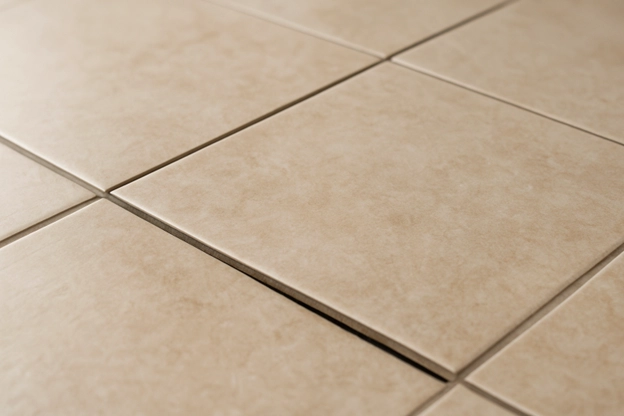
Tile lippage can happen for several reasons – some related to the tiles, others related to the installation process. Here are the most common causes professionals check:
1. Uneven Subfloor (The biggest culprit)
If the flooring beneath the tiles isn’t perfectly level, even the best installer will end up with lippage. Concrete naturally shrinks, cracks or settles, so floors often dip without being obvious to the eye.
2. Warped or Curved Tiles
Many tiles – especially large-format ones – have slight factory curvature. Even 1-2 mm of warpage can cause lippage when placed next to perfectly flat tiles. If your stone floors also look uneven or dull, our marble polishing service can help restore a smooth, flawless finish.
3. Wrong Trowel Size or Too Little Adhesive
Incorrect adhesive application prevents tiles from sitting evenly. Using the same trowel size for all tile sizes is a common amateur mistake.
4. Rushed Installation
Installers working too fast fail to check each tile with a straightedge or spirit level. Once the adhesive sets, the tiles can’t be adjusted – leading to permanent lippage.
5. Tiles Not Coming From the Same Batch
Different batches can have slight thickness variations. Mixing lots often leads to uneven height alignment.
6. No Tile Leveling System Used
Professional installers today use wedge or clip-and-lock systems. Without them, especially for large tiles, lippage is almost guaranteed.
How Much Tile Lippage Is Actually Acceptable?
Most homeowners don’t know that tile lippage is not always a mistake. Industry standards define how much is acceptable based on tile type.
Here’s a simplified explanation:
Standard Acceptable Lippage Levels
- Ceramic/Vitrified tiles: ~1 mm
- Rectified tiles (sharp edges): 0.5-0.8 mm
- Large-format slabs: Usually require near-zero lippage
- Stone (marble, granite): Almost no lippage acceptable due to polishing
In general:
- If you can feel it clearly with your foot → probably unacceptable
- If you can see shadows under light → may exceed tolerance
- If it causes tripping or chipping → definitely unacceptable
If unsure, a straightedge test or laser level makes it easy to measure. Tile warping from moisture can be avoided with proper waterproofing.
How to Fix Tile Lippage (DIY & Professional Solutions)
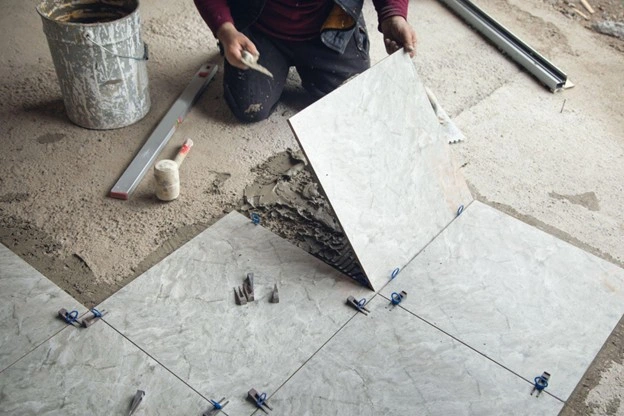
The fix depends on how bad the lippage is and how recent the installation was.
If tiles were installed in the last 24 hours:
You can still:
- Lift and reset the tiles
- Add or remove adhesive
- Re-align using a leveling system
This is the easiest and cheapest time to correct it.
If tiles have already set (after 24-48 hours):
There are two real solutions:
1. Minor Lippage Fix: Grinding / Honing the Raised Edge
Professionals use diamond pads to smooth the raised tile edge until both tiles meet evenly. Works best on:
- Stone
- Porcelain
- Ceramic
Not suitable for textured tiles.
2. Major Lippage Fix: Remove & Re-install Tiles
If the height difference is large, if tiles are hollow, or if the substrate is uneven, reinstallation is the only reliable method. Uneven bases can be corrected with replastering services before retile work.
DIY fixes (for small issues only):
- Add transition strips to manage height differences
- Use rugs or mats to cover minor problem areas
- Re-grout (only helpful if lippage causes uneven grout lines)
When to call a professional:
- Tiles are large-format (600×600 or bigger)
- Subfloor seems uneven
- Multiple tiles have lippage
- There is hollow sound + lippage (sign of poor installation)
How to Prevent Tile Lippage During Renovation
Preventing lippage is much easier- and cheaper- than fixing it. Here’s what experienced contractors do:
1. Level the Subfloor First
Use:
- Self-leveling compound
- Grinding tools
- A long straightedge to detect dips. Weak or damaged subfloors may need pest control before tiling.
2. Choose High-Quality Tiles
Look for:
- Flatness certifications
- Same batch number
- Rectified edges for modern finishes
3. Use the Right Trowel & Proper Adhesive Coverage
Different tiles need different trowel sizes. Aim for 90-100% adhesive contact, especially in bathrooms.
4. Use a Tile Leveling System
This is the biggest game-changer for homeowners.
Clips + wedges keep tiles at the same height while the adhesive cures.
5. Hire a Skilled Installer
Ask for:
- Previous tiling work photos
- Use of leveling systems
- Understanding of large-format tile techniques
Lippage-free tiles dramatically improve your renovation finish, and prevent future repairs. Renovation areas stay safer with regular office cleaning during the work.
Final Word
Tile lippage is frustrating, but it’s completely fixable – and even easier to prevent with the right installation methods. When you understand why it happens and what proper tiling should look like, you can spot issues early and ensure your renovation stays on track. A smooth, level floor doesn’t just look premium – it protects your tiles, prevents damage, and increases the lifespan of your renovation.
At Clean Fanatics, we help homeowners achieve flawless, long-lasting finishes with expert tile repair, reinstallation, grouting, waterproofing, and home inspection services. With the right guidance and the right team, your home renovation can stay safe, beautiful, and completely stress-free.
FAQs
Often yes, but not always. It can also happen due to tile warpage or uneven floors.
Yes. High points chip, grout cracks, and tiles loosen.
Minor cases can be sanded or ground down. Major cases require re-installation.
For large-format tiles, absolutely. They dramatically reduce the chance of lippage.
No. Installation quality matters even more than tile quality.