 Skip to content
Why Your Sofa Looks Distorted After Washing
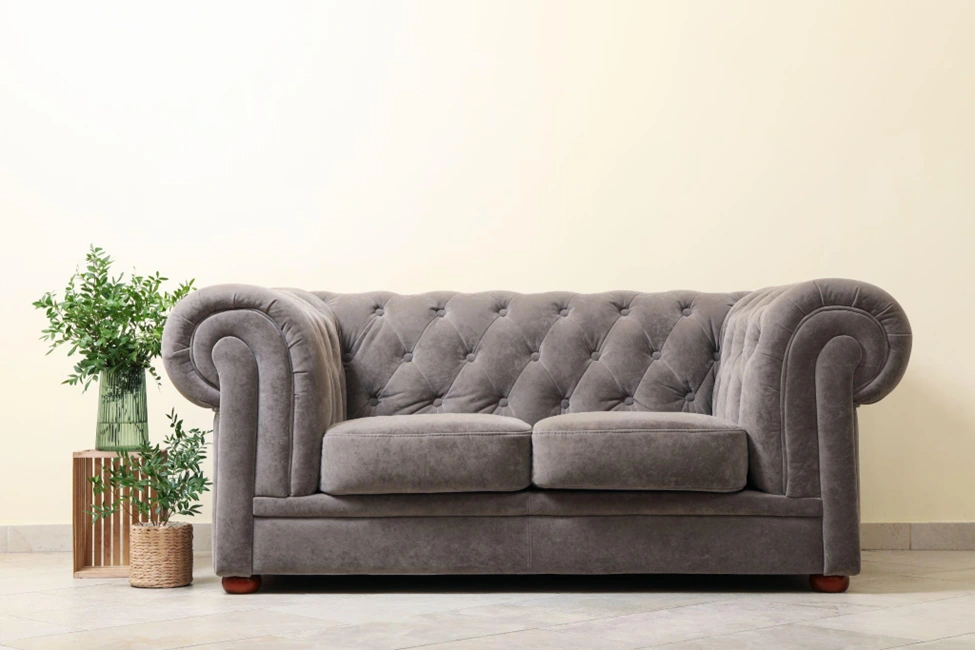
If you’ve ever cleaned your sofa- whether professionally, with a wet vacuum, a steam cleaner, or just DIY shampooing- and noticed it suddenly looks loose, distorted, wavy, or tired, you’re not imagining it. Certain upholstery fabrics genuinely lose their shape after cleaning, and the reason lies deep inside the micro-structure of fibres, their memory retention ability, and how they respond to moisture, heat, mechanical agitation, and drying cycles.
In this blog, we break down why fabrics deform, which materials are most vulnerable, how cleaning techniques affect fibre behavior, and how you can prevent this from happening in the future. If your entire living space needs a deep refresh, explore our expert Full House Cleaning Service.
Understanding Fibre Memory: The Science Behind Shape Retention
Every fabric has a kind of “muscle memory”, technically called fibre memory retention. This refers to the ability of fibres to return to their original structure after mechanical stress or moisture exposure.
✔ What Actually Determines Fibre Memory
- Polymer Structure
- Polyester and nylon have strong molecular chains that “snap back” after cleaning.
- Cotton, linen, and viscose have weaker hydrogen-bond networks- so once stretched, they often stay stretched.
- Weave Density & Orientation
- Tighter weaves resist deformation.
- Looser weaves (slub cotton, linen blends) shift easily when wet.
- Moisture Absorption Level
- Hydrophilic fibres (cotton, linen) swell up to 20-25%.
- Hydrophobic fibres (polyester, acrylic) swell only 1-2%.
The more swelling → the more distortion → the worse the shape retention post-cleaning.
- Heat Sensitivity
- Velvets and memory-fabrics are extremely reactive to heat.
- Steam can permanently alter pile direction and warp the base cloth.
For hard surfaces that require specialised care, our professional Marble Polishing Service restores shine without structural damage.
✔ Why Cleaning Disrupts Fibre Memory
Once fibres absorb water, they undergo relaxation, meaning:
- tension is released,
- weave structures loosen,
- fibres slide out of alignment,
- elasticity temporarily drops.
When drying occurs unevenly, these fibres can “freeze” into the wrong shape, causing:
- sagging,
- wrinkles,
- looseness,
- rippling,
- fabric distortion.
This is why the problem is visible only after cleaning, not before.
What Actually Causes Sofa Deformation During Cleaning

Let’s break down the exact cleaning-related triggers:
1. Over-Wetting
Excess water increases fibre swelling dramatically. Hydrophilic fabrics become temporarily elastic, allowing the upholstery to sag under its own weight.
2. High Heat (Steam, Hot Water Extraction)
Steam can soften polymer chains in synthetic fibres and relax natural fibres too much. This can lead to:
- shrinkage,
- pile distortion,
- warping,
- fabric “bubbling.”
Velvet is the biggest victim, steam permanently crushes pile. If moisture sensitivity is a concern in your home, our advanced Waterproofing Service helps prevent long-term dampness and fabric deterioration.
3. Alkaline Cleaning Agents
High-pH detergents break down natural fibres’ hydrogen bonds and weaken structural cohesion.
Result → fabric stretches unevenly.
4. Aggressive Mechanical Agitation
Hard brushing loosens the weave and displaces warp/weft positioning.
5. Slow Drying
When different zones dry at different speeds, the fibres set in uneven tension, creating ripples or loose areas.
6. Incorrect Cushion or Foam Handling
When covers are cleaned separately from inserts, but the foam has already deformed with age, the fabric fits poorly after re-installation.
Fabric Categories Most at Risk (and Why)
Different fabrics deform for different reasons. Here’s a practical but technical breakdown:
1. Cotton & Cotton Blends
- Absorbs water heavily → high swelling.
- Weak elasticity → once stretched, rarely recovers.
- Common result → loose, sagging covers; ripples after drying.
2. Linen
- Very high stiffness in dry form, but collapses when wet.
- Weave tends to shift with water + agitation.
- Often creates permanent shape distortion post-cleaning.
3. Viscose / Rayon
- Loses up to 70% strength when wet.
- Distorts easily and can tear if agitated.
- Often becomes misshapen or “baggy.”
For homeowners upgrading wet areas, our precision-built Shower Enclosure Solutions ensure durability and long-lasting performance.
4. Velvet (Cotton, Polyester, or Nylon)
- Steam crushes fibres.
- Pile direction permanently shifts.
- Water spots create shading and structural collapse.
5. Microfiber / Polyester
- Strong fibre memory but sensitive to heat.
- High-temperature steam can warp surfaces.
- Over-wetting can cause “water rings” but less shape deformation.
6. Memory Fabrics (as per your referenced blog)
- Engineered to retain shape only when dry.
- Moisture + heat disrupts programmed shape settings.
- Incorrect cleaning resets or weakens memory behaviour.
How to Clean Sofa Without Causing Fibre Distortion

✔ For Homeowners (DIY-Safe Techniques)
- Avoid steam on cotton, linen, velvet, rayon.
- Use low-moisture encapsulation cleaners.
- Always vacuum thoroughly before using any liquid cleaning.
- Test on a hidden area; watch for fabric relaxation.
- Keep the drying airflow strong and uniform (fans, AC).
- Never leave cushions in wet covers, they stretch the fabric.
✔ For Professional Cleaners
- Check fabric codes (W, S, W-S, X) and weave type.
- Measure moisture content during cleaning (ideal <12%).
- Use pH-neutral cleaners for natural fibres.
- Use low-heat (40-50°C) steam on heat-sensitive materials.
- Apply controlled water extraction to avoid soak-through.
- Pre-condition with surfactants to avoid aggressive agitation.
- Dry with high CFM air movers to maintain fibre position.
If you’re dealing with fabric damage due to pests, our targeted Bed Bug Control Service protects upholstery without chemical overexposure.
✔ Technique Cheat-Sheet
Fabric | Safe Method | Avoid |
Cotton | Low-moisture cleaning | Steam, soaking |
Linen | Solvent-based cleaning | Brushing, hot water |
Velvet | Dry foam / solvent | Steam |
Polyester | Warm water extraction | High-heat steam |
Rayon | Minimal moisture | Agitation, wet cleaning |
Final Word
Upholstery losing its shape after cleaning isn’t random – it’s the result of fibre memory, moisture behavior, heat exposure, and how the fabric reacts under mechanical stress. Once you understand these forces, you can clean smarter, protect the structural integrity of your sofa, and avoid unnecessary deformation. At Clean Fanatics, we work with these principles every day to ensure fabrics are cleaned safely, restored correctly, and handled with the respect their material science demands. If you care for your upholstery with the same awareness, your furniture will retain its shape, strength, and comfort for years.
FAQs
Because fibres swell, stretch, and relax when wet, and if they dry in that state, the new shape becomes permanent.
Yes- especially on velvet, rayon, memory fabrics, and linen-based materials.
Sometimes- heat-setting, reupholstering, or professional restretching can help, depending on fibre type.
Polyester, nylon, and microfiber- due to high tensile strength and excellent fibre memory.
Low-moisture encapsulation + rapid drying. It respects fibre memory while still removing soil.