 Skip to content
How to Polish Old Wood Without Changing Its Colour
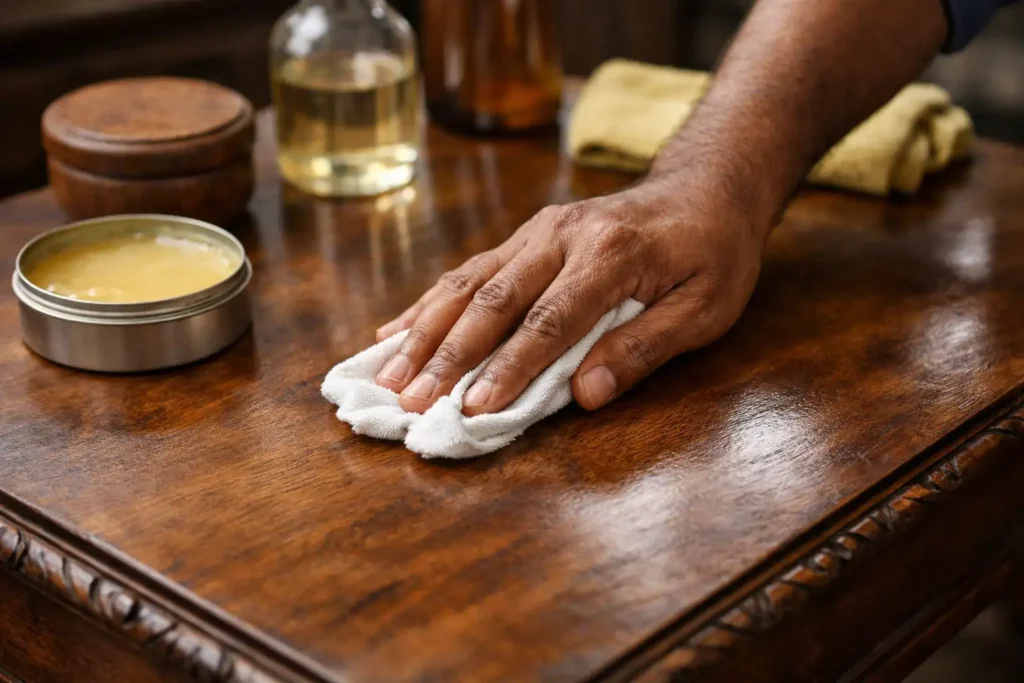
In short: You can polish old wood furniture without changing its colour by cleaning it gently, avoiding tinted polishes or heavy oils, and using clear wax or colour-neutral polish. This restores shine while preserving the wood’s natural tone.
Old wooden furniture often has character that modern pieces simply cannot replicate. The challenge comes when it starts looking dull, scratched, or dry. Many people want to restore the shine without altering the natural colour of the wood.
The good news is that polishing old wood without changing its colour is possible. With the right products, gentle methods, and a bit of patience, you can revive wood furniture while keeping its original tone intact. This guide explains how to do it safely and effectively.
Why Old Wood Changes Colour During Polishing
Before polishing wood furniture, it helps to understand why colour changes happen in the first place.
Many polishes and restoration products contain oils, stains, or pigments that penetrate the wood. These ingredients can darken the surface or change the tone of the finish. Products marketed as “restorers” often include colour enhancers designed to cover scratches, but they can permanently alter the appearance of the wood.
Another reason is over-sanding. Sanding removes the existing finish and exposes fresh wood underneath, which may appear lighter or darker than the original surface.
To polish old wood furniture without changing its colour, the goal is simple – clean the surface, revive the existing finish, and add protection without introducing pigments or heavy oils.
Preparing Old Wood Furniture Before Polishing
Preparation is one of the most important steps when restoring wood without altering its colour.
Start by removing dust and dirt. Use a microfiber cloth or soft brush to wipe down the furniture. If the piece has accumulated grease or residue, lightly clean it with a mixture of mild soap and warm water. Wring the cloth well so the wood does not get soaked.
Once cleaned, dry the surface immediately with a soft cloth.
Next, inspect the wood carefully. Look for:
- Light scratches
- Dull patches
- Wax buildup
- Loose joints or hardware
If there is old wax buildup, remove it using a gentle wax remover or mineral spirits applied lightly with a cloth. This step helps new polish spread evenly and prevents uneven shine.
Avoid sanding unless the damage is severe. Sanding changes the surface and may affect the original colour.
How to Polish Old Wood Without Changing Its Colour
Now comes the main step. The safest method is to use a clear furniture polish or natural wax that enhances shine without adding pigment.
Follow these steps:
Step 1 – Choose a colour-neutral polish
Look for clear beeswax polish or a transparent furniture wax. Avoid tinted polishes or products labelled as colour restorers.
Step 2 – Apply a small amount
Use a soft cotton cloth and apply a small amount of polish in circular motions. Start with a hidden area to test the result.
Step 3 – Work in sections
Polish small sections of the furniture at a time. This helps control how much product goes onto the surface.
Step 4 – Let it absorb briefly
Allow the polish to sit for a few minutes so the existing finish absorbs the protective layer.
Step 5 – Buff the surface
Use a clean cloth to buff the wood gently. Buffing brings out the natural shine of the wood without affecting its colour.
This method works well for tables, cabinets, chairs, and antique furniture where preserving the original tone is important.
Common Mistakes That Change Wood Colour
Many DIY furniture restoration attempts fail because of a few common mistakes.
Using coloured polish
Tinted polishes contain pigments that darken wood. These products are designed to hide scratches, not preserve the original colour.
Applying too much oil
Heavy oils like linseed oil or tung oil can deepen the tone of wood significantly.
Skipping cleaning
Applying polish over dirt or grease creates uneven colour patches.
Over-polishing
Using too much product repeatedly can create buildup that dulls the finish rather than enhancing it.
Aggressive sanding
Sanding removes the existing finish layer. Once that layer is gone, the wood may look completely different.
Taking a gentle approach helps protect the character and natural appearance of older wood furniture.
When Professional Wood Polishing Is Better
Sometimes furniture needs more than simple polishing. Deep scratches, faded finishes, or water damage may require professional treatment.
Professional polishing services use specialised tools and finishing techniques to revive wood while preserving its original appearance. Experts can also identify the type of wood and finish before restoring it.
This is especially important for antique furniture, heirloom pieces, and high-value wood surfaces where maintaining the original colour matters.
If the furniture has structural damage or severe finish deterioration, professional polishing may prevent permanent colour changes.
Final Word
Polishing old wood without changing its colour is about preserving what already exists rather than replacing it. Gentle cleaning, colour-neutral polish, and careful buffing can restore shine while keeping the natural tone intact.
When done correctly, even older furniture can regain its warmth and elegance without losing the character that makes it unique.
FAQs
Use a clear wax or colour-neutral furniture polish. Apply a small amount and buff gently with a soft cloth to restore shine without altering the wood tone.
Yes. Some polishes contain pigments or oils that darken the surface. Always choose transparent or colour-neutral products if you want to preserve the original shade.
No. Sanding is usually not needed unless the finish is severely damaged. Polishing focuses on reviving the existing finish rather than removing it.
Clear beeswax polish is commonly recommended because it protects the surface while maintaining the natural colour of the wood.
Most furniture only needs polishing every few months. Regular dusting and occasional waxing are enough to maintain the finish.