 Skip to content
Why Your Wall Paint Looks Different at Night - And How Lighting Changes Everything
In short:
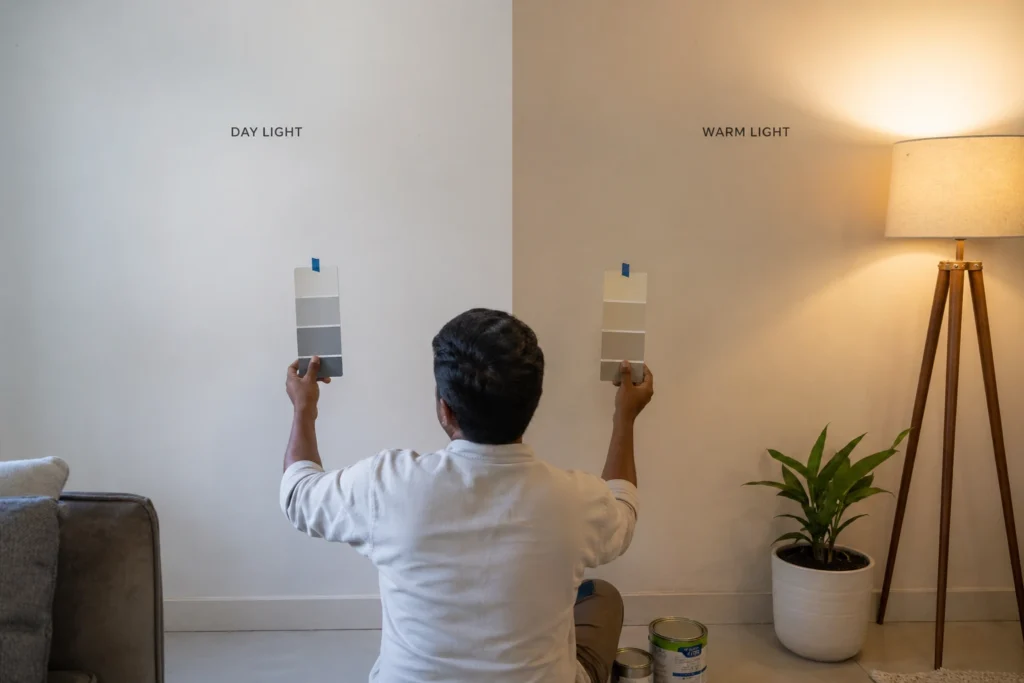
Your wall paint doesn’t actually change – the lighting does. Natural light shifts throughout the day, while artificial lighting like warm or cool bulbs can make colors appear more yellow, dull, or intense. That’s why a shade can look perfect in the morning and completely different at night. The best way to avoid surprises is to test paint directly on your walls and observe it in different lighting conditions before making a final decision.
You finally pick the perfect paint shade. It looks amazing in the store. Even better on the sample. But once it’s on your walls, something feels… off.
In the morning, it looks soft and perfect. By evening, it suddenly looks darker, duller, or even like a completely different color.
No, the paint didn’t change. The lighting did.
How Lighting Affects Wall Paint Color
Wall paint doesn’t have a fixed appearance. It changes based on how light interacts with it and how your eyes perceive that reflection.
Different types of light – natural sunlight, warm bulbs, cool LEDs – all affect how color shows up on your walls.
Here’s what’s happening in simple terms:
- Light hits the wall and reflects back to your eyes
- Different light sources have different color temperatures
- Your brain interprets these reflections differently depending on the lighting
That’s why the same beige can look creamy in the morning and slightly yellow at night. Or why a grey wall suddenly starts looking bluish in certain lighting.
Natural Light vs Artificial Light – What’s the Difference?
Natural Light
Natural sunlight gives you the most accurate version of a paint color. But even that changes throughout the day.
- Morning light – softer, slightly warm
- Afternoon light – bright and neutral
- Evening light – warmer, more golden
Room direction also matters:
- North-facing rooms – cooler, muted tones
- South-facing rooms – brighter and warmer tones
- East-facing rooms – warm mornings, cooler later
- West-facing rooms – neutral mornings, warm evenings
Artificial Light
Artificial lighting can significantly alter how your paint looks.
- Warm light (yellow tone) – makes colors look warmer and sometimes more yellow
- Cool light (white/blue tone) – makes colors look sharper, sometimes colder
This is why white walls can look slightly yellow under warm bulbs or stark and bluish under cool LEDs.
Why Your Paint Looks Different at Night
This is one of the most common concerns people have.
At night, your home relies completely on artificial lighting. And most homes use warm lighting.
This leads to:
- Colors appearing deeper or darker
- Whites turning slightly yellow or cream
- Cool tones like grey or blue looking muted or dull
If your paint looked perfect during the day but off at night, it is almost always due to lighting temperature, not the paint itself.
How to Choose the Right Paint Color for Your Lighting
This is where most people go wrong. They choose paint first and think about lighting later.
Instead, do this:
- Test paint swatches on your walls – not just on paper
- Observe them at different times of the day – morning, afternoon, and night
- Check under your actual home lighting – not showroom lighting
- Decide your lighting before finalizing paint – especially for new homes
Some quick guidelines:
- Low light rooms – go for lighter, warmer shades
- Bright rooms – you can experiment with deeper or cooler tones
- Warm lighting setups – avoid overly yellow-based paints
- Cool lighting setups – avoid colors that may feel too cold
Professionals always evaluate lighting conditions before recommending paint. It’s one of the biggest factors in getting the final look right.
Final Word
If your wall color looks different at different times of the day, that’s completely normal.
Paint is not just about the shade you pick. It’s about how that shade interacts with light in your home.
Understanding this one factor can save you from costly repainting and disappointment.
So before you commit to a color, take a step back and ask – how will this look in my lighting?
FAQs
Because artificial lighting, especially warm light, changes how colors appear, often making them look warmer or darker.
Yes. Natural light changes throughout the day, which can make paint look slightly different in the morning, afternoon, and evening.
Neutral white lighting is best if you want the most accurate representation of your paint color.
Apply swatches directly on your wall and observe them under different lighting conditions during the day and night.
Warm lighting can give white paint a yellow or creamy appearance.