 Skip to content
Bathroom Waterproofing Done Right: Slope, Drains, and Behind-the-Tiles Steps
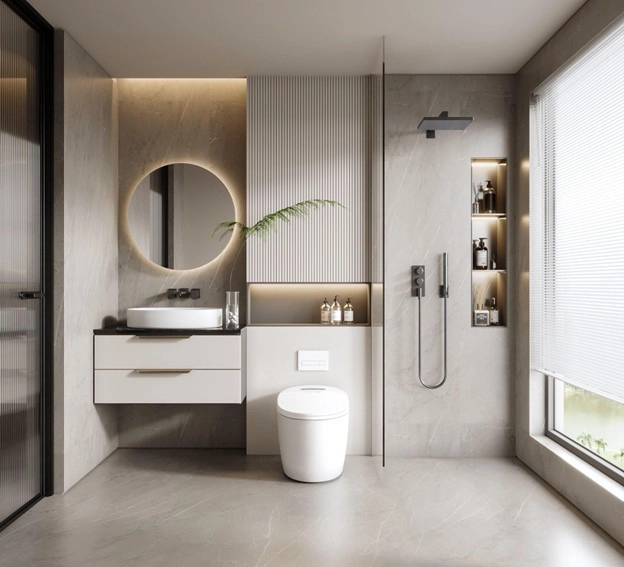
Bathroom waterproofing might sound like a one-time task – apply a waterproof coat, let it dry, and tile over it, right? Not quite. Even the most expensive waterproofing can fail if the slope is off, drains are misplaced, or the waterproof layer behind the tiles isn’t done correctly.
In this guide, we’ll break down what really goes into a “done right” bathroom waterproofing job – from how slope and drainage design prevent seepage to what’s happening behind those beautiful tiles.
Why Bathroom Waterproofing Isn’t Just About a Coat of Sealant
Let’s start with a truth that most homeowners realize too late – waterproofing isn’t a one-layer job. It’s a system that involves slope, drainage, sealants, membranes, and finishing materials working together.
When this system fails, you see classic signs like:
- Damp patches on the ceiling below your bathroom
- Peeling paint outside bathroom walls
- A musty, damp smell near corners
- White powdery deposits (efflorescence) on floor edges
These aren’t just cosmetic issues, they point to water trapped beneath tiles or in concrete layers, a clear sign of failed waterproofing.
👉 Pro tip: If you’re renovating, waterproof before tiling, not after leaks start. Fixing waterproofing post-tiles is much more expensive.
If you’re already noticing peeling paint or damp patches outside your bathroom, our Interior Painting Services in Bangalore can help restore your walls with moisture-resistant finishes that prevent future damage.
The Slope: Your Bathroom’s Silent Hero
The slope is the unsung foundation of every successful waterproofing job.
It decides whether water flows neatly toward the drain or starts pooling near the corners.
Here’s what good slope looks like:
- Ideally, the floor should slope 1:100 to 1:80 (10-12 mm per meter) toward the drain.
- The slope should be consistent – no low spots where water stagnates.
- Use a cement mortar layer or self-leveling compound to create the correct gradient before applying waterproof coating.
Why slope mistakes cause waterproofing failure:
If the slope is too flat, water stagnates and seeps into grout joints and beneath tiles.
If it’s too steep, you’ll get uneven tile placement and water rushing past the drain – both result in eventual leakage.
👉 Pro tip: Test your slope before tiling by pouring a bucket of water – it should drain out in under 3 minutes without leaving puddles.
If your bathroom floor already has pooling issues or uneven levels, check out our Bathroom Renovation Services in Bangalore. We specialize in slope correction and waterproofing upgrades.
Drains: Where Most Waterproofing Starts (and Ends) Failing
Drains are the exit points for every drop of water – and yet, they’re the most overlooked.
A well-placed and properly sealed drain ensures the waterproof layer doesn’t break where it matters most.
Key checks during waterproofing:
- Use PVC or stainless steel drains with a flange to bond waterproofing membranes seamlessly.
- Apply sealant or waterproof grout around drain perimeters – not just tile adhesive.
- Maintain a tight connection between drain outlet and plumbing pipe to prevent leakage under the floor.
Common mistakes:
- Using low-cost drains without proper flange design.
- Cutting the membrane too close to the drain (it causes micro-gaps).
- Not applying an extra waterproof coat around drain corners.
Want a complete upgrade? Explore Tiles and Stone Replacement Services – we ensure your new tiles align perfectly with waterproofing and drain levels.
Behind-the-Tiles Waterproofing: The Hidden Layer That Saves Your Bathroom
This is the step most homeowners never see – and often, that’s where the trouble begins.
Behind every tile, there’s a waterproof membrane that protects concrete from moisture. If that layer is skipped or poorly applied, leaks are inevitable.
Step-by-step essentials:
- Surface prep: Clean the wall/floor and fill cracks with polymer-modified mortar.
- Apply a waterproof primer for better adhesion.
- Use a liquid-applied waterproofing membrane (two coats minimum, perpendicular strokes).
- Seal joints and wall-floor corners with waterproof tape or mesh.
- Allow 24-48 hours of curing before tile-laying.
- Use epoxy grout or waterproof adhesive for tiling.
Behind-the-tiles waterproofing keeps:
✔ Water from seeping into concrete
✔ Grout lines from turning black
✔ Paint in adjacent rooms from bubbling
If your walls already show dampness or bubbling paint, consider our Waterproofing Services to restore aesthetics after waterproofing.
The Final Word
Waterproofing isn’t just a finishing step – it’s what ensures your bathroom stays safe, functional, and damage-free for years. From ensuring the right slope to sealing drains and waterproofing behind tiles, every layer matters. A few days of careful preparation today can save you months of repair tomorrow. And remember – once tiles are up, waterproofing errors are hidden but costly to fix.
At Clean Fanatics, we understand every layer of the process – from inspection and slope correction to waterproofing and finishing – ensuring your bathroom stays leak-free and beautiful for the long run.
FAQs
Typically, a slope of 1:100 to 1:80 is ideal to ensure smooth water flow without puddling.
It’s possible but limited — only surface-level waterproofing or regrouting can help. For long-term results, tiles need to be removed first.
Acrylic or cementitious waterproof coatings with polymer additives work best behind tiles.
The issue might be with slope, drain sealing, or tile grout failure — not necessarily the coating.
Inspect for damp patches or peeling every 2–3 years, especially near drains and wall corners.