
At a Glance
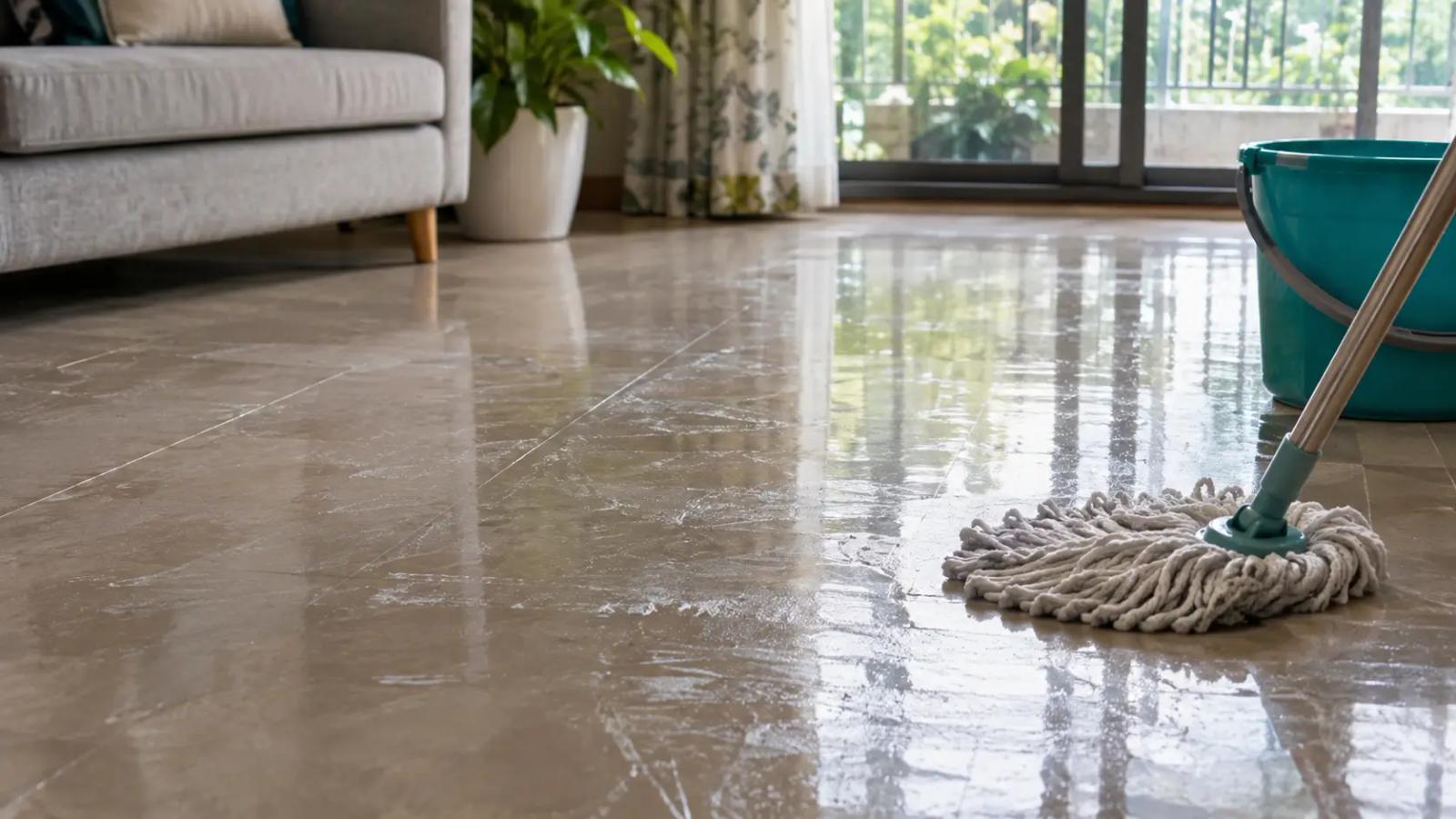
A floor is sticky after mopping because a thin film is left behind, almost always from too much floor cleaner, dirty mop water, a product that suits the floor badly or hard-water minerals. The film dries into a dull or tacky layer that traps dust, so the floor looks dirty again sooner. Using less cleaner, changing the water, rinsing and drying fixes most cases. This guide explains the causes of a floor sticky after mopping, why it shows more on some floors and how to stop it.
Few jobs are more frustrating than mopping a floor and finding it dull, streaky or tacky once it dries. Mopping more often or using a stronger cleaner usually makes it worse, because the problem is not dirt that was missed but a film that was left. The cause is almost always something in the method. For how different floors react, see this guide to cleaning different floor types.
What Makes a Floor Sticky After Mopping?
A floor is sticky after mopping because a thin film of cleaner, dirt or minerals is left on the surface, which dries tacky and holds on to dust. The usual causes are:
- Too much floor cleaner in the water
- No rinse with clean water afterwards
- Dirty mop water used across the whole floor
- A dirty mop head carrying old residue
- A cleaner that does not suit the floor type
- Hard-water minerals drying on the surface
- Slow drying in humid weather
Several of these usually work together, which is why changing only one thing does not always fix the floor.
Why Does Too Much Floor Cleaner Make Floors Sticky?
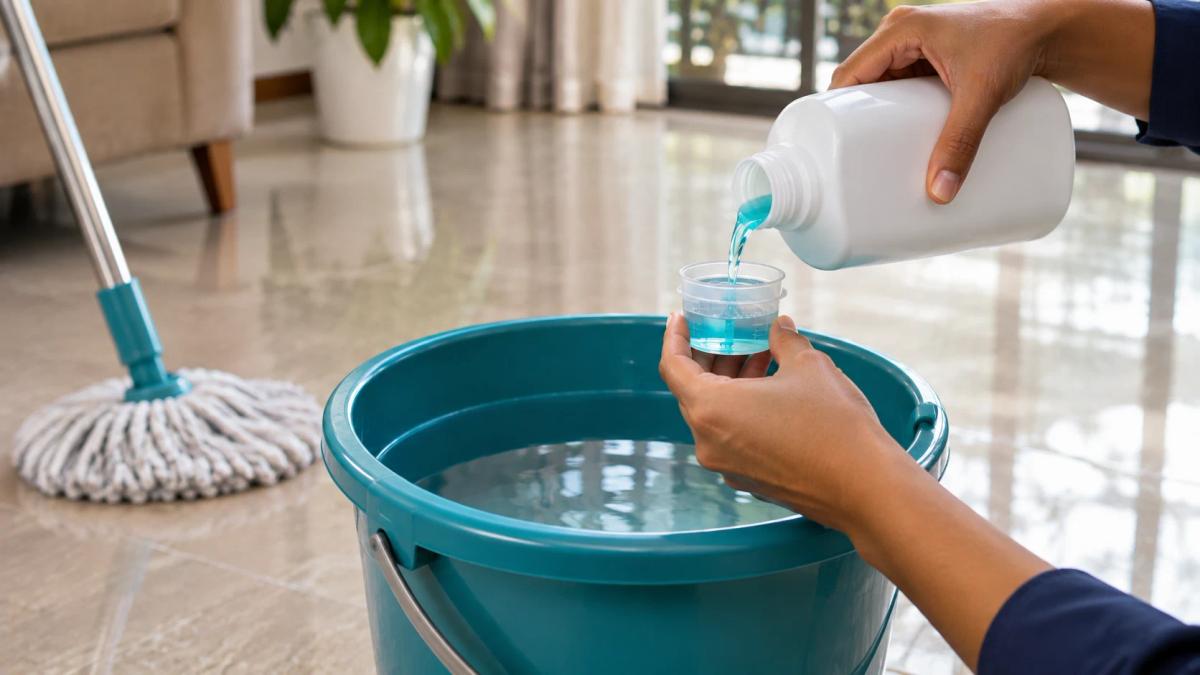
Too much floor cleaner makes floors sticky because there is not enough water to rinse it all away, so the leftover product dries into a tacky film.
More cleaner does not clean better. Every product has a recommended dilution, and going above it leaves residue that feels tacky underfoot and attracts dust almost at once. Visible suds in the bucket are a sign too much has been used. The film shows most on glossy tiles and polished floors, where it dries cloudy, and the floor then looks dirty faster than it did before mopping.
Why Does Dirty Mop Water Leave Floors Sticky or Streaky?
Dirty mop water leaves floors sticky or streaky because once the water is dirty it spreads grime instead of lifting it, and that thin layer dries on the floor.
A bucket of water turns dirty within minutes, especially in a large room. A dirty mop head makes it worse, since it carries dried detergent and old residue into every new clean. A two-bucket method helps: one bucket for the cleaning solution and one for rinsing the mop, so dirt is washed out of the mop instead of back onto the floor. Mop heads and pads should be washed after each use.
Why Do Hard Water and the Wrong Cleaner Leave Residue?
Hard water and the wrong cleaner leave residue because minerals dry on the surface and cleaners made for another floor type leave a film or damage the finish.
How Does Hard Water Affect Floors After Mopping?
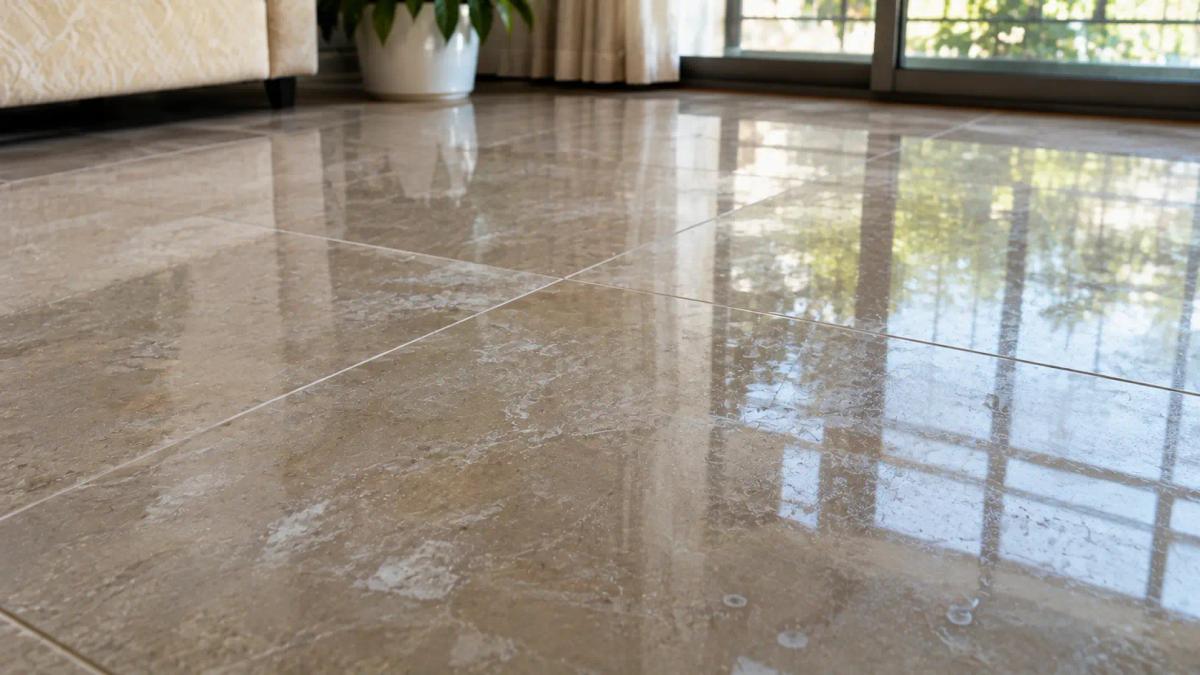
Hard water makes floors dull, spotted or sticky because calcium and magnesium minerals dry on the surface and can combine with soap to leave a film. This is common in Bengaluru, where hard water also marks glass and tiles, as covered in the guide to Bengaluru hard water and shower glass. Drying the floor with a clean cloth straight after mopping stops the minerals settling, and filtered water helps where it is available.
Why Does the Wrong Cleaner for the Floor Type Leave a Film?
The wrong cleaner for a floor leaves residue or damages the finish, because products are made for specific surfaces, such as stone cleaners for marble and different formulas for wood and laminate. Wax polishes do not belong on vitrified tile, and acids etch marble. Mixing several cleaners in one bucket also leaves a film and can be unsafe, as explained in which cleaning products cannot be mixed.
Which Floors Show Residue the Most?
Glossy vitrified tiles and polished marble show residue the most, because a film dries cloudy on a reflective surface, while grout lines and textured tiles trap it.
On a glossy floor, even a thin film catches the light and reads as streaks or haze. Grout is porous and absorbs residue quickly, which is why tile floors can look streaky even when the tiles themselves are clean. Wood and laminate behave differently, because the main risk there is too much water, so they need a barely damp mop and a product made for them.
Why Do Floors Look Dull After Mopping?
Floors look dull after mopping when a film of dried product covers the surface, when grit has scratched the finish, or when acid has etched the stone.
- A film of dried cleaner or minerals, which looks like a hazy layer rather than dirt
- Fine scratches made by loose grit dragged under the mop
- Etching on marble and other stone from acidic cleaners, which is permanent and cannot be mopped away
- A worn finish or sealer that no longer reflects light
The first two are preventable by sweeping first and using less product. Etched marble needs polishing rather than more cleaning, and Clean Fanatics offers marble polishing for floors that have lost their shine.
How to Mop a Floor Without Leaving It Sticky
A floor is mopped without leaving it sticky by controlling three things: how much cleaner goes in, how clean the water stays and how quickly the floor dries.
How to Mop a Floor Without Residue in 7 Steps
A floor is mopped without leaving residue by removing grit first, using little cleaner and clean water, and drying the floor promptly.
- Sweep or vacuum first. Loose grit scratches the finish and turns to mud under a wet mop.
- Measure the floor cleaner. Follow the label dilution and use less if in doubt, since suds mean too much.
- Use clean water and change it often. A two-bucket method keeps dirt out of the cleaning solution.
- Mop in sections with a well-wrung mop. A damp mop leaves less to dry on the floor.
- Rinse where a film shows. Go over glossy tile or stone once with clean water to lift leftover product.
- Dry glossy floors and stone. A clean cloth or good airflow stops minerals and streaks forming, and humid weather makes this step more important.
- Wash the mop after every use. Old residue on a mop head goes straight back onto the next floor.
How to Fix a Floor That Is Already Sticky
A sticky floor is fixed by removing the film with clean water or a properly diluted pH-neutral cleaner, then drying the floor fully.
Mopping again with plain clean water, changing it often and using a fresh mop head removes most of the film. Adding a stronger cleaner usually adds more residue, so it is best avoided. On marble and other natural stone, only pH-neutral products should be used, and a dull patch that does not wash off may be etching. When floors need a full reset, Clean Fanatics offers deep cleaning, and the house cleaning schedule shows where mopping fits into a regular routine.
How to Keep Floors Clean Without Residue
Floors stay clean without residue when less product is used, the water stays clean and the floor is dried, so mopping can be less frequent but better. Sweeping or vacuuming more often reduces how much mopping is needed. A floor that feels smooth and looks evenly shiny after drying has been mopped correctly, while streaks, cloudiness or tackiness mean a film is still there.
Want floors cleaned as part of a full home deep clean?
Frequently asked questions
Why are my floors still sticky after mopping?
Floors stay sticky after mopping because of residue, most often from too much cleaner, dirty mop water or not rinsing. The film dries tacky and attracts dust. Using less product and cleaner water fixes most cases.
How much floor cleaner should be used?
The dilution on the label is the guide, and using less is safer than using more. Visible suds mean too much has been used. More product does not clean better, it leaves residue.
Why does a floor look dull after mopping?
A dull floor usually has a film of dried cleaner or minerals, fine scratches from grit, or, on marble, etching from acidic products. Sweeping first and using less product prevent the first two.
Does hard water leave marks on floors after mopping?
Hard water can leave streaks, spots or a rough film as the minerals dry on the surface. Drying the floor with a clean cloth right after mopping helps, especially on glossy tiles and stone.
Can vinegar fix a sticky floor?
A mild vinegar solution can dissolve mineral residue on some tiles, but too much, or no rinse, can leave its own film, and it must never be used on marble or natural stone. A rinse with plain clean water is the safer first fix.
How can floors be mopped without streaks?
Sweep first, use little cleaner, change the mop water often, wring the mop well and dry glossy floors with a clean cloth. A two-bucket method, one for the solution and one for rinsing, helps.
How do I fix a sticky floor?
A sticky floor is fixed by removing the film with clean water or a properly diluted pH-neutral cleaner, then drying the floor fully. Mopping again with plain clean water, changing it often and using a fresh mop head removes most of the film. Adding a stronger cleaner usually adds more residue, so it is best avoided. On marble and other natural stone, only pH-neutral products should be used.
Which floors show residue the most?
Glossy vitrified tiles and polished marble show residue the most, because a film dries cloudy on a reflective surface, while grout lines and textured tiles trap it.