
Marble looks beautiful when it is clean, polished and free of cloudy marks. Hard water, unfortunately, has other plans. If you have noticed white spots, chalky rings or a dull haze around your bathroom fixtures, countertops or shower walls, mineral-rich water could be the culprit.
Hard water contains dissolved minerals such as calcium and magnesium. When the water evaporates, those minerals are left behind on the stone. Over time, that harmless-looking residue can become stubborn buildup. The bigger problem? Using the wrong marble cleaning chemicals to remove it can damage the marble itself.
What Does Hard Water Do to Marble and Natural Stone?
When hard water sits on marble or natural stone and dries, its dissolved minerals can leave behind white or grey deposits, rings and a cloudy appearance. This is especially common around taps, sinks, shower walls and other areas that frequently come into contact with water.
So, does hard water damage marble? The deposit itself is usually a surface problem. However, repeated buildup can make the stone look dull and hide its natural colour and veining. Marble is also particularly sensitive to acids because its main mineral, calcite, reacts with acidic substances.
This is why a simple hard water stain can turn into a much bigger issue if treated incorrectly.
How Can You Tell If Marble Has Hard Water Stains?
Not every white mark on marble is a hard water stain. Knowing the difference can save you from using a cleaner that does more harm than good.
Hard water deposits usually appear as:
- White or grey haze
- Chalky or crusty patches
- Rings around taps or containers
- Slightly raised or gritty mineral buildup
Etching, on the other hand, tends to look like a dull, flat patch where the polished finish has lost its shine. It can happen when acidic products come into contact with marble. Soap scum and efflorescence can also create white marks, but they have different causes.
If your marble looks dull even after cleaning, don’t automatically reach for a stronger product. First, identify what you are actually dealing with.
How Do You Remove Hard Water Stains From Marble Safely?
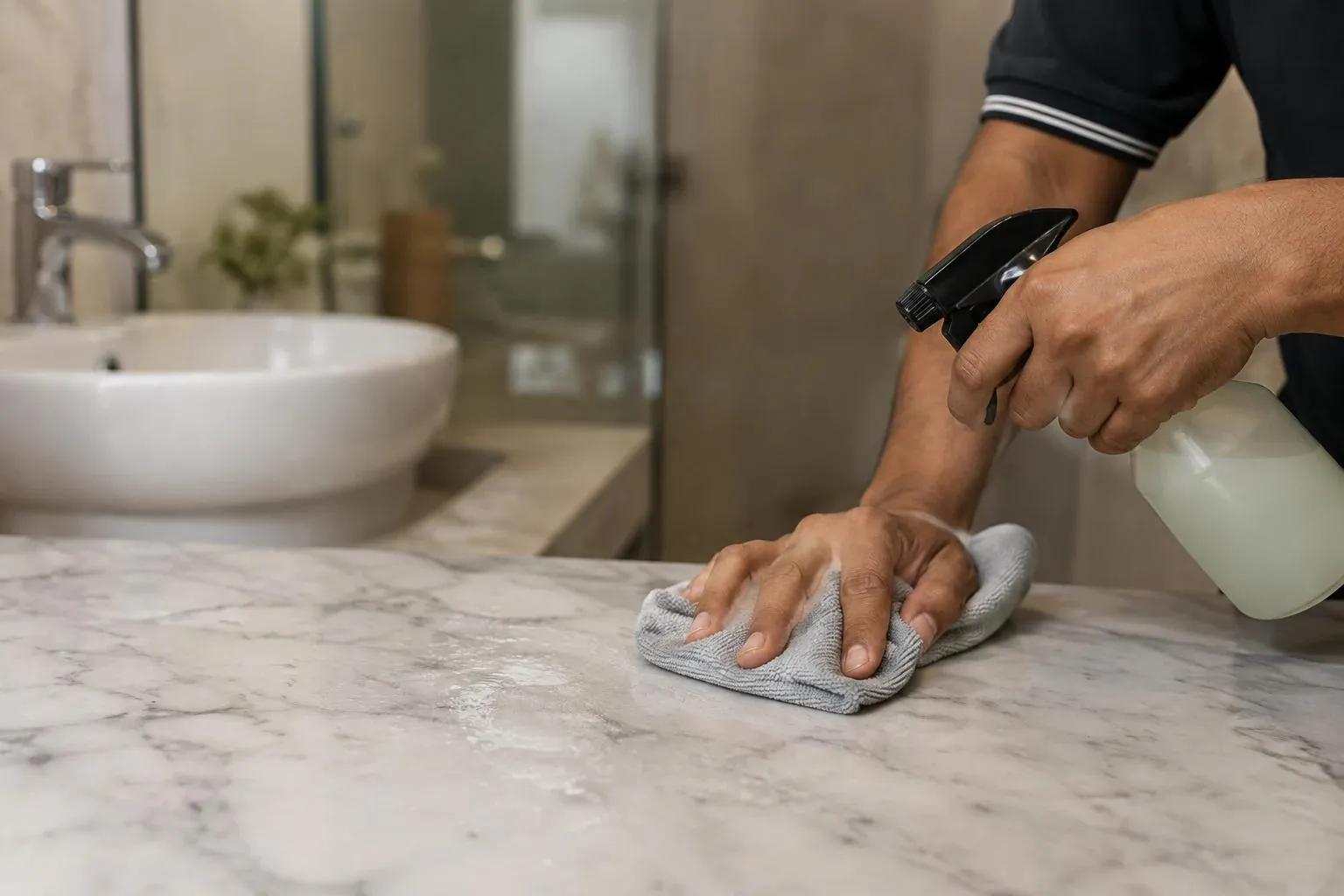
For light, recent deposits, start with a pH-neutral cleaner made specifically for natural stone and a soft microfibre cloth. Gentle mechanical cleaning is usually safer than aggressive scrubbing.
For more stubborn buildup, use a stone-safe hard water deposit remover according to its instructions. Avoid abrasive pads, steel wool and harsh scrubbing, which can scratch the surface. Long-standing or heavily bonded deposits are better handled by a professional stone-care specialist.
Most importantly, do not use vinegar, lemon juice or acidic limescale removers on marble. These products can dissolve the calcite in marble and create etching. Unlike a surface deposit, etching is actual damage to the polished stone and may require professional re-polishing.
Prevention is much easier. Wipe standing water as soon as possible, use a squeegee on shower surfaces and dry marble after cleaning. Sealing can improve stain resistance, but it does not stop mineral deposits from forming on the surface.
Final Word
Hard water is a common reason marble and natural stone start looking cloudy, spotted or less polished than they once did. The good news is that many deposits can be managed with the right cleaning approach.
The rule to remember is simple: don’t fight hard water stains with harsher chemicals. Use stone-safe products, dry surfaces regularly and get professional marble polishing when deposits are severe or the stone has already been etched.
With consistent care, your marble can stay clean, polished and beautiful for much longer.
Restore the Shine of Your Marble Floors
Hard water deposits and everyday wear can affect the appearance of marble surfaces. Clean Fanatics offers professional marble polishing to help restore the stone's natural shine and finish.
Explore Marble Polishing Services!
Frequently asked questions
Does hard water permanently damage marble?
Hard water deposits are generally surface buildup, but improper cleaning can cause etching, which is actual damage to the polished stone and may require professional re-polishing.
Can I use vinegar to remove hard water stains from marble?
No. Vinegar is acidic and can etch marble. Use a pH-neutral, stone-safe cleaner instead.
Why does my marble have white spots?
They may be hard water deposits, soap scum, efflorescence or etching. The appearance and texture can help identify the cause.
How can I prevent hard water stains on marble?
Don’t let water sit on the surface. Wipe standing water as soon as possible, use a squeegee on shower surfaces and dry marble after cleaning.
Can professional cleaning remove hard water stains from marble?
Yes. Professional stone cleaning is particularly useful for heavy, long-standing deposits or marble that has been dulled or etched by incorrect cleaning products.
What does hard water do to marble?
When hard water sits on marble or natural stone and dries, its dissolved minerals, such as calcium and magnesium, can leave white or grey deposits, rings and a cloudy appearance. This is especially common around taps, sinks, shower walls and other areas that frequently come into contact with water.
How do you remove hard water stains from marble safely?
For light, recent deposits, start with a pH-neutral cleaner made specifically for natural stone and a soft microfibre cloth. For more stubborn buildup, use a stone-safe hard water deposit remover according to its instructions. Avoid abrasive pads, steel wool and harsh scrubbing, and leave long-standing or heavily bonded deposits to a professional stone-care specialist.
What is the difference between hard water stains and etching on marble?
Hard water deposits usually appear as a white or grey haze, chalky or crusty patches, rings around taps or containers, or slightly raised, gritty buildup. Etching looks like a dull, flat patch where the polished finish has lost its shine, and it can happen when acidic products come into contact with marble.
Does sealing marble stop hard water stains?
Sealing can improve stain resistance, but it does not stop mineral deposits from forming on the surface. Wiping standing water as soon as possible, using a squeegee on shower surfaces and drying marble after cleaning make prevention much easier.