
At a Glance
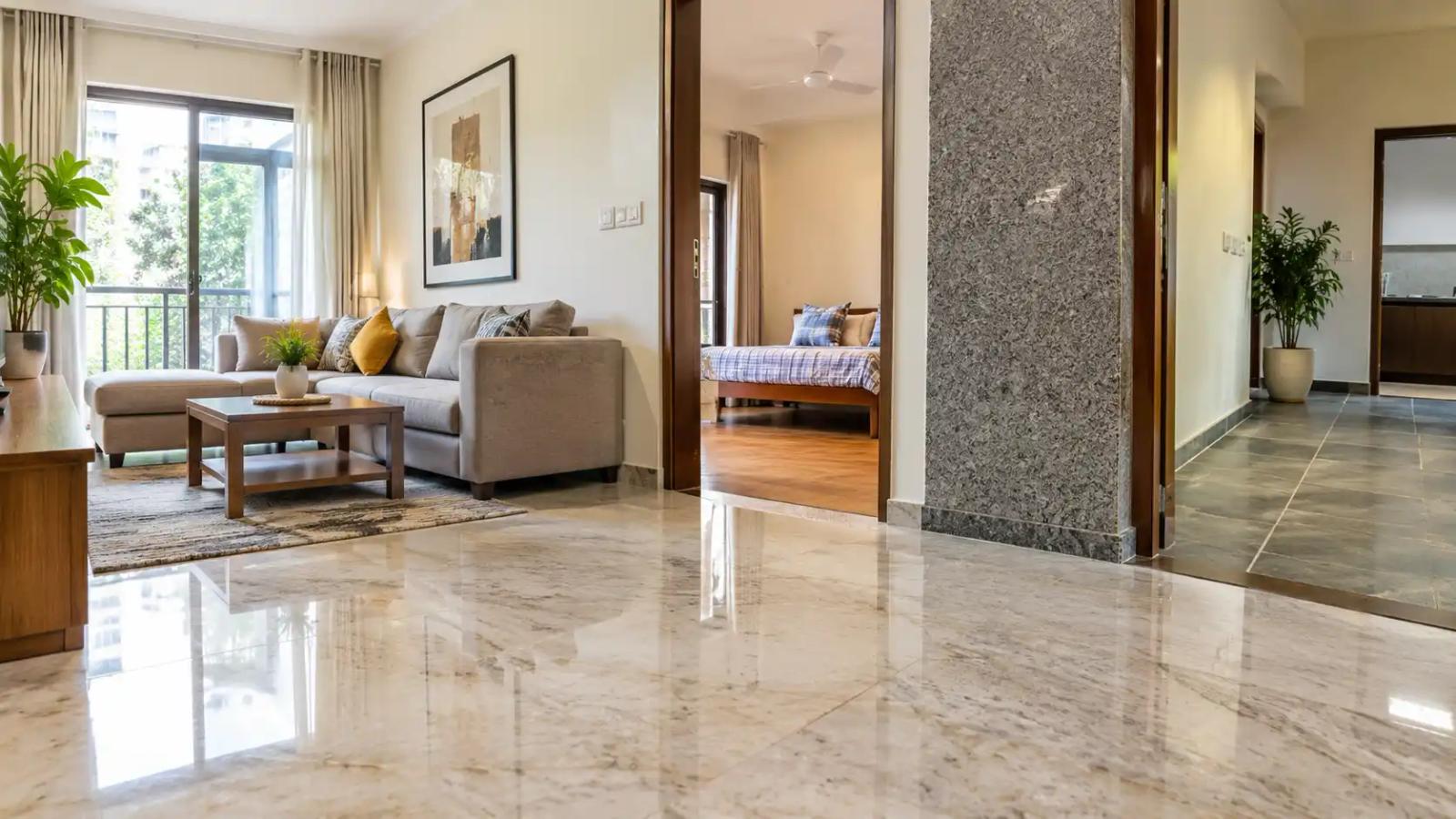
How to clean different floor types depends on what the floor is made of. Vitrified and ceramic tiles are forgiving, marble, mosaic and Kota stone are damaged by acids and too much water, granite sits in between, and wood and laminate are harmed by moisture. The safe default for floor cleaning is a pH-neutral cleaner, a damp mop, no steam on stone and prompt drying. This guide explains the common Indian floor types, how to identify them, how each is cleaned and what each should never touch.
Most damaged floors in Indian homes are not worn out. They were cleaned the wrong way, because one cleaner and one mop are used on floors that behave very differently. A product that is harmless on vitrified tile can leave dull patches on marble within seconds. This guide takes each common floor type in turn. For the weekly mopping routine itself, see this house cleaning schedule.
What Are the Common Floor Types in Indian Homes?
The common floor types in Indian homes are vitrified and ceramic tiles, marble, granite, Kota stone, mosaic or terrazzo, and wood or laminate, and each behaves differently when it meets water and cleaners. A short guide to each:
- Vitrified tiles (including GVT and PGVT): dense, polished tiles that dominate newer homes
- Ceramic tiles: common in older kitchens and bathrooms, with a colour layer on the surface only
- Marble: a polished natural stone that is easily etched by acids
- Granite: a dense natural stone that is tougher than marble
- Kota stone: a fine-grained green or blue-grey stone found in older and rural homes
- Mosaic and terrazzo: stone or marble chips set in cement
- Wood and laminate: fibre-based floors that swell when wet
How to Tell Which Floor Type a Home Has
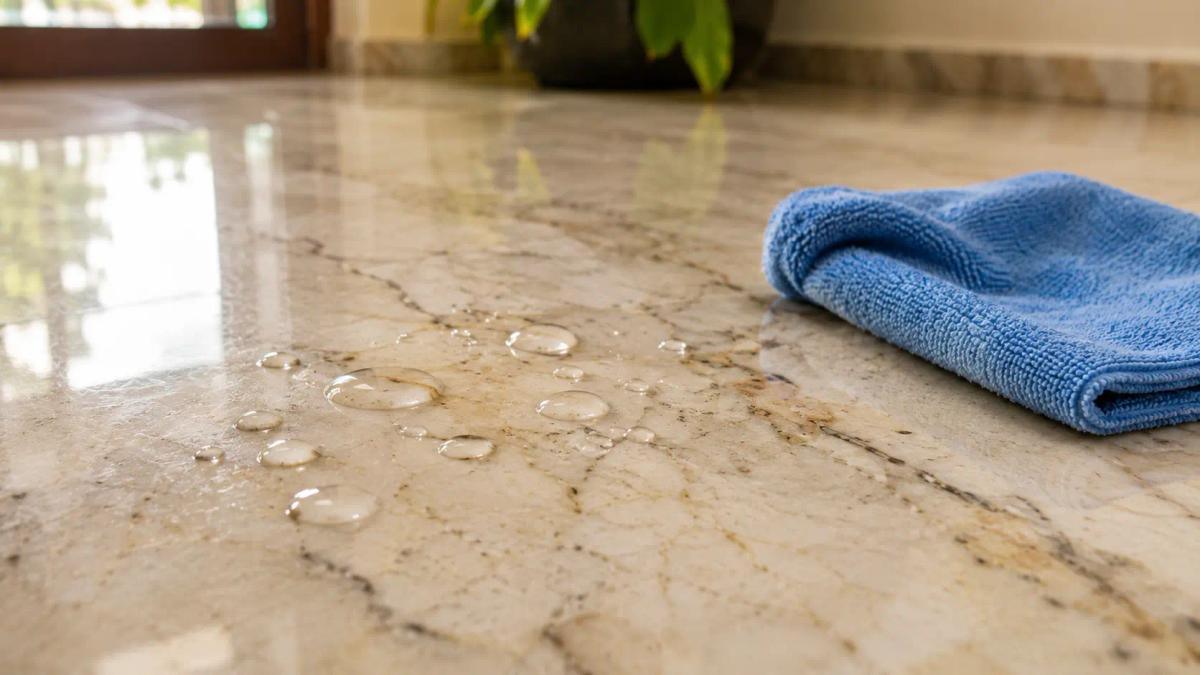
A floor type can usually be identified by sound, a chipped edge and a simple water test, which matters because the right cleaner depends on it.
- Tap the tile and check any chipped edge: ceramic sounds dull and shows a different colour beneath the surface, while vitrified is dense with colour through the tile
- Look for chips or flecks of stone set in cement, which point to mosaic or terrazzo
- Put a few drops of water on natural stone: if they bead up the stone is sealed, and if they soak in and darken it, the stone is porous or the sealer has worn off
Pro Tip: When the floor type is uncertain, treat it as marble until proven otherwise. A gentle pH-neutral cleaner and a barely damp mop are safe on almost every hard floor.
Which Floors Are Forgiving and Which Are Delicate?
Vitrified and ceramic tiles are the most forgiving floors, granite is moderately tough, and marble, Kota stone, mosaic and wood are the most delicate.
The table below shows how sensitive each floor is, what it should never meet and the safe routine.
| Floor Type | Sensitivity | Never Use | Safe Routine |
|---|---|---|---|
| Vitrified (GVT, PGVT) | Low | Wax polish, abrasive pads, acids that eat the cement grout | Mild pH-neutral cleaner and a damp mop |
| Ceramic | Low | Harsh abrasives | Mild detergent and a damp mop |
| Granite | Low to medium | Strong acids, abrasive scrubbers | pH-neutral cleaner, resealed when water soaks in |
| Marble | High | Vinegar, lemon, toilet cleaners, scouring powder, standing water | pH-neutral stone cleaner, spills blotted at once |
| Kota stone | Medium to high | Acids, harsh detergents, steam, soaking | Plain water or a mild pH-neutral cleaner |
| Mosaic and terrazzo | High | Acids, hard scrubbing, steam | Treat like marble |
| Treat like marble | High, for moisture | Wet mopping and steam | A barely damp mop and a mild cleaner |
How Is Each Floor Type Cleaned?
Each floor type is cleaned with a mild, pH-neutral product and as little water as possible, with extra care for anything made of natural stone or wood.
How to Clean Vitrified and Ceramic Tile Floors
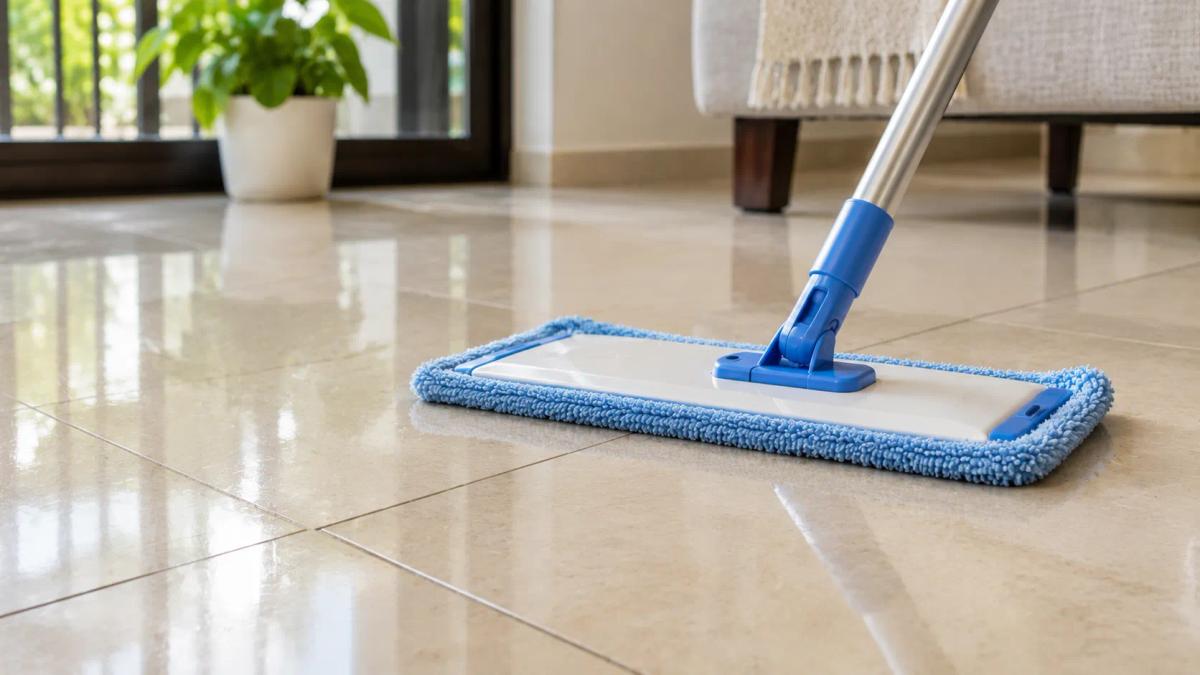
Vitrified and ceramic tile floors are cleaned with a mild pH-neutral floor cleaner and a damp mop, and they tolerate more than any other floor type. Wax polishes and abrasive pads should be avoided, because they dull the finish or scratch it. Acids should be avoided as well, since they wear down the cement grout between the tiles. Grout lines also hold residue, so over-wetting shows up there first.
How to Clean Marble and Mosaic Floors
Marble and mosaic floors are cleaned with a pH-neutral stone cleaner and a barely damp mop, because acid etches them within seconds and standing water seeps into the stone. Vinegar, lemon, toilet cleaners and scouring powder should never touch them, and spills should be blotted at once. Mosaic and terrazzo are marble chips in cement, so they follow the same rules. The most common errors are listed in these marble cleaning mistakes. Clean Fanatics offers marble polishing for floors that have already lost their shine, and the guide to signs marble needs restoration or just a polish explains the difference.
How to Clean Granite Floors
Granite floors are cleaned with a mild pH-neutral cleaner. They are tougher than marble but should still be kept away from strong acids and abrasive scrubbers. Granite is dense and heat resistant, though lighter varieties can be more porous. If water soaks in and darkens the stone, it needs resealing before it faces regular wet mopping.
How to Clean Kota Stone Floors
Kota stone floors are cleaned with plain water or a mild pH-neutral cleaner, because acids and harsh detergents dry the stone out, and steam and soaking damage it. Kota is porous enough to absorb liquid, so it may need periodic sealing. A soft broom and a damp mop keep its matte colour intact.
How to Clean Wood and Laminate Floors
Wood and laminate floors are cleaned with a barely damp mop and a mild cleaner, because water that seeps between boards or planks causes swelling and warping. The mop should be wrung out well and the floor dried straight afterwards. Steam is unsuitable for both.
Can Steam Mops Be Used on All Floors?
Steam mops suit sealed tile and sealed granite, but they are risky on marble, unsuitable for Kota stone and mosaic, and harmful to wood and laminate.
Steam delivers heat and water together, which can etch unsealed marble, roughen porous stone and lift the layers of wood floors. Sealed marble may tolerate low heat at best. The manufacturer's guidance for both the floor and the mop should be checked before steam is used on anything other than tile.
How to Keep Any Floor in Good Condition
Floors stay in good condition when grit is removed first, products are used sparingly and moisture is controlled, and the steps below put that into practice.
How to Care for Any Floor in 6 Steps
Any floor stays in good condition when grit is removed first, the right product is used sparingly and the floor is dried promptly.
- Sweep or vacuum first. Loose grit acts like sandpaper under a mop and scratches the finish.
- Use a pH-neutral floor cleaner. Follow the label dilution, since more product does not clean better.
- Mop damp, not wet. Wring the mop well, and change the water when it turns dirty.
- Dry stone and wood promptly. Standing water seeps into stone and swells wood.
- Blot spills at once. Acidic spills such as lemon juice and soft drinks etch marble quickly.
- Reseal or polish stone when needed. Sealers wear off and polish dulls with use, so both need periodic attention.
Daily sweeping and weekly mopping fit into a regular routine. Clean Fanatics offers a maid service in select Bangalore areas for daily upkeep, and a deep-cleaning service for the periodic reset.
How to Choose the Right Cleaning Method for a Floor
Choosing the right method starts with identifying the floor: tiles can take regular mopping with a mild cleaner, granite needs care, and marble, mosaic, Kota stone and wood need pH-neutral products and very little water. A floor that looks dull or feels tacky after mopping is usually a sign of the wrong amount or type of product, as covered in why a floor is sticky after mopping.
Not sure what a floor is made of or how it should be cleaned?
Frequently asked questions
How do I know what type of floor I have?
Tap the tile and check any chipped edge: ceramic sounds dull and shows a different colour beneath, while vitrified is dense throughout. A few drops of water on natural stone show whether it is sealed, since they bead up on sealed stone and soak in on porous stone.
Can vinegar be used to clean floors?
Vinegar should never be used on marble, granite, Kota stone or mosaic, because the acid etches stone. On tile it can work when diluted, but repeated use can wear cement grout, so a pH-neutral cleaner is the safer routine.
Which cleaner is safe for marble floors?
For marble floor cleaning, a pH-neutral stone cleaner, or a few drops of mild dish soap in water, is safe. Acids, scouring powder and toilet cleaners should never be used. Spills should be blotted at once.
Can a steam mop be used on marble floors?
Steam is risky on marble, because heat and water together can etch unsealed stone. Sealed marble may tolerate low heat at best. Kota stone, mosaic and wood should never be steamed.
How often should floors be mopped?
Mopping is usually a weekly job, with sweeping or vacuuming more often. Busy areas such as the kitchen and entrance need more attention, and stone and wood floors need the barest minimum of water each time.
Which floor type is easiest to maintain?
Vitrified and ceramic tiles are the easiest, because they tolerate regular mopping with mild cleaners. Marble, Kota stone, mosaic and wood need the most care.
Can steam mops be used on all floors?
No. Steam mops suit sealed tile and sealed granite, but they are risky on marble, unsuitable for Kota stone and mosaic, and harmful to wood and laminate. The manufacturer’s guidance for both the floor and the mop should be checked before steam is used on anything other than tile.
How should vitrified and ceramic tile floors be cleaned?
Vitrified and ceramic tile floors are cleaned with a mild pH-neutral cleaner and a damp mop. Wax polishes and abrasive pads should be avoided, and acids should be avoided as well, since they wear down the cement grout between the tiles.
How do I clean Kota stone floors?
Kota stone floors are cleaned with plain water or a mild pH-neutral cleaner, because acids and harsh detergents dry the stone out, and steam and soaking damage it. A soft broom and a damp mop keep its matte colour intact.
How should wood and laminate floors be cleaned?
Wood and laminate floors are cleaned with a barely damp mop and a mild cleaner, because water that seeps between boards or planks causes swelling and warping. The mop should be wrung out well and the floor dried straight afterwards. Steam is unsuitable for both.