
Minimum Curing Time for Plastering: How Many Days Curing Is Required?
At a Glance
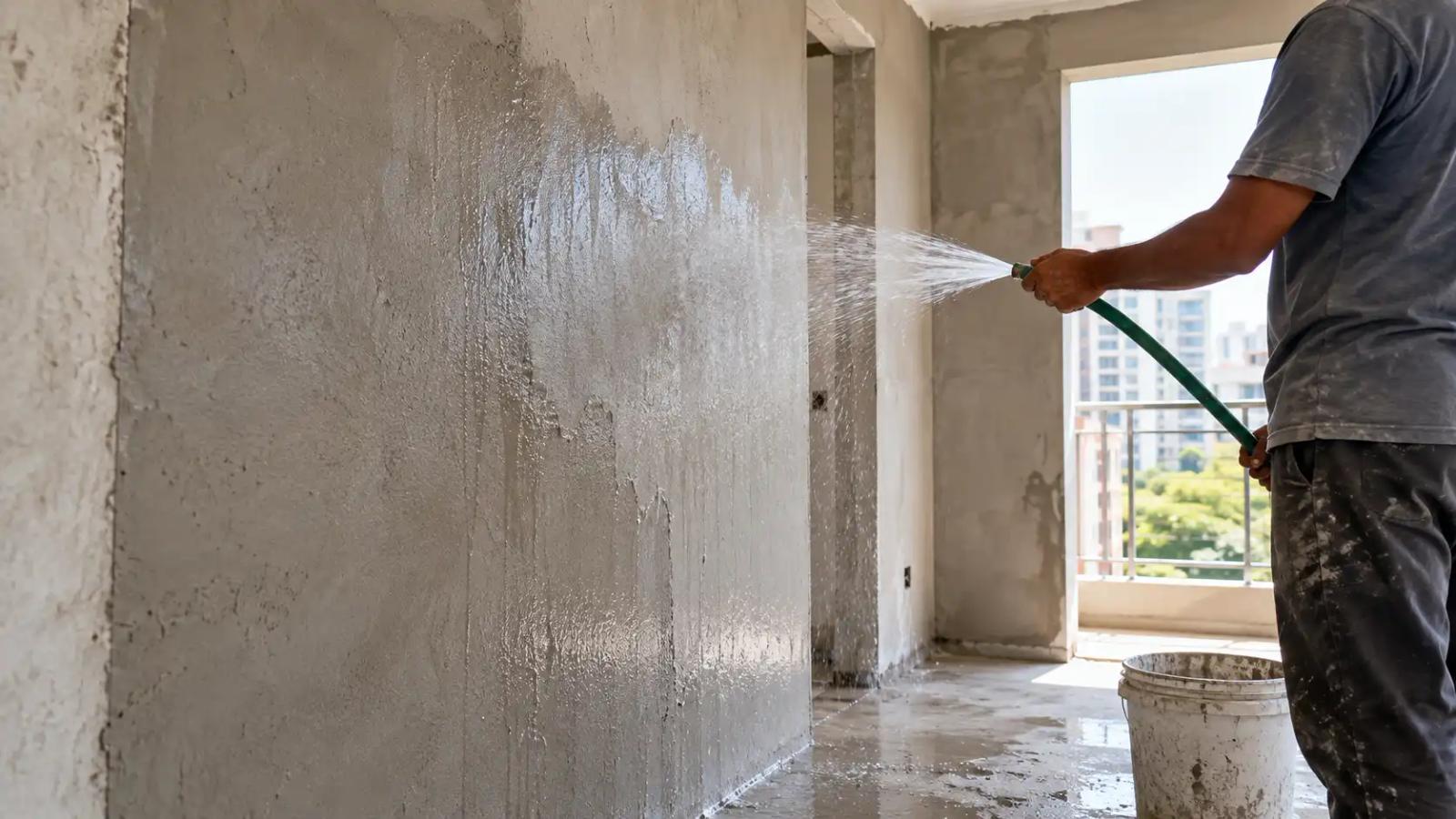
Cement plaster needs a minimum of 7 days of curing. External walls and thick plaster need 10–14 days. Start watering about 24 hours after plastering and keep the wall moist 2–4 times a day, more often in summer.
Plastering is one of the most important steps in construction and renovation. It forms the base for smooth, strong and long-lasting walls. But the strength of plaster does not depend only on the material used. It depends heavily on how long and how well it is cured. Rushing this step leads to cracks, flaking paint and costly repairs later.
So, how many days of curing does plaster really need? How many days should you water a wall after plastering? And how does the season, whether a hot summer, the rainy season or winter, change the curing period? This guide answers each question step by step.
Plaster Curing Days at a Glance
Use this table as a quick guide to the curing period for plastering. Always lean towards the longer number in hot, dry or windy weather. What Does “Curing” in Plastering Actually Mean?
| Plaster type / wall | Typical thickness | Curing period | Watering per day |
|---|---|---|---|
| Internal wall, cement plaster | 12 mm | Minimum 7 days | 2–3 times |
| Ceiling, cement plaster | 6–10 mm | Minimum 7 days | 2–3 times |
| External wall, cement plaster | 15–20 mm | 10–14 days | 3–4 times |
| Two-coat plaster (first coat) | 10–12 mm | About 2 days, then left to dry before the second coat | 2–3 times |
| Two-coat plaster (final coat) | 6–8 mm | Minimum 7 days | 2–3 times |
| Lime plaster | 12–20 mm | Up to 15 days | Keep damp, avoid soaking |
| Gypsum plaster | 8–13 mm | No water curing; dries in 2–3 days | None |
What Does Curing of Plaster Actually Mean?
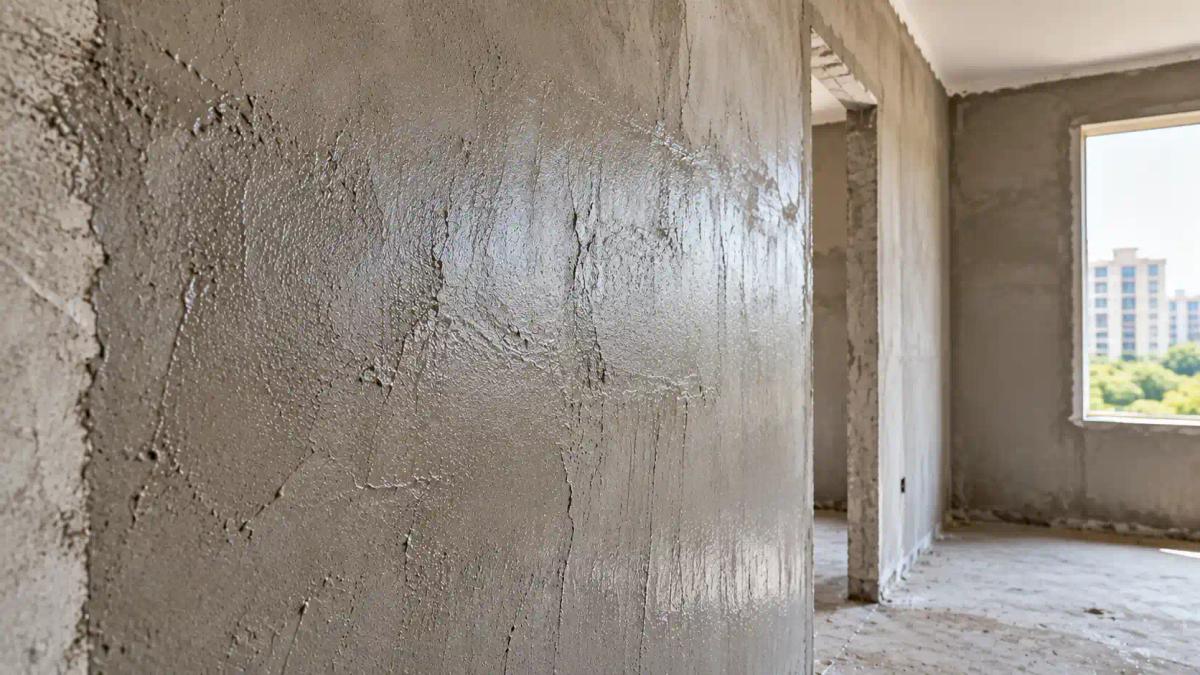
Curing of plaster means keeping the fresh plaster moist for a set number of days so the cement can react with water and gain strength. This reaction is called hydration. It continues only while there is enough water inside the plaster.
Many homeowners confuse setting, drying and curing. They sound similar, but they are three different stages:
- Setting: The plaster stiffens and stops being workable. This happens within hours of application.
- Drying: The surface loses moisture and feels hard to the touch, usually within 1–2 days.
- Curing: The deeper process where the plaster keeps hydrating, gains strength and bonds firmly with the wall. This needs at least 7 days of moisture.
Think of it like baking a cake. The top may look golden brown while the inside is still raw. If you paint or tile over plaster that has only dried and not cured, the finish will later peel, crack or bubble.
Proper curing gives plaster its strength, moisture resistance and long-term durability. Without it, even the best plaster mix will not hold up.
How Many Days Curing Is Required for Plastering?
The minimum curing time for cement plastering is 7 days. For external walls, thick plaster or hot weather, the curing period should be extended to 10–14 days.
Why 7 days and not 3 or 4? Cement gains strength fastest in its first week. By day 7, cement plaster reaches roughly two-thirds of its final strength. If the wall dries out before that, hydration stops early and the plaster stays weak for good. Water added later cannot fully undo this.
Curing for only 2–3 days is one of the most common shortcuts on site. It saves a few days but often shows up months later as hairline cracks, hollow-sounding patches and peeling paint.
Minimum Curing Time for Plastering in India
In India, cement plastering follows IS 1661, the Indian Standard code of practice for cement and cement-lime plaster finishes. Along with CPWD specifications for building work, it calls for keeping cement plaster moist for at least 7 days.
Indian conditions make this minimum especially important:
- High temperatures: In many parts of India, summer temperatures cross 35°C, which dries plaster very fast.
- Long monsoon season: Heavy rain can wash fresh plaster and slow down drying before painting.
- Cement plaster is the standard: Most Indian homes use brick or block walls with cement plaster, which depends fully on water curing.
So while 7 days is the minimum curing time for plastering in India, 10–14 days is the safer target for external walls and summer work.
Wall Plaster Curing Time: Internal vs External Walls
The plaster curing time for walls depends mainly on where the wall is and how thick the plaster is.
- Internal walls (about 12 mm plaster): Minimum 7 days of curing. They are protected from sun and wind, so they lose moisture more slowly.
- External walls (15–20 mm plaster): 10–14 days of curing. They face direct sun, wind and rain, and the thicker coat needs longer to cure through.
- Ceilings (6–10 mm plaster): Minimum 7 days. Ceilings are harder to water, so they are often under-cured. Spray them gently and check that the whole surface stays damp.
- Bathrooms and kitchens: Minimum 7 days, with extra care. These walls face water later, so a weak plaster bond here leads to dampness and seepage. Proper waterproofing matters too, which our bathroom renovation services take care of.
Curing for Two-Coat Plaster
External walls and uneven surfaces often get two coats. The first coat is kept damp for about 2 days and then allowed to dry, so the second coat bonds well. The finishing coat is then cured for at least 7 days, or 10–14 days on external walls. Each coat needs its own curing; one round of curing at the end is not enough.
Skipping the curing period is one of the most common causes of hairline cracks, weak plaster and flaking paint. A wall may look fine at first, but hidden weaknesses show up within months. Our home inspection services help catch such issues early.
How Much Time Does Cement Plaster Take to Set?
Cement plaster starts to set within about 30 minutes to 2 hours and is usually firm within 10–24 hours. Setting is only the first stage, though. The plaster keeps gaining strength for weeks after it looks hard.
Here is a simple timeline of what happens after plastering
| Time after plastering | Stage | What it means for you |
|---|---|---|
| 30 minutes – 2 hours | Initial set | Plaster stiffens; finishing work must be done before this |
| 10 – 24 hours | Final set | Surface is firm; start curing after about 24 hours |
| 1 – 2 days | Surface dry | Looks dry, but is still weak inside |
| 7 days | Minimum curing complete | Roughly two-thirds of final strength; stop curing internal walls |
| 10 – 14 days | Extended curing complete | Recommended for external walls and hot weather |
| About 28 days | Near-full strength | Plaster has dried out and is ready for painting |
The exact timing depends on the cement, the mix, the weather and the plaster thickness. In hot weather, plaster sets faster; in cold or humid weather, it sets more slowly.
After Plastering, How Many Days Is Water Required?
After plastering, water is required for a minimum of 7 days on internal walls and 10–14 days on external walls. The goal is simple: the wall should never fully dry out during the curing period.
Day-by-Day Watering Schedule
| Day | What to do |
|---|---|
| Day 0 (plastering day) | No water. Let the plaster set. Shade it from strong sun and protect it from rain. |
| Day 1 | Start curing about 24 hours after plastering, once the surface is firm. Spray gently. |
| Days 2–7 | Water 2–3 times a day on internal walls, 3–4 times a day on external walls. |
| Days 8–14 | Continue watering external walls, thick plaster and anything done in summer. |
| After curing | Stop watering and let the wall dry naturally before painting. |
How to Water Plaster Correctly
- Start after about 24 hours. Watering too early can wash away or soften the top layer.
- Spray, don't splash. Use a gentle spray or a hose with a fine nozzle. A strong jet can damage fresh plaster.
- Water from top to bottom. Begin at the top of the wall so water runs down and wets the full surface.
- Water before the wall turns pale. Plaster turns lighter in colour as it dries. Re-wet it before that happens.
- Best times: Early morning and evening are ideal. In summer, add a midday round as well.
- Don't forget corners and edges. They dry faster than the middle of the wall.
Can plaster be over-cured? Keeping plaster moist for longer than the minimum does not harm it. The only real risk is heavy water on very fresh plaster in the first few hours. When in doubt, cure a little longer.
Plaster Curing in Summer, Rainy Season and Winter
Weather changes how fast plaster loses water, so the curing routine must change with the season.
| Season | Curing period | Watering per day | Main risk |
|---|---|---|---|
| Summer | 10–14 days | 3–4 times or more | Plaster dries too fast and cracks |
| Rainy season | 7–14 days | 1–2 times on dry days | Fresh plaster gets washed; walls stay damp too long |
| Winter | 10–14 days | 1–2 times | Slow strength gain; plaster stays wet longer |
Curing Plaster in Summer
Summer is the toughest season for plaster. Heat, dry air and wind pull water out of the wall within hours, which causes shrinkage cracks.
- Plaster in the cooler part of the day. Morning or late afternoon work avoids the peak heat.
- Shade fresh plaster. Cover external walls with tarpaulin or green net so direct sun does not hit them.
- Water more often. 3–4 times a day, or whenever the wall starts turning pale.
- Use wet hessian (jute) bags. Hang them over the wall and keep them wet. They hold moisture much longer than sprinkling alone.
- Extend the curing period to 10–14 days, even for internal walls facing the sun.
- Dampen the wall before plastering. A dry brick wall sucks water out of fresh plaster and weakens the bond.
Curing Plaster in the Rainy Season
Rain does not mean curing takes care of itself. Rainfall is uneven: some parts of a wall get soaked while others, under sunshades or balconies, stay dry.
- Avoid external plastering during heavy rain. Rain can wash out cement from plaster that has not set.
- Cover fresh plaster for the first 24 hours. Use polythene sheets or tarpaulin to protect it from direct rain.
- Keep curing on dry days. On days without rain, water the wall as usual. Check areas under sunshades, balconies and window projections.
- Don't over-water. If the wall is already wet from rain, skip that round of curing.
- Wait longer before painting. Walls dry slowly in humid weather. Painting a damp wall leads to blistering, peeling and efflorescence.
Curing Plaster in Winter
In cold weather, cement reacts more slowly, so plaster takes longer to set and gain strength.
- Extend the curing period to 10–14 days, as strength builds more slowly.
- Water less often. 1–2 times a day is usually enough, as evaporation is low.
- Water during the warmer part of the day. Avoid wetting walls late in the evening when temperatures drop.
- Avoid plastering in very cold conditions. Below about 5°C, cement hydration nearly stops.
Curing Plaster in Bangalore Weather
Bangalore has a mild climate, but it still has distinct seasons that affect curing. The hot, dry months of March to May need summer-style curing with frequent watering. The monsoon months, from about June to November, need rain protection for fresh plaster and longer drying time before painting. The cooler months of December to February are the easiest time for plastering, though curing should still run the full 7–14 days. Watch for early signs of water seepage on newly plastered walls during the rains.
Other Factors That Affect Plaster Curing Time
Plaster Type
- Cement plaster: Needs consistent water curing for 7–14 days. Understanding the differences between gypsum and cement plaster helps you plan the right curing.
- Gypsum plaster: Sets quickly and does not need water curing. It usually dries in 2–3 days.
- Lime plaster (traditional): Sets slowly and needs longer curing, sometimes up to 15 days.
Plaster Thickness
Thicker coats take longer to cure all the way through. A 20 mm external coat needs more curing time than a 12 mm internal coat.
Wall Material
Brick and block walls absorb water from fresh plaster. If the wall is not dampened before plastering, the plaster loses water from behind as well as in front, which shortens the effective curing.
Curing Methods for Plaster Walls
| Method | How it works | Best for |
|---|---|---|
| Water sprinkling or spraying | Wall is sprayed with water several times a day | Internal walls, ceilings |
| Wet hessian (jute) bags | Wet bags hung on the wall hold moisture for hours | Summer, external walls |
| Polythene sheet covering | Sheet over the damp wall stops water escaping | Windy areas, rain protection |
| Curing compound | A liquid sprayed once that forms a film to hold moisture in | High-rise external walls where daily watering is hard |
If a curing compound is used, check with the paint manufacturer first, as some compounds need to be removed before painting.
Signs of Properly Cured Plaster (and Poorly Cured Plaster)
Properly cured plaster:
- Even colour across the wall once dry
- Hard surface that does not powder when rubbed
- Solid sound when tapped, with no hollow patches
- No cracks after drying
Poorly cured plaster:
- Hairline or map-like cracks
- Dusty or sandy surface that rubs off
- Hollow sound when tapped, showing poor bonding
- Paint that peels, bubbles or flakes within months
Common Plaster Curing Mistakes to Avoid
- Stopping curing after 2–3 days because the wall looks dry.
- Watering immediately after plastering, which can wash away the surface.
- Missing days in between. A wall that dries out fully mid-way loses strength. If a day is missed, restart watering at once and add extra days at the end.
- Curing only the easy-to-reach areas and leaving ceilings, corners and upper sections dry.
- Relying on rain alone during the monsoon.
- Painting or tiling too soon, which traps moisture and leads to peeling or damp walls.
When Can You Paint After Plastering?
Wait at least 21–28 days after plastering before painting. This gives 7–14 days for curing and enough time for the wall to dry out fully. In the rainy season or humid weather, the wall may need even longer.
Before painting, check that the wall is evenly dry with no damp patches. Once the plaster has cured and dried, the usual sequence is wall putty, primer and then paint. Our interior painting services give properly cured walls a lasting finish.
Final Word: Don't Rush the Cure
Plaster is the foundation for every paint finish, tile and decorative design that comes after it. Giving it the right curing time, a minimum of 7 days and 10–14 days for external walls or hot weather, is not optional for a durable home. Adjust the routine to the season: water more in summer, protect fresh plaster in the rainy season, and cure longer in winter.
At Clean Fanatics, we follow industry-standard plastering and curing practices so your walls look great and last for years. Whether it is new construction or renovation, our team focuses on quality, durability and long-term strength for every wall.
Give Your Walls the Right Finish
Proper plaster curing helps create a suitable foundation for painting. Once your walls have cured adequately and are ready for finishing, Clean Fanatics can help refresh your interiors with professional painting services.
Frequently asked questions
What is the minimum curing time for plastering?
The minimum curing time for plastering is 7 days for internal walls and 10–14 days for external walls, depending on plaster thickness and weather conditions.
How many days curing is required for plastering?
Cement plastering needs at least 7 days of curing. External walls, thick plaster and plaster done in summer should be cured for 10–14 days.
After plastering, how many days is water required?
Water is required for at least 7 days after plastering on internal walls and 10–14 days on external walls. Start about 24 hours after plastering and keep the wall moist throughout.
How many times a day should plaster be watered?
Usually 2–3 times a day for internal walls and 3–4 times a day for external walls. In summer, water more often; in winter or rainy weather, 1–2 times a day is usually enough.
How much time does cement plaster take to set?
Cement plaster starts setting within about 30 minutes to 2 hours and becomes firm within 10–24 hours. It continues gaining strength for about 28 days, which is why curing is needed.
Is curing and drying of plaster the same?
No. Drying means the surface feels dry to touch, while curing ensures the plaster has gained strength and durability. Curing usually takes longer than drying.
Is 3 days of curing enough for plaster?
No. Three days is not enough for cement plaster. Plaster cured for only 2–3 days often develops cracks and weak spots. Cure for at least 7 days.
Is curing required for plaster in the rainy season?
Yes. Rain wets walls unevenly, so areas under sunshades and balconies can dry out. Continue watering on dry days and protect fresh plaster from heavy rain for the first 24 hours.
Can I paint the wall immediately after plastering?
No. Wait at least 21–28 days after plastering so the plaster can cure and dry fully. Painting too early can cause peeling, bubbling and cracks.
Does gypsum plaster need curing?
Unlike cement plaster, gypsum plaster does not need water curing. It sets and dries quickly, usually within 2–3 days.
How does weather affect plaster curing time?
In hot and dry weather, plaster dries too fast, so you need frequent watering and a longer curing period. In cold or humid conditions, plaster gains strength slowly, so extend curing and allow more drying time before painting.
What happens if plaster is not cured properly?
Improper curing leads to hairline cracks, flaking, reduced strength and moisture damage. Over time, it can also increase maintenance costs.
How do I cure plaster effectively?
Start curing 24 hours after plastering, spray water 2–4 times a day depending on the weather, and keep the surface moist for at least 7 days. Use wet hessian bags in summer, and extend curing to 10–14 days for thick external walls.