
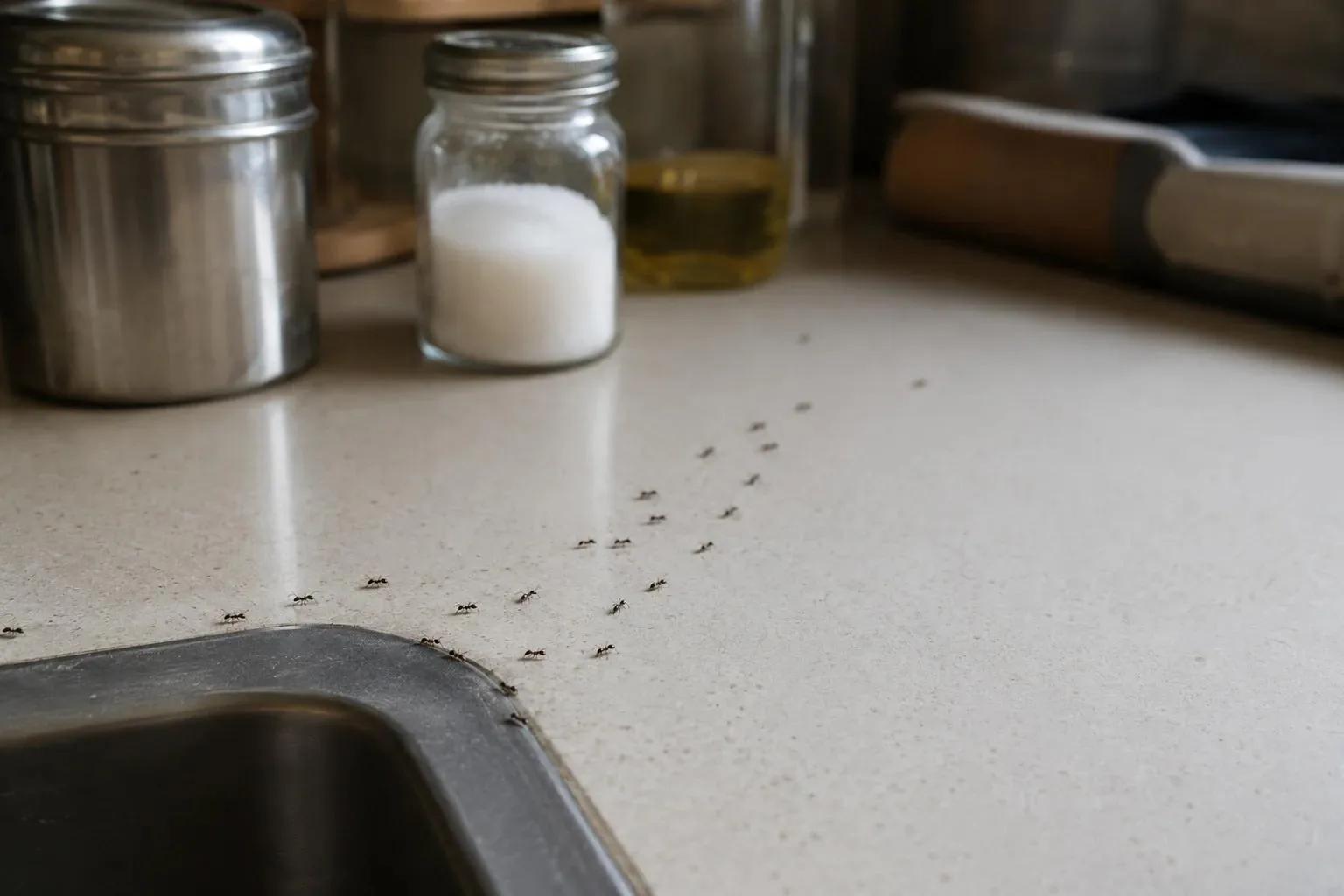
Why Are Ants Suddenly Appearing in Your Kitchen?
In short: Ants can appear even in clean kitchens because they’re attracted to tiny food crumbs, moisture, and easy entry points. Removing these attractants, sealing gaps, and maintaining regular deep cleaning can help prevent them from coming back.
You wipe down the counters every day, store your groceries properly, and make sure the sink is clean before going to bed. Yet, one morning, you notice a trail of tiny ants marching across your kitchen counter.
If you’ve been wondering, “Why are ants suddenly appearing in my kitchen?”, you’re not alone. It’s one of the most common household pest problems, and surprisingly, it doesn’t always mean your kitchen is dirty.
Ants are simply excellent at finding food, water, and shelter. Even the smallest crumb, a damp corner, or an unnoticed entry point can invite them indoors. The good news is that once you know what’s attracting them, it’s much easier to stop them from coming back.
Why Are Ants Suddenly Appearing in Your Kitchen?
Ants don’t appear without a reason. They usually enter your kitchen because they’ve found something that meets their basic needs.
Here are some of the most common reasons:
- Food crumbs and sugary spills: Tiny crumbs under appliances, sugar on the countertop, or food residue around the stove can attract ants, even if your kitchen looks spotless.
- Moisture and water sources: Leaky taps, damp sink cabinets, standing water, and wet dishcloths provide the moisture ants need to survive.
- Easy entry points: Small cracks around windows, doors, plumbing pipes, or electrical outlets can serve as entryways into your home.
- Seasonal changes: During the monsoon and warmer months, ants often move indoors in search of dry shelter and reliable food sources.
- Ant scent trails: Once one ant discovers food, it leaves behind a pheromone trail that guides the rest of the colony to the same spot. That’s why you often see ants moving in a neat line.
- Neighbouring colonies: If ants are active in nearby gardens, balconies, or neighbouring apartments, they may eventually find their way into your kitchen too.
So, if you’re asking, “Why do I have ants in my clean kitchen?”, the answer is simple. Clean homes can still provide enough food or moisture for ants to visit.
How to Get Rid of Ants in Your Kitchen
The fastest way to deal with ants is to remove whatever is attracting them while disrupting the paths they use to return.
Here’s what you can do:
- Wipe kitchen counters, dining tables, and stovetops immediately after cooking.
- Clean underneath appliances where hidden crumbs and grease often collect.
- Store sugar, flour, snacks, cereals, and pet food in airtight containers.
- Empty the kitchen bin regularly and keep it tightly covered.
- Fix leaking taps and keep sinks dry overnight.
- Seal cracks around doors, windows, and utility pipes.
- Clean away visible ant trails using a mild cleaning solution so other ants can’t easily follow the same route.
Many homeowners also try natural remedies like vinegar or lemon. While these may temporarily disturb ant trails or repel a few ants, they rarely eliminate the colony itself. If ants keep returning, there’s usually a larger nest nearby.
When Ants Keep Coming Back
If you’ve cleaned your kitchen thoroughly but the ants continue to appear every few days, the problem may be bigger than surface cleanliness.
Ant colonies often nest inside wall gaps, beneath flooring, around plumbing, or outdoors near the house. In these cases, wiping away the ants only removes the ones you can see, not the colony that’s sending them.
This is also where it’s helpful to understand the difference between deep cleaning and pest control.
A professional deep cleaning removes hidden food residue, grease, dust, and moisture from hard-to-reach areas that attract ants. Pest control, on the other hand, targets the colony itself and helps eliminate the infestation.
Using both together offers the best long-term results by removing what attracts ants while also dealing with the source of the problem.
How to Prevent Ants from Returning
Once the ants are gone, a few simple habits can help keep your kitchen less attractive to future visitors.
- Wipe food spills as soon as they happen.
- Keep countertops and floors free of crumbs.
- Store dry foods in sealed containers.
- Avoid leaving dirty dishes overnight.
- Keep sinks, drain areas, and utility spaces dry.
- Seal small gaps around doors, windows, and plumbing.
- Schedule regular deep cleaning to remove hidden grease and food buildup that daily cleaning may miss.
- Inspect your kitchen more frequently during the monsoon, when ant activity tends to increase.
Small, consistent habits are often the most effective way to prevent recurring ant problems.
Final Word
Finding ants in your kitchen doesn’t automatically mean your home is unhygienic. In most cases, they’re responding to hidden food sources, moisture, seasonal changes, or easy entry points. By understanding what attracts ants, maintaining a clean kitchen, and addressing recurring infestations early, you can keep your home far less inviting to unwanted visitors.
FAQs
Ants often become noticeable overnight after discovering a food or water source. Once one ant finds it, others quickly follow the scent trail.
Even clean kitchens can have hidden crumbs, moisture, sugary spills, or tiny entry points that attract ants.
Remove food and water sources, clean ant trails, seal entry points, and maintain regular deep cleaning. Persistent infestations may require professional pest control.
No. Vinegar can disrupt ant trails temporarily, but it usually doesn’t eliminate the colony, so ants may return.
If ants continue to return despite cleaning, or you notice large numbers of ants regularly, it’s a good idea to consider professional pest control to treat the colony at its source.