At a Glance
Sofa fabric types decide how a sofa can be cleaned. Cotton and linen shrink and watermark, velvet flattens and marks when wet, microfibre depends on its cleaning code, and leather needs gentle, low-moisture care. Every sofa tag carries a cleaning code, W, S, WS or X, that says whether water is safe. Water on the wrong fabric can leave watermarks, shrinkage or stiff patches. This guide explains the main sofa fabric types, which suit Bangalore, which can be shampooed and which should only be vacuumed.
Two sofas can look equally dirty and still need completely different cleaning, because the fabric decides what is safe. A method that revives a polyester sofa can leave rings on linen or flatten the pile on velvet. This guide explains the common sofa fabrics, how to read the cleaning code, and what each type can and cannot take. For general upkeep, see this complete guide to cleaning a sofa.
Where Is the Cleaning Code on a Sofa and What Do W, S, WS and X Mean?
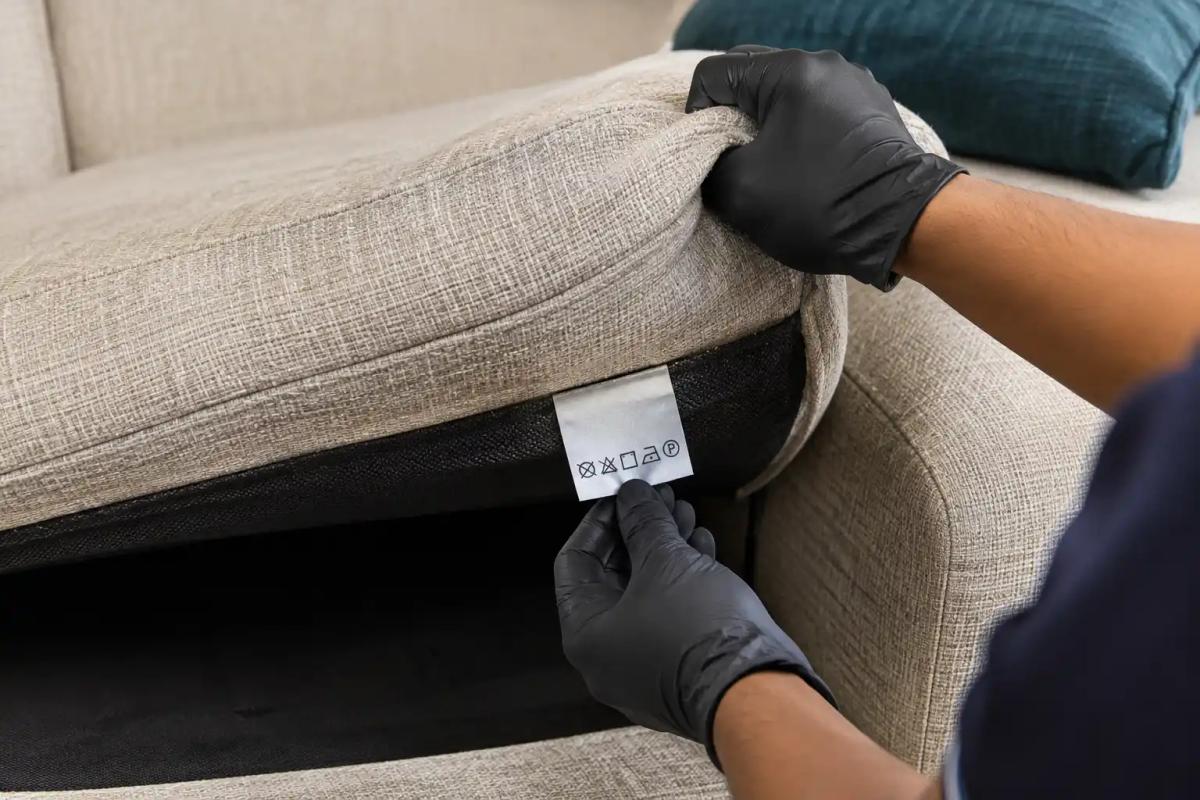
The cleaning code is on a tag under a seat cushion or beneath the base, and it says W for water-based cleaning, S for solvent only, WS for either, and X for vacuum or brushing only.
The code is the most reliable guide to a sofa's cleaning method, because it comes from the people who made the fabric. The table below explains each one.
| Code | Meaning | What it means in practice |
|---|---|---|
| W | Water-based cleaning | Foam or mild soap solutions are safe |
| S | Solvent only | No water, which can cause watermarks or shrinkage |
| WS | Water or solvent | Either works, depending on the mark |
| X | Vacuum or brush only | No liquid cleaning at all |
Pro Tip: Check the tag before buying a cleaner. If the tag is missing, test any product on a hidden spot first, since fabrics of the same type can carry different codes.
What Are the Main Types of Sofa Fabric?
The main sofa fabric types are cotton, linen, velvet, microfibre or polyester and leather, with faux leather as a common synthetic alternative.
Each one looks and behaves differently, especially around water:
- Cotton: soft, breathable and absorbent, but it can shrink and watermark
- Linen: natural and airy, but it creases and watermarks easily
- Velvet: a plush pile that flattens and marks with water and rubbing
- Microfibre and polyester: a tightly woven synthetic that resists stains, though its code varies
- Leather: real hide that needs gentle, low-moisture care and conditioning
- Faux leather: a synthetic surface that can peel or crack if scrubbed hard
Which Sofa Fabric Is Best for Bangalore's Climate?
Synthetic fabrics such as polyester and microfibre suit Bangalore's humid climate best, because they resist moisture and dry quickly, while cotton and linen need more care.
In humid weather, a fabric that stays damp for long can develop a musty smell, so quick-drying synthetics are the safer everyday choice, especially in busy family rooms. Cotton and linen are comfortable but absorb moisture and mark easily. Velvet looks rich but shows watermarks and flattened pile. The right pick depends on how the sofa is used and how much upkeep a household wants.
Which Sofa Fabrics Are Low Maintenance and Which Are High Maintenance?
Polyester and microfibre are the lowest maintenance sofa fabrics, while linen and velvet are the highest.
The table below sorts the common types by how much care they need.
| Fabric | Maintenance | Why |
|---|---|---|
| Cotton | Medium | Absorbent, so it can shrink and watermark |
| Linen | High | Watermarks and creases easily |
| Velvet | High | Pile flattens and marks when wet |
| Leather | Medium to high | Needs conditioning, and the finish decides the care |
| Faux leather | Medium | Wipes clean, but the surface can peel under hard scrubbing |
Which Sofa Fabrics Can Be Shampooed, and Why?
Sofa fabrics coded W or WS, often polyester, microfibre and some cotton blends, can be foam shampooed, because the code confirms they tolerate controlled moisture.
A low-moisture foam followed by quick moisture extraction keeps the fabric from getting soaked, which is what prevents rings, shrinkage and slow drying. On cotton-type fabrics, cleaning the whole cushion face rather than one spot also avoids water rings. Clean Fanatics uses low-moisture foam shampooing with moisture extraction on fabric sofas that can take it.
Which Sofa Fabrics Should Not Be Shampooed, and Why?
Sofa fabrics coded S or X, and delicate fabrics such as many velvets and linens, should not be shampooed, because water can cause watermarks, shrinkage, flattened pile or stiff dark patches.
Each reacts badly to moisture in its own way. Wrong cleaning products and too much water are also behind many marks left by home cleaning, as explained in why sofas get greasy armrests. The usual problem fabrics are:
- S-coded fabric: water causes watermarks and shrinkage
- X-coded fabric: only vacuuming or light brushing is safe, and any liquid risks damage
- Velvet: water flattens the pile and leaves marks
- Linen: water causes shrinking and rings
- S-coded microfibre: water leaves stiff, dark patches
Steam is unsuitable for these fabrics and for leather as well. For sofas that should stay dry, Clean Fanatics vacuums rather than shampoos.
How Are Leather and Faux Leather Sofas Cleaned?
Leather and faux leather sofas are cleaned with gentle, low-moisture wiping rather than shampooing, and the type of leather decides how careful that has to be.
What Are the Types of Leather Sofa Finishes?
Leather sofas come in aniline, semi-aniline and pigmented finishes, which differ in how much protective coating sits on the hide. Aniline has no topcoat, so it feels softest and is the most sensitive. Semi-aniline has a light topcoat, and pigmented has a heavy topcoat, which makes it the most durable and easiest to clean. The finish dictates how gentle the cleaning must be.
How Is a Leather Sofa Cleaned Safely?
A leather sofa is cleaned safely at home with a lightly damp cloth and a gentle cleaner, followed by conditioning, and never soaked or steamed. Real leather absorbs moisture easily and can crack if it dries out, so conditioning restores what cleaning removes. For leather sofas, Clean Fanatics uses HEPA vacuuming, pH-balanced cleaning and conditioning.
How Is Faux Leather Cleaned Differently?
Faux leather is cleaned with mild soap and a damp cloth, because its synthetic surface is not porous like real leather and can peel or crack under hard scrubbing. Harsh products and rough scrubbing wear down the coating over time. A gentle wipe and a dry cloth is the safest routine.
How Does Clean Fanatics Clean Sofas by Fabric Type?
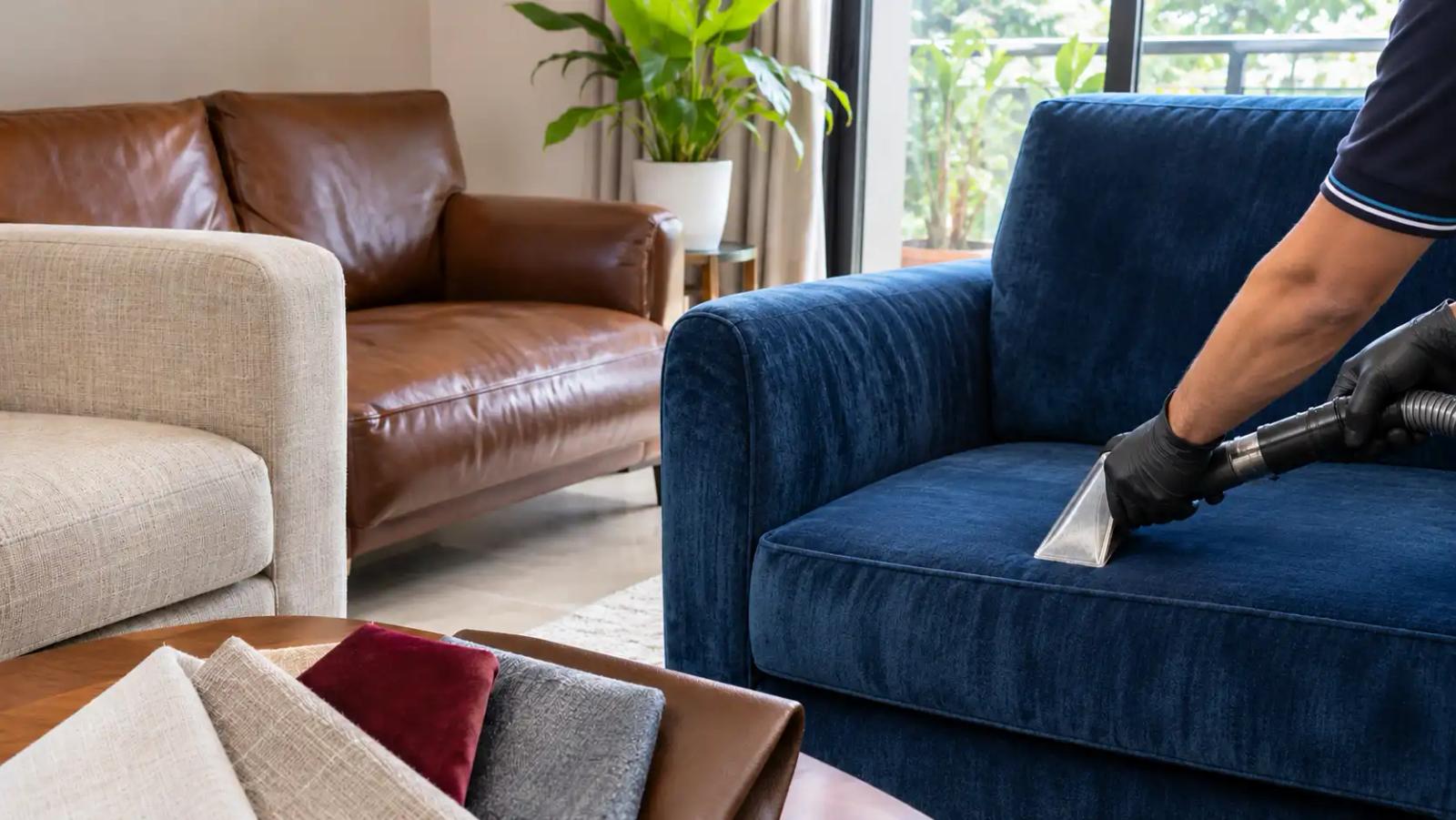
Clean Fanatics matches the method to the fabric: fabric sofas that can take water get HEPA vacuuming, foam shampooing, moisture extraction and UV-C sanitization, those that should stay dry are vacuumed, and leather gets HEPA vacuuming, pH-balanced cleaning and conditioning. Each step is explained in sofa cleaning methods explained.
How to Choose the Right Cleaning Method for a Sofa
Choosing the right method starts with the fabric and the cleaning code: W and WS fabrics can be shampooed with controlled moisture, S and X fabrics should be vacuumed or dry cleaned, and leather needs gentle wiping and conditioning. When the tag is missing, a hidden-spot test or a professional check is the safest step. The same fibre-first logic applies to rugs, as covered in this guide to choosing a carpet cleaning method.
Not sure what a sofa is made of or how it should be cleaned?
Frequently asked questions
How do I know what fabric my sofa is made of?
Check the tag under a seat cushion or beneath the base, which often lists the fabric and the cleaning code. If there is no tag, a professional can identify the fabric by look and feel. The code matters because it says whether water is safe.
What do the W, S, WS and X codes on a sofa mean?
W means water-based cleaning is safe, S means solvent only with no water, WS means either, and X means vacuum or light brushing only. Using water on an S-coded sofa can cause watermarks or shrinkage.
Can a velvet sofa be cleaned with water?
A velvet sofa can be cleaned with water only if the tag allows it, and then with minimal moisture. Too much water flattens the pile and leaves watermarks. Many velvets are safer vacuumed and brushed along the pile.
Which sofa fabric is easiest to clean?
Polyester and microfibre are usually the easiest, since they resist stains and dry quickly, though the cleaning code still decides the method. Pigmented leather also wipes clean easily. Linen and velvet are the hardest to keep looking fresh.
Can a leather sofa be cleaned with water?
A leather sofa can be wiped with a lightly damp cloth and a gentle cleaner, but never soaked or steamed. Real leather absorbs moisture easily. Conditioning afterwards keeps it from drying out and cracking.
How often should a sofa be deep cleaned?
Most sofas benefit from a deep clean every six months, or every three to four months in homes with pets or children. Regular vacuuming in between keeps dust from settling into the fabric.