
At a Glance
Mattress types decide how a mattress can be cleaned. Memory foam soaks up moisture and dries slowly, so it should never be soaked or steamed. Latex also dislikes heat and soaking, innerspring coils can rust if they get wet, and coir is a breathable natural fibre that still absorbs dust, sweat and dampness. In a humid city like Bangalore, a dry method is the safest choice for every type. This guide explains the main mattress types, how each reacts to moisture and how each is cleaned.
Not every mattress can be cleaned the same way. A method that suits a spring mattress can ruin memory foam, because foam holds on to moisture long after the surface feels dry. Knowing the mattress type before cleaning prevents mould, musty smells and damage. This guide covers the common types and what each can take. For general upkeep, start with this guide to freshening up a mattress.
What Are the Main Types of Mattress?
The main mattress types are memory foam, innerspring, latex, coir and hybrid, and each is built from different materials that react differently to moisture. A quick guide to how each is built:
- Memory foam: dense, contouring foam that absorbs moisture and dries slowly
- Innerspring: a steel coil core with comfort layers on top, where wet coils can rust
- Latex: a springy foam from natural or synthetic latex, sensitive to heat and soaking
- Coir: a firm layer of coconut fibre that is breathable but absorbs dust, sweat and damp
- Hybrid: coils combined with foam or latex, cleaned according to its comfort layer
Which Mattress Types Absorb the Most Moisture?
Memory foam absorbs the most moisture, because its dense structure holds liquid deep inside and takes a long time to dry, followed by latex and coir.
Moisture that cannot be seen or felt on the surface is the moisture that turns into mould, which is why soaking is the main cleaning mistake with any mattress. The table below shows how each type behaves and the safest approach.
| Mattress Type | Moisture Tolerance | Safe Cleaning Approach |
|---|---|---|
| Memory foam | Very low | Vacuum and, at most, a barely damp cloth. No soaking, no steam |
| Latex | Low | Vacuum and light spot cleaning. Avoid soaking and heat |
| Innerspring | Medium | Keep the coils dry. Light surface cleaning only |
| Coir | Low to medium | Vacuum and light spot cleaning. Never soak |
| Hybrid | Depends on the top layer | Treat it by its comfort layer |
Pro Tip: Check the maker’s care label before cleaning. Sources differ on some methods, especially for latex, so the label for that specific mattress is the safest guide.
Which Mattress Is Best for Bangalore’s Humid Climate?
In humid weather, mattresses that let air move through them, such as innerspring, coir and open-cell latex, are easier to keep fresh than dense memory foam, which holds heat and moisture.
A mattress that cannot dry out after sweaty, humid nights becomes a home for dust mites and mould. Memory foam can still be a good choice, but it needs more care: a breathable base, a washable protector and regular airing. Keeping any mattress directly on the floor for long blocks ventilation and traps moisture underneath. Comfort should lead the choice, but humidity belongs in the decision too.
Can a Mattress Be Wet Cleaned or Steam Cleaned?
Most mattresses should not be wet cleaned or steamed, because foam, latex and coir hold on to moisture, and steam pushes heat and water deep into the core.
Why Should Memory Foam and Latex Not Be Soaked or Steamed?
Memory foam and latex should not be soaked or steamed because water and heat go straight into the core and can take days to dry, which leads to mould and musty smells. A musty smell that returns within days of cleaning is a sign that moisture has reached the foam. Sources differ on whether latex tolerates steam, so the care label should be followed.
Why Do Innerspring Coils Rust When a Mattress Gets Wet?
Innerspring coils rust when water soaks through the comfort layers and reaches the steel, because the metal stays damp inside where air cannot reach. Rust weakens the coils and can stain the fabric from within. Steam is sometimes suggested for innerspring mattresses, but only with thorough drying before bedding goes back on, and a dry method avoids the risk altogether.
How Should a Coir Mattress Be Cleaned?
A coir mattress should be vacuumed regularly and spot cleaned with a gentle soap solution, never soaked, because coir absorbs dust, sweat and moisture. Airing it in a well-ventilated room helps clear trapped dampness. Brands differ on direct sunlight, with some advising short exposure and others advising against it, so a bright, ventilated room is the safer choice.
How Is a Mattress Cleaned Without Water?
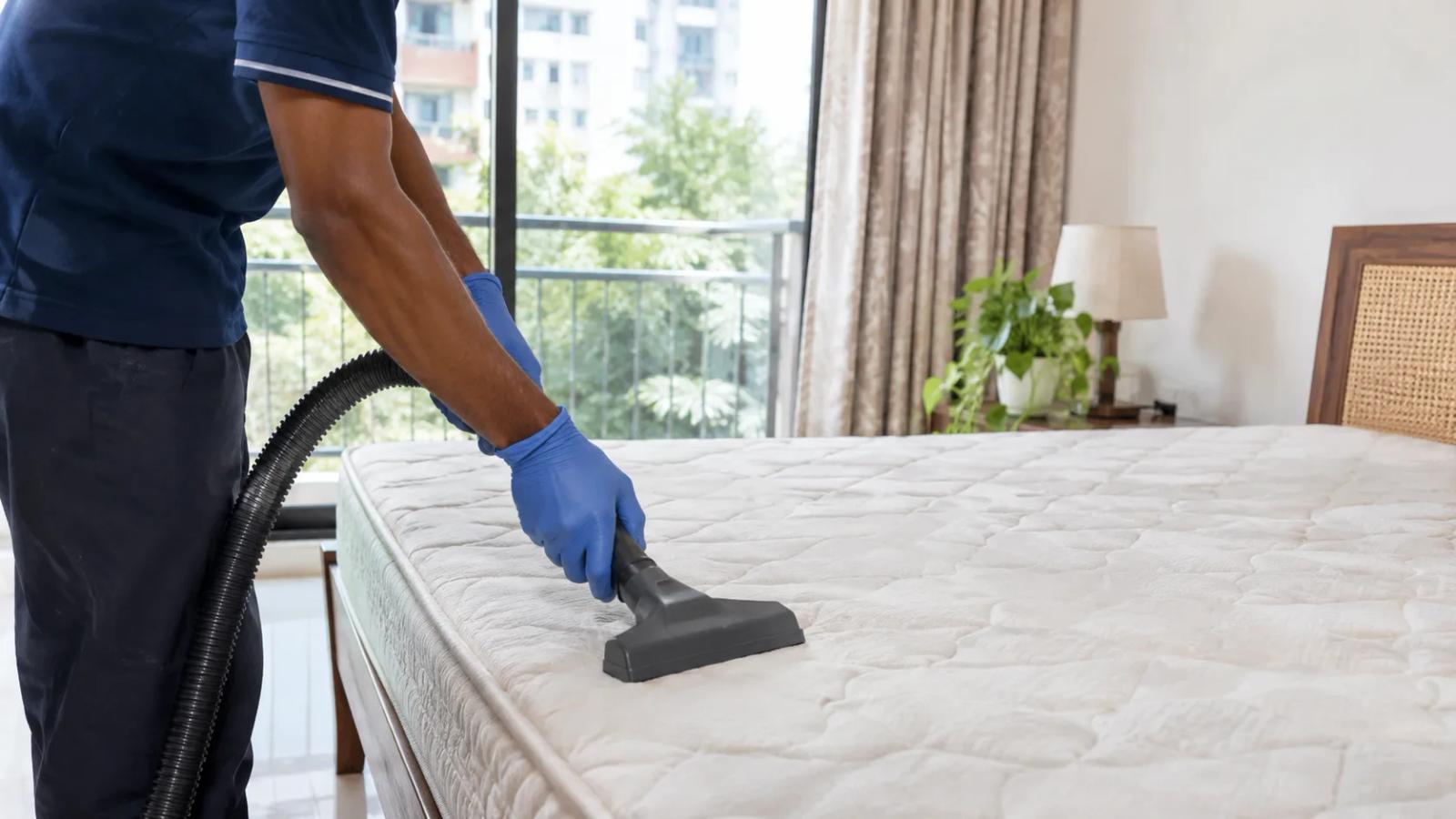
Mattress dry cleaning is cleaning a mattress without water, by HEPA-filter vacuuming to remove dust, dead skin and allergens, followed by UV-C sanitization of the surface, a method that suits every mattress type because it adds no moisture.
This dry method removes surface dust and sanitizes the cleaned surface with no drying time, so there is nothing for mould to feed on. Clean Fanatics uses it for mattresses. The steps are explained in mattress cleaning methods, and the limits of UV-C are covered in UV-C sanitization for sofas and mattresses.
How to Look After Each Mattress Type Between Cleans
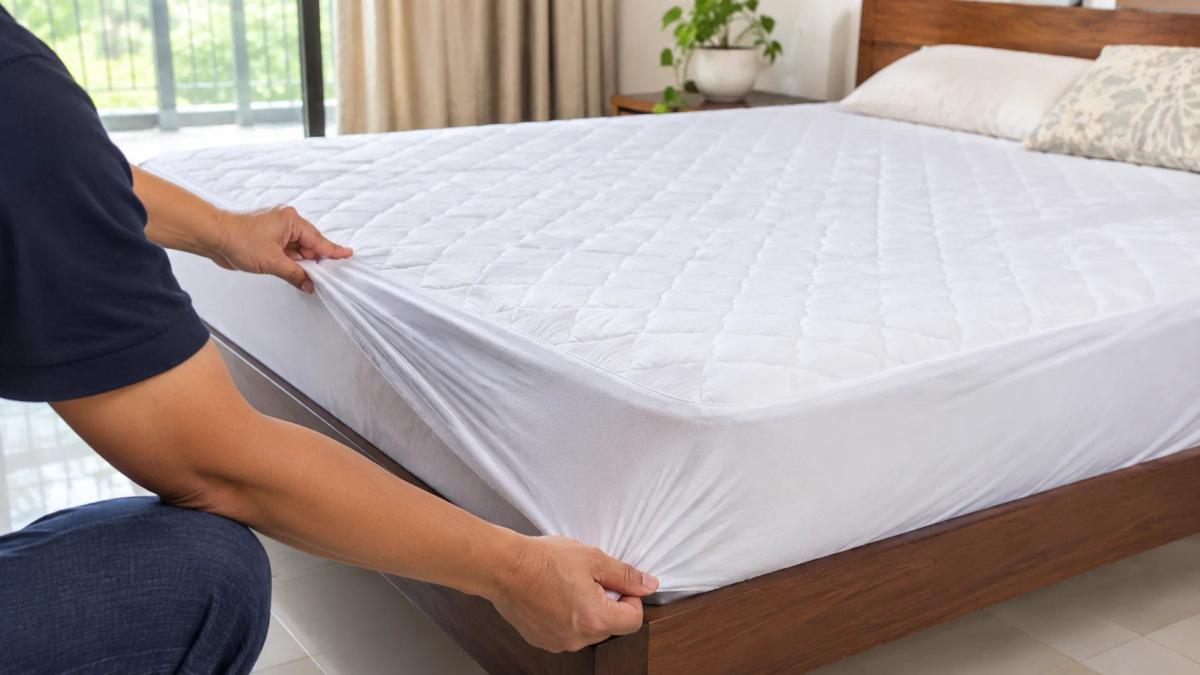
Mattresses stay fresher between cleans with a washable protector, regular vacuuming and good airflow.
- Use a washable mattress protector so spills and sweat do not reach the mattress.
- Vacuum the surface monthly to remove dust and dead skin.
- Rotate memory foam and latex mattresses head to foot every six months rather than flipping them.
- Keep the mattress on a ventilated base, not directly on the floor.
- Air the mattress when changing bedsheets, and keep fabric sprays off foam.
How to Choose the Right Cleaning Method for a Mattress
Choosing the right method starts with the mattress type: memory foam and latex should stay dry, innerspring coils must not get wet, and coir should never be soaked. A dry method works on every type, and a professional clean every six months, or every three to four months in homes with pets, children or allergy concerns, keeps dust and allergens down. The same material-first logic applies to upholstery, as covered in sofa fabric types and how each is cleaned.
For a mattress cleaned the dry way, whatever its type, the Clean Fanatics team in Bangalore can help.
Frequently asked questions
Can a memory foam mattress be cleaned with water?
A memory foam mattress should not be soaked, because it soaks up moisture and dries slowly. At most, use a barely damp cloth on the surface. Dry vacuuming is the safer routine.
Can a mattress be steam cleaned?
Most mattresses should not be steam cleaned, because steam pushes heat and water deep into the core. Memory foam should never be steamed, sources differ on whether latex tolerates steam so the care label should be followed, and steam is sometimes suggested for innerspring mattresses but only with thorough drying. A dry method avoids the risk.
How do I clean a coir mattress?
A coir mattress is vacuumed regularly and spot cleaned with a gentle soap solution, never soaked. It should be aired in a ventilated room and kept off the floor so moisture does not build up beneath it.
Should a mattress be flipped or rotated?
Memory foam and latex mattresses should be rotated head to foot every six months rather than flipped.
Which mattress type is best for humid weather?
Mattresses that allow airflow, such as innerspring, coir and open-cell latex, are easier to keep dry than dense memory foam. Any mattress needs a ventilated base and regular airing in humid weather.
How often should a mattress be cleaned?
Most mattresses benefit from professional mattress cleaning every six months, or every three to four months in homes with pets, children or allergy concerns. Vacuuming monthly in between keeps dust down.
Does Clean Fanatics offer mattress cleaning in Bangalore?
Yes. Clean Fanatics uses a dry method for mattresses: HEPA-filter vacuuming to remove dust, dead skin and allergens, followed by UV-C sanitization of the surface. It adds no moisture and has no drying time.
What are the main types of mattress?
The main mattress types are memory foam, innerspring, latex, coir and hybrid, and each is built from different materials that react differently to moisture. Memory foam is dense, contouring foam, innerspring has a steel coil core, latex is a springy foam from natural or synthetic latex, coir is a firm layer of coconut fibre, and hybrid combines coils with foam or latex.
Why do innerspring coils rust when a mattress gets wet?
Innerspring coils rust when water soaks through the comfort layers and reaches the steel, because the metal stays damp inside where air cannot reach. Rust weakens the coils and can stain the fabric from within.
How is a mattress cleaned without water?
A mattress is cleaned without water by HEPA-filter vacuuming to remove dust, dead skin and allergens, followed by UV-C sanitization of the surface. This dry method suits every mattress type because it adds no moisture.