At a Glance
Mattress cleaning methods fall into two types: dry and wet. Dry cleaning uses HEPA-filter vacuuming to remove dust and allergens, and UV-C light to sanitize the surface, with no water. Wet cleaning, or shampooing, works a foam into the mattress and extracts it, cleaning deeper into the fabric but leaving the mattress to dry for hours. Each has clear advantages and limits. This guide explains what each method is, what it does, and how wet and dry cleaning compare, which matters in a humid city like Bangalore.
A mattress collects dust, dead skin, sweat and dust-mite allergens over time, none of which a quick household vacuum fully removes. That is why mattresses are deep cleaned, and there is more than one way to do it. Knowing the methods helps a homeowner understand what each one actually achieves. For the basics first, see this mattress cleaning guide, then read on for how the methods differ.
What Are the Main Mattress Cleaning Methods?
The main mattress cleaning methods are dry cleaning, which uses HEPA-filter vacuuming and UV-C sanitization, and wet cleaning, which uses shampooing.
Dry methods clean and sanitize without water, while wet methods use a cleaning solution that has to dry afterward. Which one fits a home depends on how deep the cleaning needs to be and how quickly the mattress has to be back in use. Each method is explained below, followed by how they compare.
What Is HEPA-Filter Vacuuming?
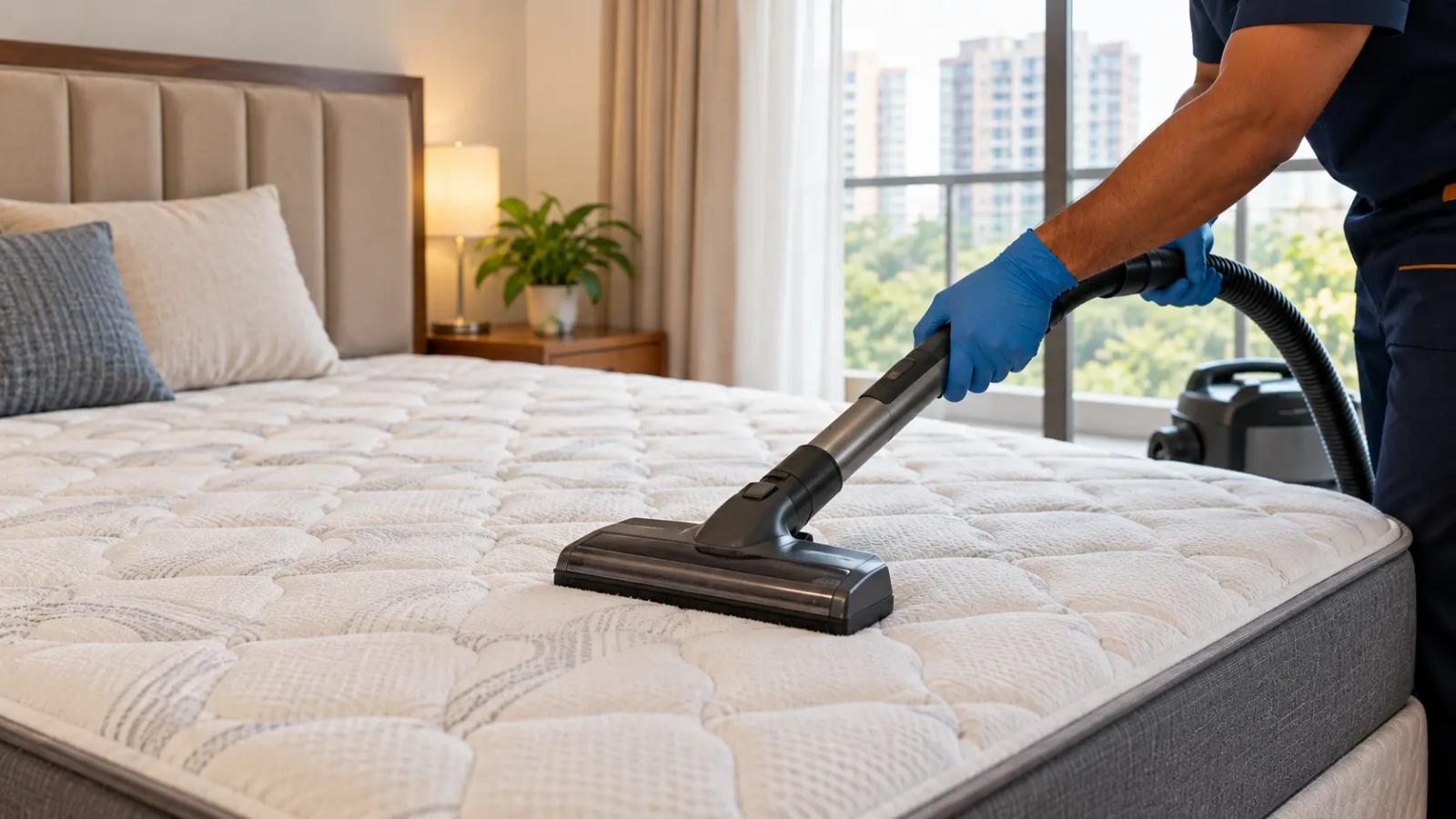
HEPA-filter vacuuming is vacuuming with a High-Efficiency Particulate Air filter that traps very fine particles instead of releasing them back into the room.
It pulls dust, dead skin, pet hair and dust-mite allergens out of the mattress surface and seams. A normal household vacuum often blows these fine particles back into the air, while a HEPA filter holds them. It is a dry method, so the mattress can be used straight after. This is usually the first step in any mattress clean, as it clears loose matter before anything else is done.
What Is UV-C Sanitization?
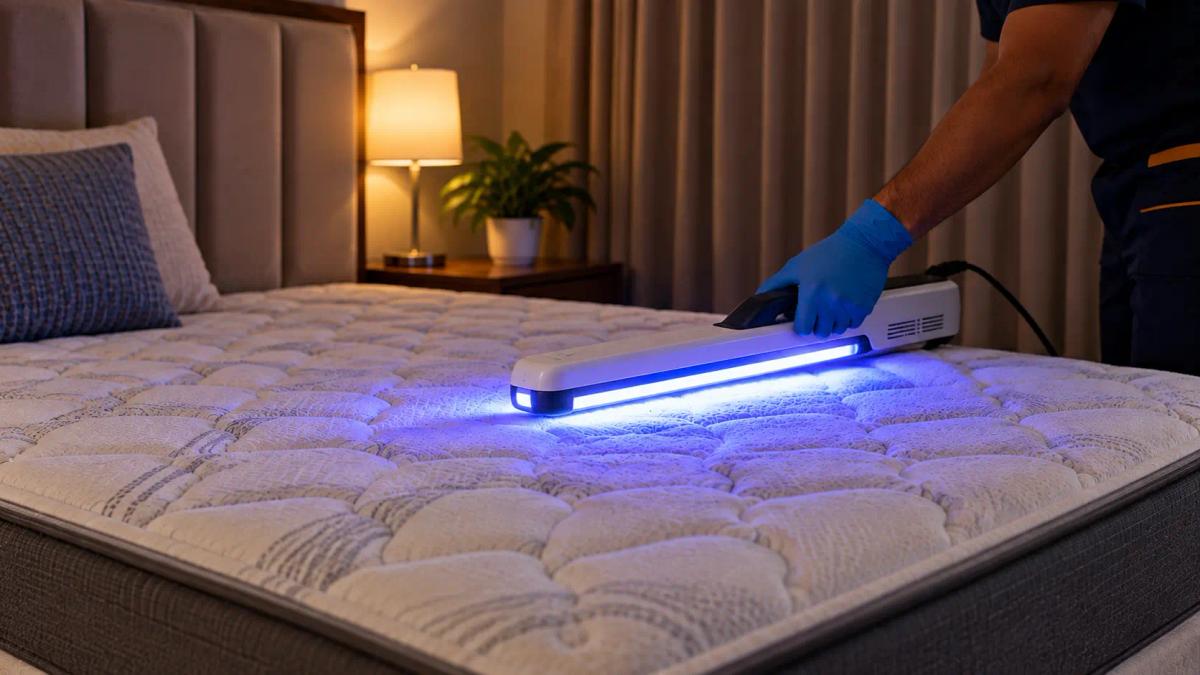
UV-C sanitization is passing UV-C light over the mattress surface to reduce bacteria, germs and dust-mite allergens.
It adds a hygiene step after vacuuming, lowering microbes on the surface without any water or chemicals. Because a mattress absorbs sweat and skin flakes night after night, it becomes a common home for dust mites, which is why sanitizing matters. UV-C is also a dry method, so there is no drying time. For more on the allergens involved, see this guide to dust mites and how to reduce them.
What Is Mattress Shampooing?
Mattress shampooing is a wet cleaning method where a cleaning foam or shampoo is worked into the mattress fabric and then pulled back out with a wet-extraction vacuum. This is usually a standard extraction machine, not a HEPA-filter vacuum, so it lifts out the solution but does not trap fine allergens the way a HEPA filter does.
It cleans deeper into the surface fabric than a dry method, reaching dirt held within the fibres. The vacuum used in shampooing is built to pull out water, not to filter fine dust, so the allergen-trapping benefit of a HEPA vacuum is not part of this method.
Note: Clean Fanatics uses a dry method for mattresses, HEPA-filter vacuuming and UV-C sanitization, not shampooing. Shampooing is explained here so the full picture is clear.
Wet vs Dry Mattress Cleaning: What Is the Difference?
The difference is water: dry cleaning uses none and leaves the mattress ready to use, while wet cleaning soaks the fabric and needs hours to dry.
Both clean a mattress, but they suit different needs. The table below compares them.
| Factor | Dry Cleaning (HEPA + UV-C) | Wet Cleaning (Shampooing) |
|---|---|---|
| Water used | None | Water-based foam |
| Vacuum used | HEPA-filter vacuum (traps fine allergens) | Standard wet-extraction vacuum |
| Drying time | Ready to use almost at once | Several hours to a day or more |
| Reach | Surface dust, allergens and germs | Deeper into the fabric fibres |
| Mould risk in humid weather | Very low | Higher if not fully dried |
| Best for | Regular hygiene and upkeep | Occasional deeper cleaning |
What Are the Advantages of Dry Mattress Cleaning?
The main advantage of dry mattress cleaning is that it sanitizes and removes allergens with no water, so the mattress can be used right away. There is no soaking, no long wait and no risk of trapped moisture. This makes it well suited to regular upkeep and to humid cities like Bangalore, where damp bedding dries slowly and can develop mould. Its limit is that it works on the surface rather than deep inside the fabric.
What Are the Advantages and Disadvantages of Mattress Shampooing?
The advantage of mattress shampooing is that it cleans deeper into the fabric than a dry method can. The disadvantage is the moisture it leaves behind. The mattress cannot be used until it is fully dry, which can take several hours or longer, and if it does not dry completely, the trapped damp can lead to a musty smell or mould. In humid weather, this drying step is the main drawback.
Which Mattress Cleaning Method Is Best?
The best method depends on the goal: dry HEPA-filter vacuuming and UV-C sanitization suit regular hygiene, while shampooing suits occasional deeper cleaning when the mattress can be left to dry fully. For routine upkeep in a humid climate, the dry method avoids the drying and moisture problems altogether, which is why Clean Fanatics uses HEPA vacuuming and UV-C sanitization for mattresses. Matching the method to the need, and to the weather, is exactly the judgement a professional cleaning service brings. The same method logic applies to upholstery, as covered in sofa cleaning methods explained.
For a mattress cleaned and sanitized the dry way, the Clean Fanatics team in Bangalore can help.
Frequently asked questions
What is the best way to clean a mattress?
The best everyday method is HEPA-filter vacuuming to remove dust and allergens, followed by UV-C sanitization. This cleans and sanitizes the mattress without water, so it can be used straight away. Shampooing is an option for occasional deeper cleaning.
What is the difference between wet and dry mattress cleaning?
Dry cleaning uses HEPA vacuuming and UV-C light with no water, so the mattress stays usable. Wet cleaning, or shampooing, uses a foam that is extracted but leaves the mattress to dry. Dry cleaning suits regular upkeep, wet cleaning suits occasional deeper cleaning.
Does UV-C sanitization clean a mattress?
UV-C sanitization does not remove dust or dirt. It is a hygiene step that reduces germs and allergens on the surface after vacuuming. HEPA vacuuming does the dust removal, and UV-C does the sanitizing.
How long does a mattress take to dry after shampooing?
A shampooed mattress can take several hours to a full day to dry, depending on the weather and airflow. In humid conditions it dries more slowly. It should not be used until it is completely dry.
Can a mattress be cleaned without water?
Yes, a mattress can be cleaned without water using HEPA-filter vacuuming and UV-C sanitization. This dry method removes dust and allergens and sanitizes the surface, with no drying time. It is a good fit for humid climates.
How often should a mattress be cleaned?
Most mattresses benefit from a professional clean every six months, or every three to four months in homes with pets, children or allergy concerns. Vacuuming the mattress between cleans keeps dust and allergens down.