
How to Tell if Paint Is Dry or Fully Cured: Touch-Dry, Recoat-Ready and Cured Explained
At a Glance
How to tell if paint is dry or fully cured depends on the stage. Touch-dry means the surface no longer transfers paint, recoat-ready means the film is firm enough for the next coat, and fully cured means the paint has reached its full hardness, which takes about two to four weeks for emulsion. A fingernail test and a tape test show the early stages. Humid weather slows every stage, so Bangalore's monsoon needs extra patience. This guide explains each stage, the tests and what must wait.
A freshly painted wall can feel dry within hours and still be soft underneath. Moving furniture against it, wiping it or hanging frames too soon leaves marks that no amount of touch-up fully hides. The gap between dry and cured is the reason, and it matters even more in humid weather. For how humidity affects the whole process, see this guide to monsoon-safe painting.
What Is the Difference Between Paint Drying and Paint Curing?
Paint drying is the surface becoming dry to the touch as water or solvent evaporates, while curing is the film hardening fully and reaching its final strength, which takes much longer.
A wall that feels dry is relatively easy to mark or damage, because the paint keeps hardening for weeks. Water-based wall paints may become touch-dry quickly, but touch-dry does not mean fully cured. The stages are:
- Touch-dry: the surface no longer feels wet or transfers paint, often within one to two hours for water-based paint
- Recoat-ready: the film is firm enough to take the next coat, usually after a few hours, as stated on the tin
- Light use: the wall can take gentle contact, typically after a day or two
- Fully cured: the paint has reached its full hardness and resistance, often two to four weeks for emulsion
How to Tell if Paint Is Dry or Cured Without Special Tools
Paint can be checked with a fingernail test and a tape test in a hidden spot, which show touch-dry and cured stages without any equipment.
How Does the Fingernail Test Work?
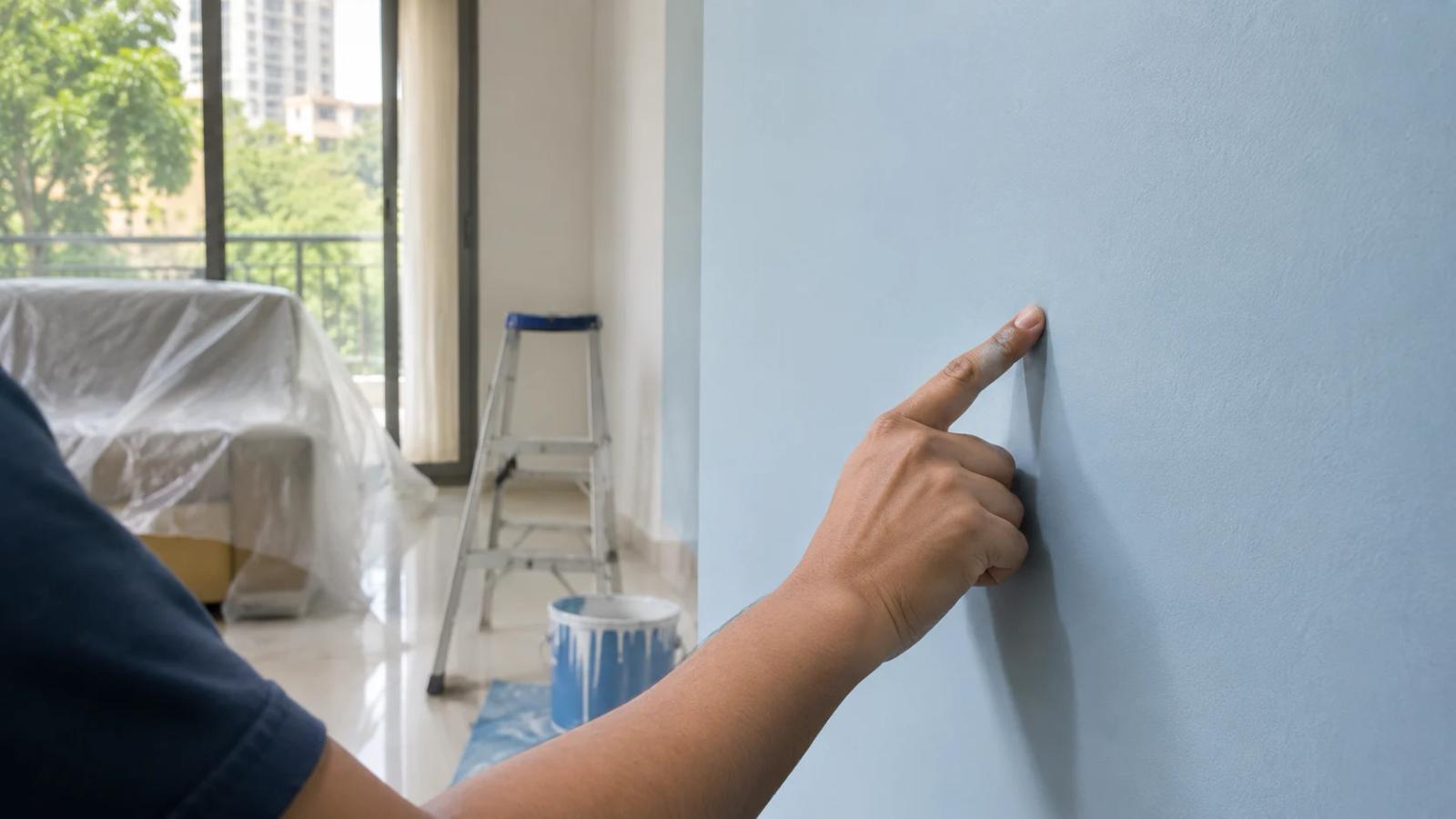
The fingernail test works by pressing the back of a fingernail gently into the paint in a hidden spot, and if no mark remains and no paint transfers, the paint is dry to the touch. If a fingernail leaves a dent, the paint is not yet fully cured. The test should be gentle, since pressing hard on soft paint leaves a permanent mark.
How Does the Tape Test Work?
The tape test works by pressing masking tape onto a hidden patch and peeling it off, and if no paint lifts, the film has firmed up. It is useful before taping over fresh paint for a second colour. Using low-tack painter's tape reduces the risk of lifting paint that is firm but not cured.
What Else Shows That Paint Has Not Fully Cured?
Signs that paint has not fully cured include a lingering smell, a slightly tacky feel in warm weather, and marks appearing from light wiping. Colour that looks slightly uneven or glossy patches from rubbing, which are called burnishing, also point to a film that is still soft.
How Long Does Paint Take to Dry and Cure?
Water-based wall paint typically takes one to two hours to become touch-dry and about two to four weeks to cure, while oil-based paint dries more slowly but often cures sooner.
These are typical figures and the tin gives the exact numbers for each product. Matte finishes tend to cure faster than glossy ones, and thick coats take longer. The table below gives a practical guide.
| Stage | Water-Based Wall Paint | What It Allows |
|---|---|---|
| Touch-dry | About 1 to 2 hours | Gentle handling only |
| Recoat-ready | A few hours, per the tin | Applying the next coat |
| Light use | About 1 to 2 days | Normal room use, no scrubbing |
| Fully cured | About 2 to 4 weeks | Washing, wiping, furniture against the wall |
Why Does Humid Weather Slow Paint Curing?
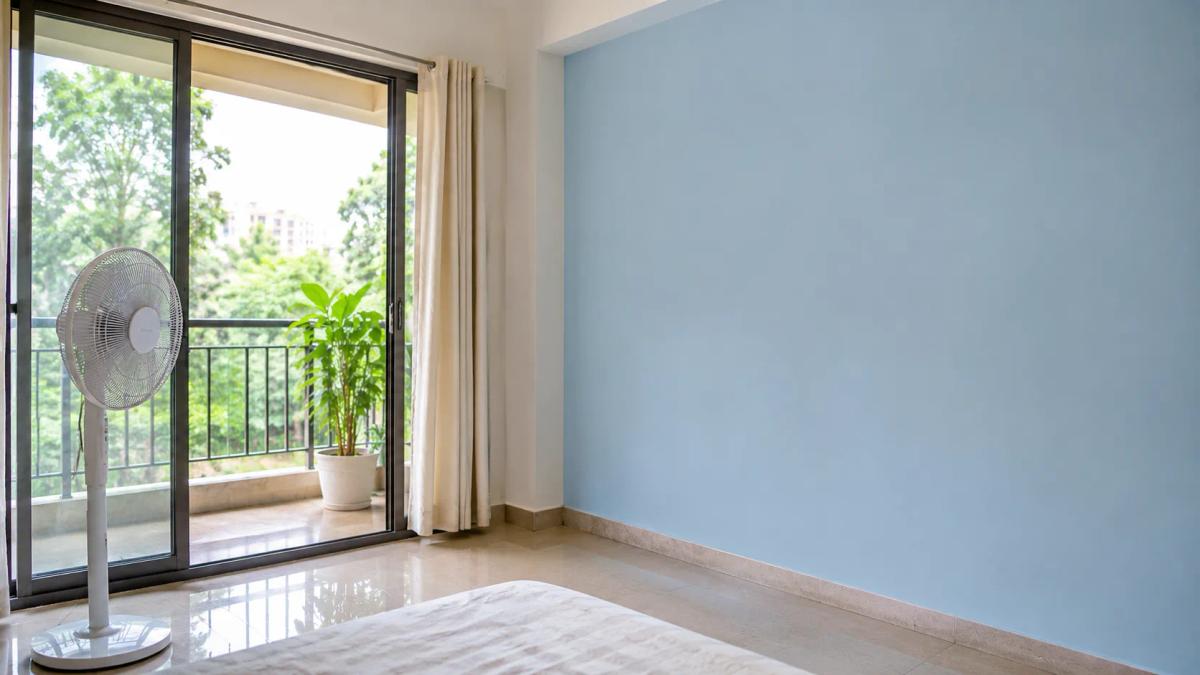
Humid weather slows paint curing because moist air holds evaporation back, so both drying and curing take longer than the figures on the tin, which are based on moderate conditions.
Cool, damp or still air stretches every stage, and thick coats and kitchens and bathrooms take longer still. Ventilation with fans and open windows helps, and painting in a dry spell is easier. Recoating too early in humid weather can trap moisture, which is one cause of peeling, as explained in why paint peels and how to fix it.
What Should Wait Until Paint Has Fully Cured?
Washing, scrubbing, pushing furniture against the wall and hanging heavy items should wait until paint has fully cured, while light dusting and gentle use are fine sooner.
- Washing or wiping the wall with any cleaner
- Scrubbing marks or scuffs
- Pushing sofas, beds and cupboards flush against the wall
- Hanging heavy frames or mirrors, which can mark or lift the film
- Taping over the paint for decoration or a second colour
Scrubbing too early can burnish the soft film into a shiny patch. Once the paint has cured, it can be cleaned safely, as covered in how to clean painted walls without damaging the paint. Clean Fanatics offers painting, and patchy finishes after early handling are explained in why new walls look patchy.
How to Protect Fresh Paint While It Cures
Fresh paint is protected by keeping contact light and air moving until it has cured.
How to Protect New Paint in 5 Steps
Five habits keep a new paint film safe while it hardens.
- Keep furniture a hand's width away. Pushing items flush against the wall can mark or bond to the paint.
- Ventilate the room. Open windows between showers and use fans to move air.
- Avoid wiping and scrubbing. Dust lightly with a dry soft cloth, and wait for the full cure before washing.
- Hold off on heavy hanging. Wait several days for light items and longer for heavy ones.
- Use low-tack tape. If taping is needed, use painter's tape and remove it gently.
How to Decide When a Wall Is Ready
A wall is ready for the next step when it passes the fingernail test, the stage on the tin has been reached and the weather has had time to do its part. When in doubt, waiting an extra few days costs far less than repainting a marked wall. Note the date, check a hidden spot and give humid weather extra time.
Planning to paint, or worried that a freshly painted wall is still soft?
Frequently asked questions
How long does paint take to dry?
Water-based wall paint is usually touch-dry in one to two hours and ready for a second coat in a few hours. The tin gives the exact time, and humid weather can double it.
How long does paint take to fully cure?
Water-based wall paint typically takes two to four weeks to fully cure. Oil-based paint dries more slowly but often cures sooner. Humid weather and thick coats lengthen the time.
How can I tell if paint is fully cured?
Press the back of a fingernail gently into paint in a hidden spot. If it leaves a dent, the paint is not fully cured. A tape test and an absence of smell also help.
When can a newly painted wall be washed?
A newly painted wall should only be washed after it has fully cured, which is usually about two to four weeks for water-based paint. Light dusting is fine sooner.
Can furniture be placed against freshly painted walls?
Furniture should stay a little away from fresh paint until it has cured, because soft paint can mark or bond to it. A week is a minimum, and two to four weeks is safer.
Why is paint still tacky after a day?
Paint is tacky after a day when the coat was thick, the room was humid or cool, or the second coat went on too early. More ventilation and time usually fix it.