
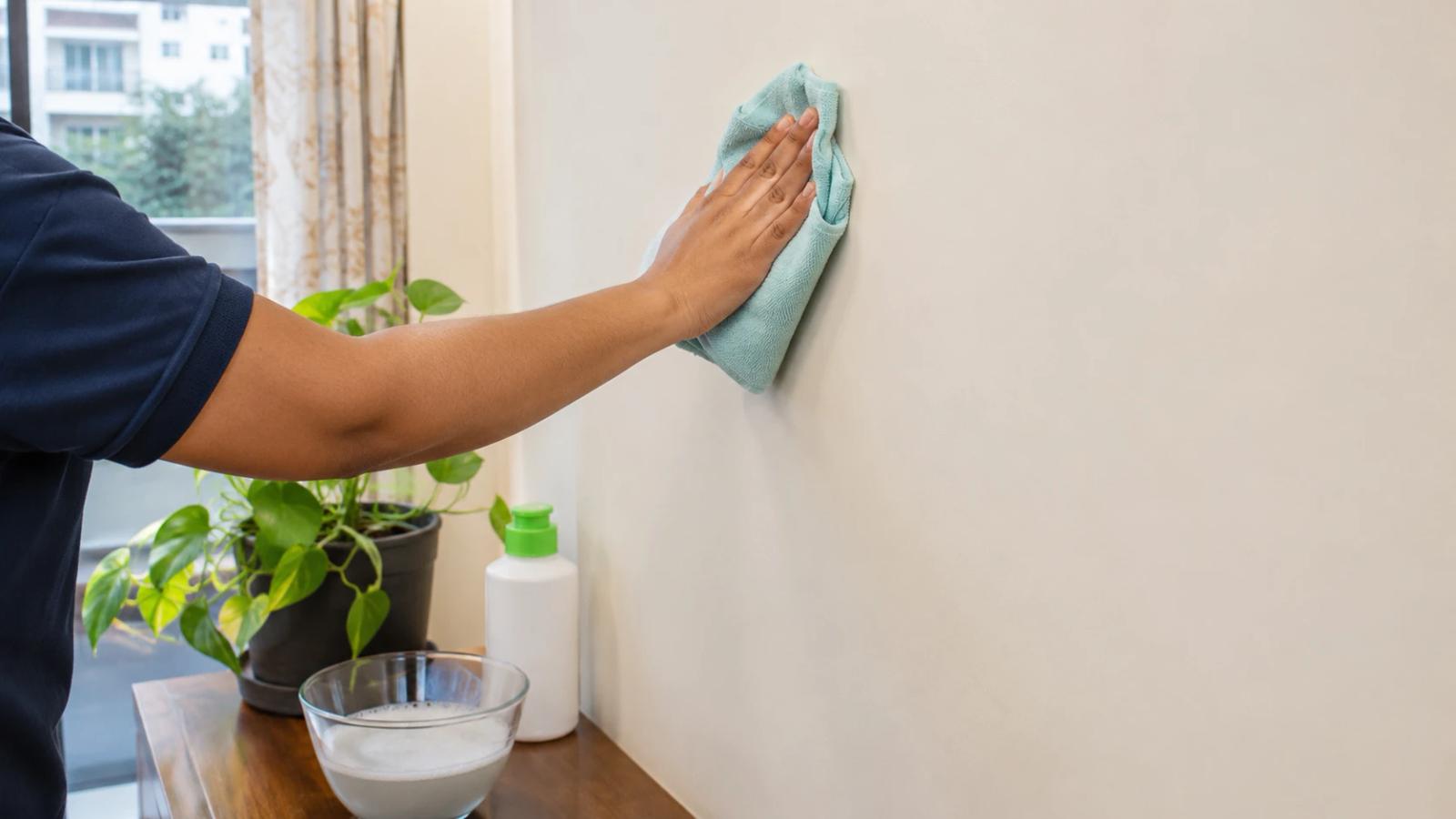
How to Clean Painted Walls Without Damaging the Paint
At a Glance
How to clean painted walls safely depends on the paint finish. Dust first with a soft cloth or a vacuum brush, then wipe with a barely damp sponge and a few drops of mild soap in warm water, testing a hidden spot first. Matt and flat paints are the most delicate and burnish or mark if scrubbed, while satin and semi-gloss tolerate more. Newly painted walls should wait about two to four weeks before washing. This guide explains the method by finish and what to avoid.
Painted walls collect fingerprints, scuffs, kitchen splatter and a fine layer of dust, and the wrong cleaning method can leave shiny patches, streaks or bare spots that look worse than the dirt. The paint finish decides how much a wall can take. For choosing paints that are easier to wash in the first place, see this guide to washable and mould-resistant paint systems.
Which Painted Walls Can Be Washed?
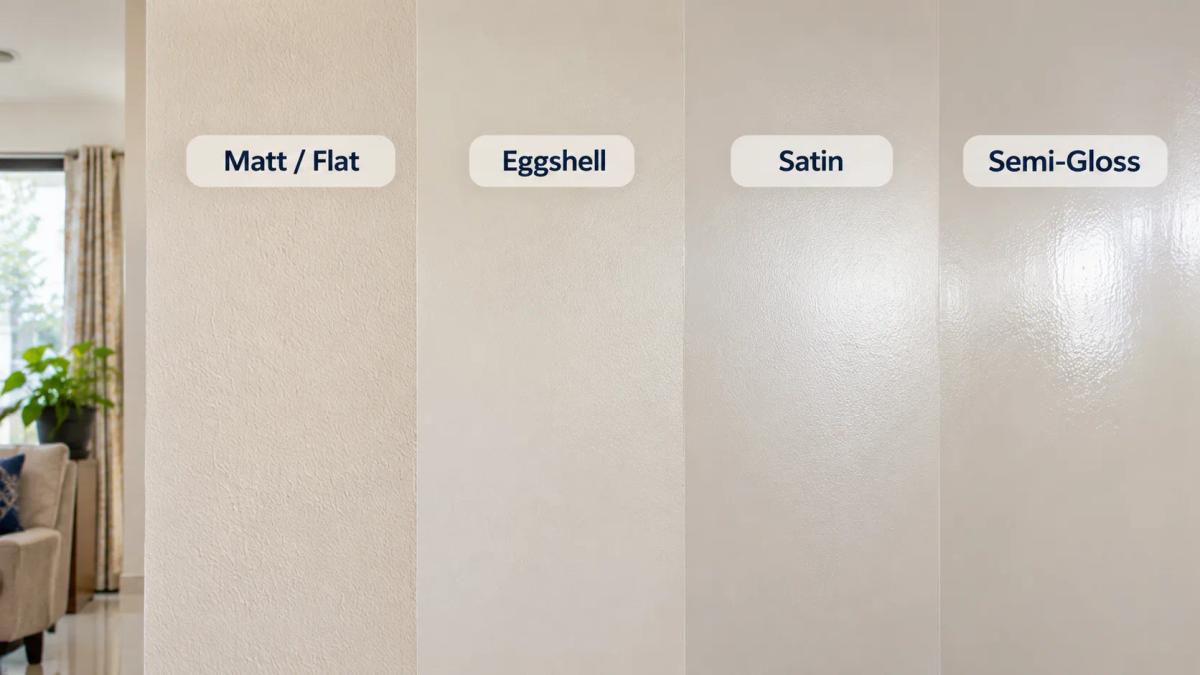
Most painted walls can be washed gently, but how much scrubbing they can take depends on the paint finish, with matt and flat paints the most delicate and semi-gloss and gloss the most durable.
Matt and flat paints have a porous, velvety surface that traps dirt and marks easily when rubbed. Satin and eggshell take more, and semi-gloss and gloss can handle firmer cleaning. The choice of finish is covered in the paint finish guide. The table below shows what each can take.
| Paint Finish | How Delicate It Is | Safe Cleaning Approach |
|---|---|---|
| Flat or matt | Most delicate | Dust, then dab with a barely damp sponge; no scrubbing |
| Eggshell | Delicate | Light wiping with mild soapy water |
| Satin | Moderate | Gentle wiping, with a little more pressure on marks |
| Semi-gloss or gloss | Most durable | Soapy sponge, firmer pressure on dirty areas |
Pro Tip: Test every method on a hidden spot first, such as behind a door. If the paint still looks even and no water mark remains once it dries, the wall can take it.
How to Clean Painted Walls Step by Step
Painted walls are cleaned by dusting first, washing in small sections with a barely damp sponge and mild soap, rinsing and drying, and keeping pressure and water to a minimum.
How to Wash Painted Walls in 6 Steps
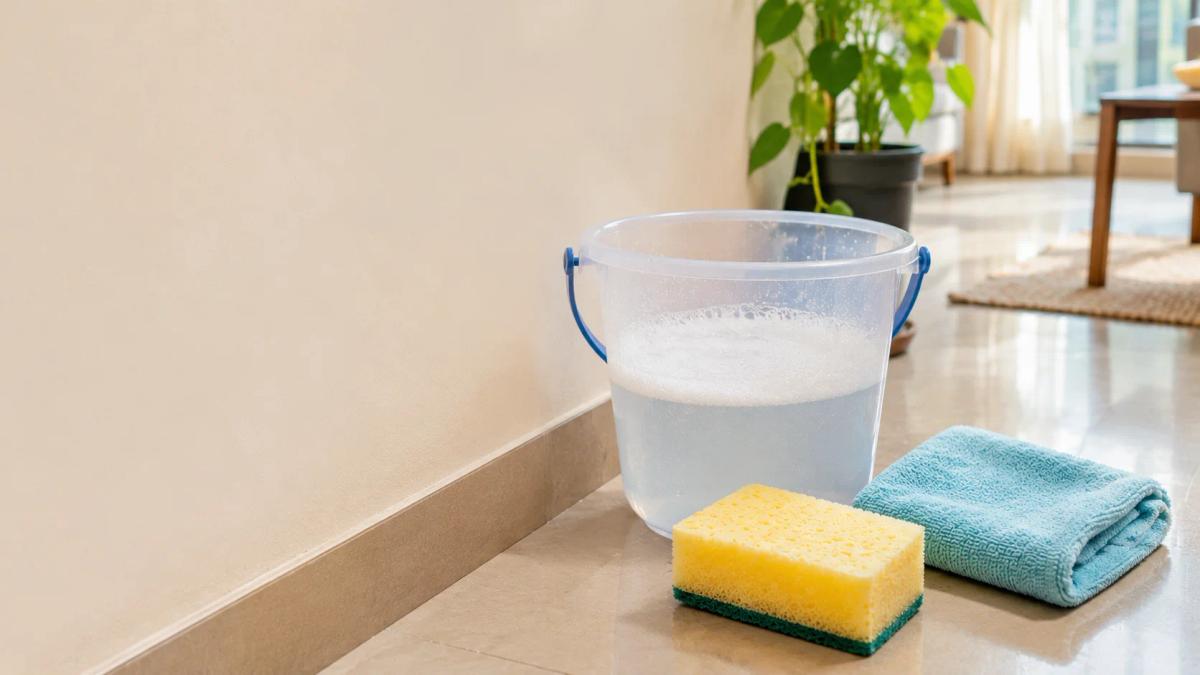
The method below suits most painted walls and works from least to most effort.
- Dust the wall. Use a soft cloth, a microfibre duster or a vacuum with a brush attachment, working from the top down, so dust is not turned into mud.
- Mix a mild cleaning solution. Use a few drops of mild dish soap in warm water, with no strong chemicals.
- Test a hidden spot. Wipe a small area, let it dry and check for streaks or a change in sheen.
- Wipe in small sections. Wring the sponge until it is only damp, and use light, even strokes without scrubbing.
- Rinse and dry. Go over each section with a clean damp cloth to lift soap residue, then dry with a soft cloth.
- Deal with marks last. Dab scuffs and stains gently and repeat if needed, rather than pressing harder.
Sources differ on direction, with some advising top-down washing and others bottom-up to avoid drip streaks. Either works if the sponge is barely damp, the wall is washed in small sections and any drips are wiped away at once.
How to Remove Common Marks From Painted Walls
Common marks are removed by treating them gently and early, starting with a damp cloth and only moving to mild soap or a mild paste if the mark stays.
How to Remove Scuffs and Fingerprints
Scuffs and fingerprints usually come off with a barely damp cloth or sponge and a drop of mild soap, using light pressure. Rubbing harder leaves a shiny or bare patch on matt paint. The sooner a mark is treated, the easier it comes off.
How to Remove Grease and Kitchen Splatter
Grease and kitchen splatter are removed with a cloth wrung out in warm water with a little grease-cutting dish soap, wiped lightly and rinsed. Glossier kitchen paint copes with this better than matt. A degreaser strong enough to damage flat paint should be avoided.
How to Clean Soot and Smoke Marks
Soot and smoke marks should be removed dry first, because wet rubbing smears them into the paint. A soft brush or vacuum brush attachment and a dry cleaning sponge come before any water, as covered in why walls turn black after Diwali. Marks that smear or stay may need repainting.
What Should Never Be Used on Painted Walls?
Abrasive scrubbers, strong chemicals, soaking and unmixed or mixed harsh cleaners should never be used on painted walls, because they remove sheen, lift paint or leave marks.
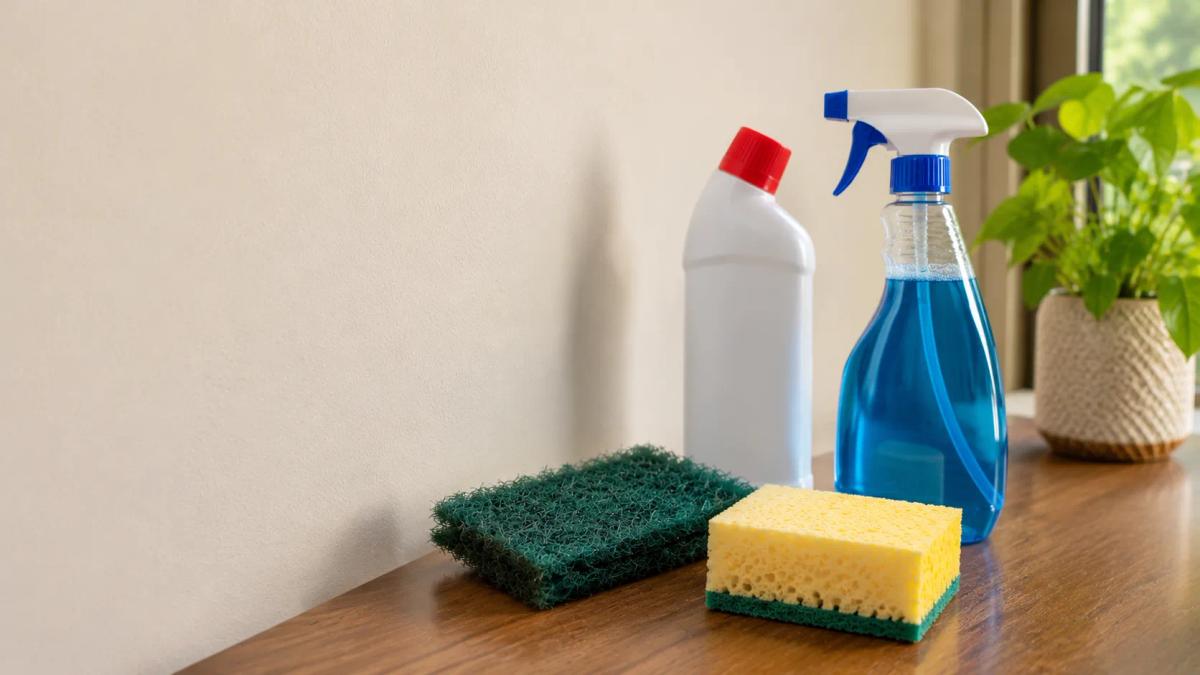
- Scouring pads and the rough side of sponges, which scratch and dull paint
- Strong degreasers and harsh chemicals, especially on flat and matt paint
- Soaking the wall, which can cause bubbling or watermarks
- Mixing cleaning products, which can be unsafe and leaves residue
- Melamine sponges used without a test, since they can dull some finishes
- Scrubbing hard in one spot, which burnishes matt paint into a shiny patch
When Is It Safe to Wash a Newly Painted Wall?
A newly painted wall is safe to wash only after the paint has fully cured, which usually takes about two to four weeks, although light dusting is fine sooner. Washing too early burnishes or damages the soft film. The stages and simple tests are explained in how to tell if paint is dry or fully cured. Clean Fanatics offers painting and home deep cleaning.
How to Keep Painted Walls Clean for Longer
Painted walls stay cleaner for longer when dust is removed regularly and marks are treated early.
How to Reduce Marks on Painted Walls in 5 Steps
Five habits keep marks to a minimum.
- Dust regularly. Matt paint traps dirt, so a quick dusting stops it settling in.
- Clean spills and marks early. Fresh marks come off with far less effort.
- Choose the right finish for busy areas. Satin or semi-gloss suits hallways, kitchens and children's rooms.
- Keep furniture slightly away. This reduces scuffs and rubbing along walls.
- Repaint when cleaning no longer works. Patchy, dull or smeared walls are past cleaning.
How to Decide Between Cleaning and Repainting
A wall should be cleaned when the paint is sound and the marks are light, and repainted when marks keep smearing, stains soak through or the finish has worn thin. Gentle, barely damp cleaning keeps paint looking good for years, while hard scrubbing shortens its life. When cleaning stops working, a fresh coat is the better choice.
Want a home cleaned and its walls refreshed?
Frequently asked questions
How do I clean painted walls without damaging the paint?
Dust first, then wipe with a barely damp sponge and a few drops of mild soap in warm water, using light pressure and testing a hidden spot first. Rinse, dry and avoid scrubbing.
Can flat or matt paint be washed?
Flat and matt paint can be cleaned gently, but it is the most delicate finish and burnishes if scrubbed. Dust it first, then dab with a barely damp sponge and mild soap.
What is the best cleaner for painted walls?
Mild dish soap in warm water is the safest cleaner for most painted walls. Strong degreasers and abrasive products should be avoided. A hidden-spot test confirms the paint can take it.
How do I remove scuff marks from walls?
Wipe the scuff gently with a barely damp cloth or sponge and a drop of mild soap. Rubbing harder can leave a shiny patch, especially on matt paint.
When can I wash a newly painted wall?
Wait until the paint has fully cured, usually about two to four weeks for water-based paint. Light dusting is fine sooner.
Why does a cleaned wall look patchy?
A cleaned wall looks patchy when scrubbing has burnished the paint, when soap residue remains, or when the wall was washed too soon after painting. Gentle rinsing and a full cure prevent it.