
At a Glance
How many layers of paint are on a wall can be checked without special equipment by looking at the edges of switch plates and door frames, scraping a tiny hidden patch and counting the colour bands, and testing adhesion with tape. Thick rounded edges, cracking and flaking hint at many layers. Too many layers make paint peel and crack, because thick films trap moisture and move unevenly. If layers are thick or failing, stripping beats painting over. This guide explains each check.
Before repainting an older wall, it helps to know what is already on it. A wall with many layers can peel and crack soon after a fresh coat, however good the new paint is. Most walls can be checked with a torch, a sharp blade and a strip of tape. For the full preparation sequence, see this wall preparation guide.
Why Does the Number of Paint Layers on a Wall Matter?
The number of paint layers matters because each extra layer makes the paint film thicker and less flexible, so adhesion drops and peeling, cracking and blistering become more likely.
Thick paint is less able to let moisture vapour pass, so pressure builds up behind it and lifts the film. Separate layers also expand and contract at different rates, and the older, more brittle layers eventually fail and take the new paint with them. This is one of the causes explained in why paint peels and how to fix it.
How to Count Layers of Paint on a Wall Without a Machine
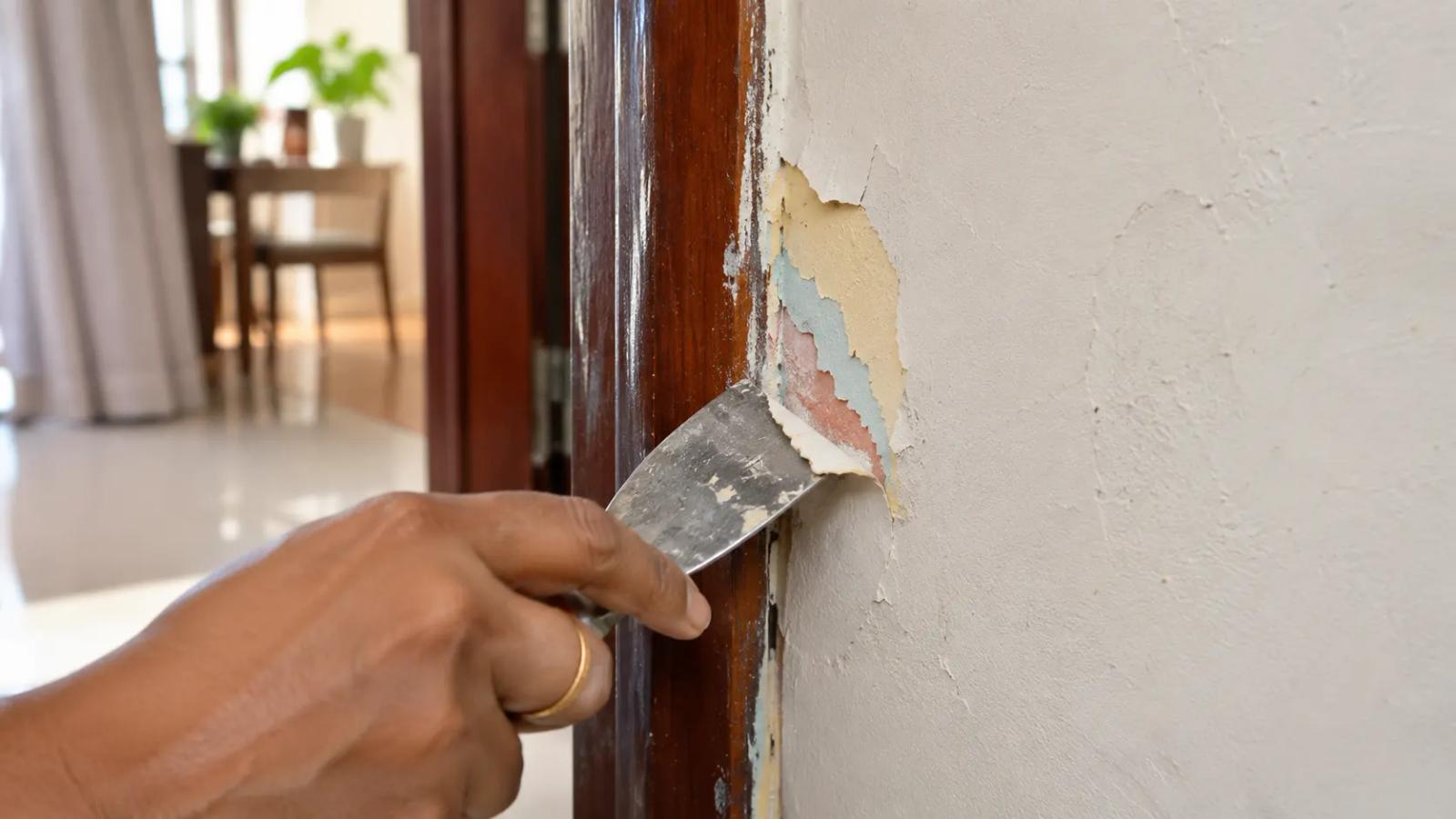
Layers of paint can be counted without a machine by checking exposed edges, scraping a tiny patch in a hidden spot and looking at the cut edge with a torch or magnifier.
Where Can Paint Layers Be Seen Without Scraping?
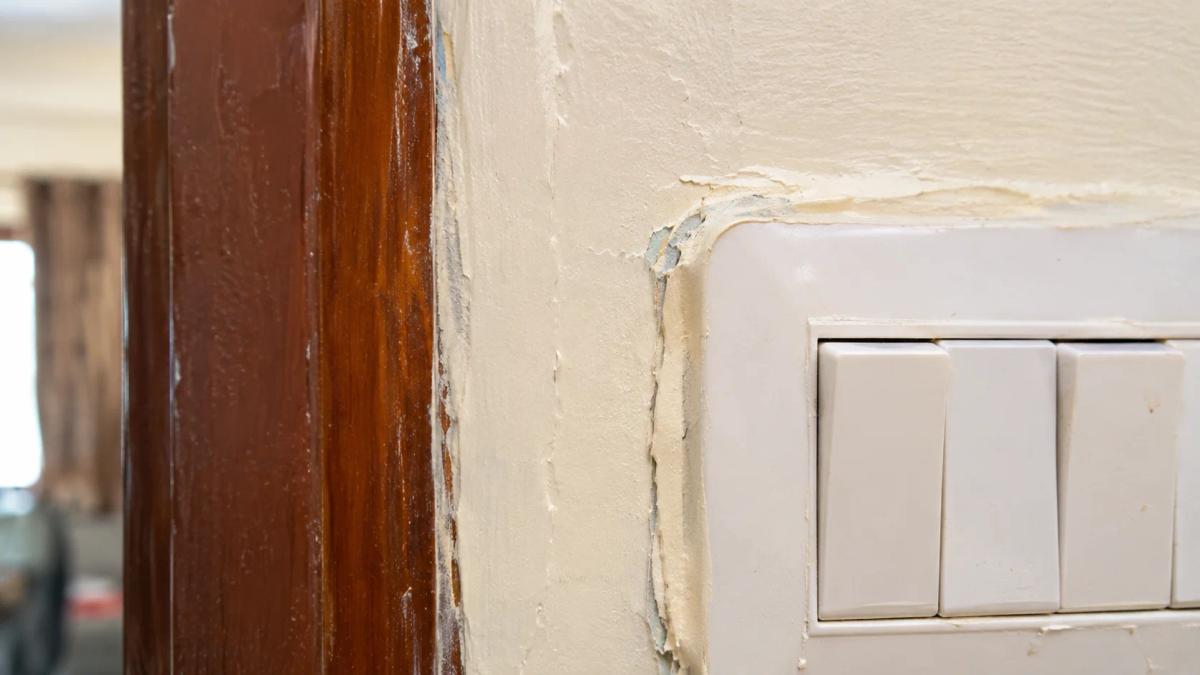
Paint layers can be seen without scraping at the edges where paint meets a switch plate, door frame, skirting or window frame, where a thick, rounded edge hints at many layers. The best places to look are:
- Around switch plates, with the power switched off at the MCB before any plate is touched
- Along door frames and around hinges
- Around window frames and sills
- Along skirting boards and in corners
- Anywhere paint has chipped and shows colour underneath
How to Do a Scrape Test in 5 Steps
A scrape test shows the layers as colour bands along a cut edge, and it takes five steps.
- Pick a hidden spot. Choose a place behind a door, a cupboard or furniture, so any mark is out of sight.
- Clean the spot. Wipe off dust so the layers can be seen clearly.
- Make a small shallow cut. Use a sharp blade to cut a tiny V into the paint, cutting only through the paint and not into the plaster.
- Lift the corner and look at the edge. Use a torch and a magnifier or phone camera, and count the colour bands.
- Patch the spot. Fill and touch up the cut once the count is done.
A scrape test can undercount, because thin coats and primer sometimes blend into a single band, so the number found is the minimum, not the exact figure.
What Do Colour History and Surface Texture Say?
Colour history and surface texture offer clues, because earlier colours often show through chips and a rough, lumpy or thick-edged surface suggests built-up layers, although neither gives an exact count. Signs worth noting include:
- Several different colours showing in a chip or crack
- Ridge lines or lumps where earlier peeling was painted over
- A rounded, thick edge at frames and corners
- Fine cracks across the surface, or an alligator-skin pattern
How Does the Tape Test Check Paint Adhesion?
The tape test checks adhesion by pressing tape over crosshatch cuts and pulling it off, and flakes coming away with the tape mean the paint is weakly attached and should be stripped before repainting. Make a small grid of close, shallow cuts in a hidden area, press tape firmly over it, and pull it off sharply. Paint that stays put is firmly attached, and this matters more than the exact layer count.
How Many Layers of Paint Is Too Many?
There is no fixed number of layers that is too many, because the condition and adhesion of the layers matter more than the count, but cracking, peeling in chunks and thick edges are signs there are too many.
The table below links common signs to what they suggest and what to do next.
| Sign | What It Suggests | Likely Next Step |
|---|---|---|
| Thick, rounded edges at frames | Many layers have built up | Test adhesion, and consider stripping if it is weak |
| Fine cracks across the surface | Old, brittle layers | Scrape loose areas, sand smooth, strip if widespread |
| Peeling in sheets or chunks | Poor bond between layers | Remove loose paint, fix any moisture, strip if widespread |
| Flakes come off with tape | Weak adhesion | Strip before repainting |
| Wrinkling or blisters after repainting | Paint applied too thick or too soon | Allow full drying and check for moisture |
Should a Wall Be Stripped or Painted Over?
A wall should be stripped when its existing layers are thick and failing, and can be painted over when the paint is sound, firmly attached and clean.
Where failure is local, only the affected layers need removing. Where peeling is widespread, taking everything off is usually the lasting fix. On sound paint, cleaning, light sanding and the right primer are enough, as explained in wall putty vs primer vs sealer. Clean Fanatics offers painting for walls that need a fresh start.
Is Old Paint Safe to Scrape or Sand?
Old paint in decades-old homes may contain lead, so large-scale scraping or dry sanding should wait until the paint has been tested, because lead dust is the real hazard.
The age of the home is the strongest clue, but only a test kit or laboratory check can confirm lead. A tiny scrape test creates very little dust, but sanding or stripping a whole wall creates a lot. Keeping the area damp, wearing a mask and keeping children and pets out are sensible precautions.
How to Stop Paint Layers Building Up Too Thickly
Paint layers are kept from building up too thickly by preparing the surface properly, applying thin coats and giving each coat time to dry.
How to Avoid Over-Thick Paint in 5 Steps
Five habits keep paint films thin and well bonded.
- Remove loose paint first. Painting over peeling paint only buries the problem under another layer.
- Clean and prime. A clean, primed surface lets the new coat bond instead of sitting on top.
- Apply thin, even coats. Thick coats dry on the outside first and fail later.
- Let each coat dry fully. A second coat over a damp first coat leads to wrinkling and poor bonding.
- Note repaint dates. Writing the date behind a door shows how many coats a wall has had.
How to Decide What a Wall Needs Before Repainting
Checking the edges, doing one scrape test and one tape test takes a few minutes and tells more than guessing. This is also why repainting at the right time matters, as set out in the guide to the importance of repainting.
Not sure what is on the wall, or whether it needs stripping before repainting?
Frequently asked questions
How many layers of paint can be on a wall?
There is no fixed limit, because condition matters more than the count. Sound, well-attached layers can take more paint, while failing layers need stripping.
How can I tell if a wall has too many layers of paint?
Thick rounded edges at frames, fine cracks, peeling in chunks and flakes that come off with tape all point to too many layers. A scrape test at a hidden spot shows how many layers are there.
Can paint layers be counted without scraping?
Partly. Edges at frames and switch plates, and chips that show earlier colours, hint at the layers. Scraping gives a clearer view but can undercount thin coats and primer.
Does the tape test damage the wall?
The tape test lifts only paint that is already loose, which is the point of it. It should be done in a small hidden area, and the spot patched afterwards.
Is it safe to scrape old paint?
A tiny scrape test is low risk, but old paint in decades-old homes may contain lead, so large-scale scraping or dry sanding should wait for a test. Damp methods, a mask and keeping children away reduce dust.
Should old paint be stripped before repainting?
Old paint should be stripped when the layers are thick, cracked or peeling, or fail the tape test. Sound, well-attached paint can be cleaned, lightly sanded, primed and painted.