
How Food Storage Habits Attract Household Pests (And How to Prevent Them)
Have you ever spotted ants marching towards a forgotten biscuit packet or found tiny insects in a bag of flour? It might seem like pests have appeared out of nowhere, but in many cases, your food storage habits are the real culprit. From crumbs left on the counter to open grain packets in the pantry, even small oversights can create the perfect environment for unwanted guests.
The good news is that a few simple changes can go a long way in keeping your kitchen clean, your food safe, and household pests at bay.
Why Do Food Storage Habits Attract Household Pests?
Household pests are always looking for three things – food, water, and shelter. A kitchen often provides all three, making it one of the first places they’ll target.
Strong food odours from uncovered leftovers, sugar spills, pet food, or open snack packets act like an invitation for pests. Moisture from leaking pipes or damp cabinets makes the problem even worse. Cockroaches thrive in dark, humid spaces, ants follow food trails, rodents are drawn to accessible food sources, and pantry pests can easily infest grains, flour, rice, and cereals stored improperly.
The longer food is left exposed, the more likely it is to attract pests. Even if your kitchen looks clean at first glance, tiny crumbs behind appliances or grease around the stove can be enough to sustain an infestation.
Common Food Storage Mistakes That Attract Household Pests
Many homeowners unknowingly make small mistakes that increase the risk of a pest infestation. Here are some of the most common ones.
- Leaving food uncovered: Whether it’s leftovers, fruits, or snacks, uncovered food releases odours that attract ants, flies, and cockroaches.
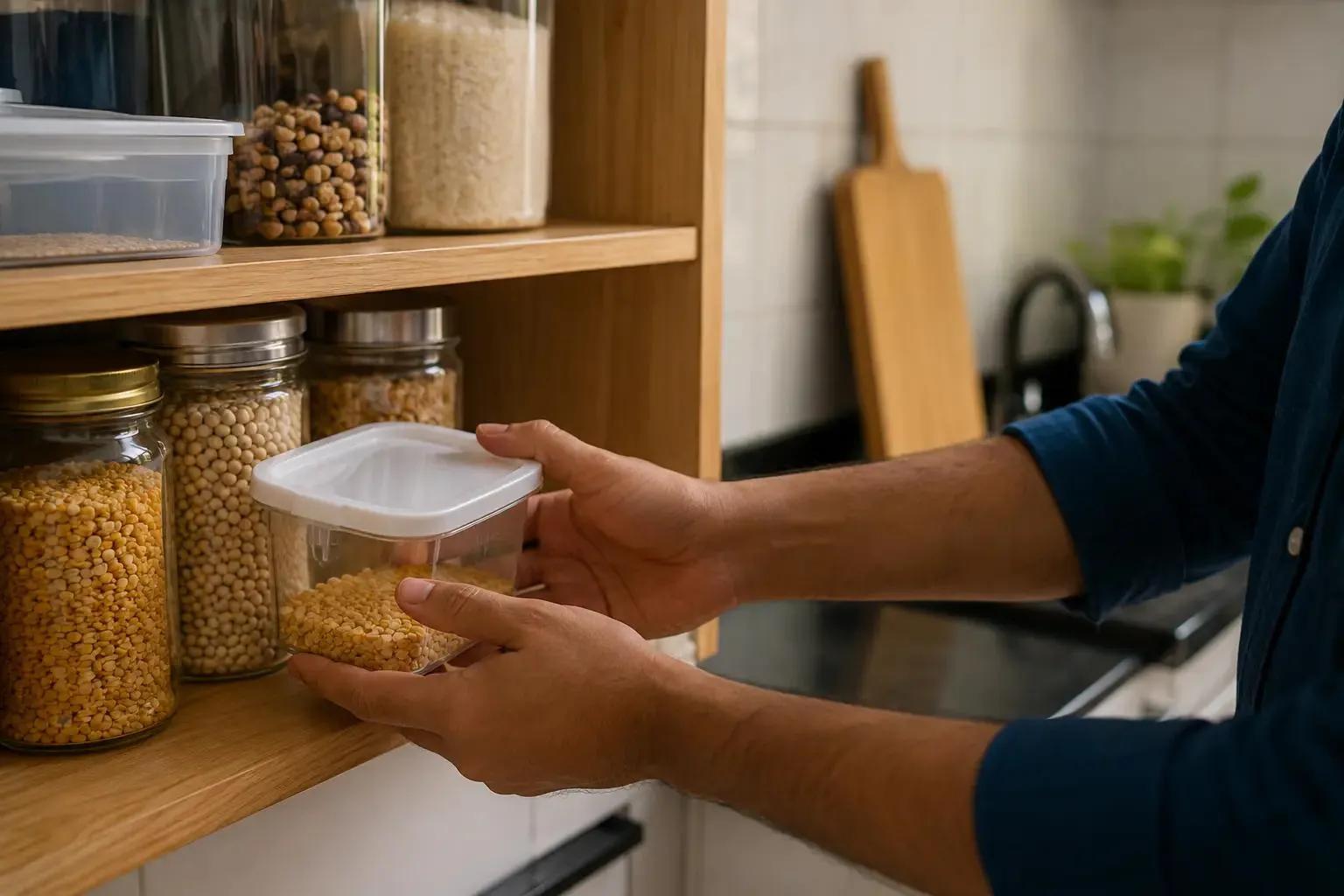
- Storing dry goods in their original packaging: Thin plastic or paper packets are easy for rodents and pantry pests to chew through. Transfer rice, flour, pulses, cereals, and dry fruits into airtight containers instead.
- Keeping overripe fruits on the counter: Fruits left out for too long can attract fruit flies and other insects.
- Ignoring crumbs and food spills: Even tiny crumbs under the dining table or behind kitchen appliances provide a steady food source for pests.
- Leaving dirty dishes overnight: Food residue on plates, utensils, and cookware is enough to attract cockroaches and ants.
- Improper pet food storage: Pet food should be sealed after every use. Leaving it open overnight can attract rodents and insects.
- Overflowing garbage bins: Food waste should be disposed of regularly. A full bin quickly becomes a breeding ground for pests.
These habits may seem harmless individually, but together they create an environment where pests can thrive.
Best Food Storage Practices to Keep Pests Away
Preventing pests doesn’t require expensive products. It starts with better food storage and consistent kitchen hygiene.
Store all dry foods in airtight glass, metal, or sturdy food-grade plastic containers to block odours and prevent pests from reaching them. Label containers and rotate older food to the front so nothing sits forgotten for months.
Wipe kitchen counters after every meal, clean up spills immediately, and vacuum or sweep areas where crumbs often collect. Regularly inspect your pantry for expired food, damaged packaging, or signs of insects.
Store fruits and vegetables appropriately. Refrigerate produce that spoils quickly and avoid letting overripe fruits sit on the counter for extended periods.
Don’t forget areas that are easy to overlook. Clean behind appliances, empty garbage bins frequently, fix water leaks promptly, and keep pantry shelves dry. Since moisture attracts many household pests, good ventilation is just as important as proper food storage.
If you’ve improved your storage habits but still notice cockroaches, ants, rodents, droppings, chewed packaging, or recurring insect activity, the infestation may already be established. At that point, professional pest control is often the safest and most effective solution.
Final Word
Good food storage isn’t just about keeping ingredients fresh. It’s one of the simplest ways to prevent household pests before they become a bigger problem. Small habits like sealing food properly, cleaning up crumbs, storing grains in airtight containers, and keeping your pantry organised can significantly reduce the chances of an infestation.
At Clean Fanatics, we believe prevention is always the best first step. But if pests have already made themselves at home despite your efforts, our professional pest control services can help eliminate the infestation safely and effectively, giving you a cleaner, healthier, and pest-free home.
FAQs
Sugary foods, grains, flour, cereals, pet food, fruits, leftovers, and uncovered snacks are among the most common food sources that attract ants, cockroaches, rodents, and pantry pests.
Yes. Airtight containers reduce food odours and make it much harder for insects and rodents to access stored food.
Tiny crumbs, hidden spills, pet food, or sugary residue can attract ants. They can also enter through small gaps while following scent trails.
A quick weekly wipe-down and a thorough monthly inspection help remove crumbs, identify expired food, and catch early signs of pantry pests.
If you continue seeing pests despite proper food storage and cleaning, or notice droppings, damaged food packaging, or repeated infestations, it’s time to seek professional pest control.