
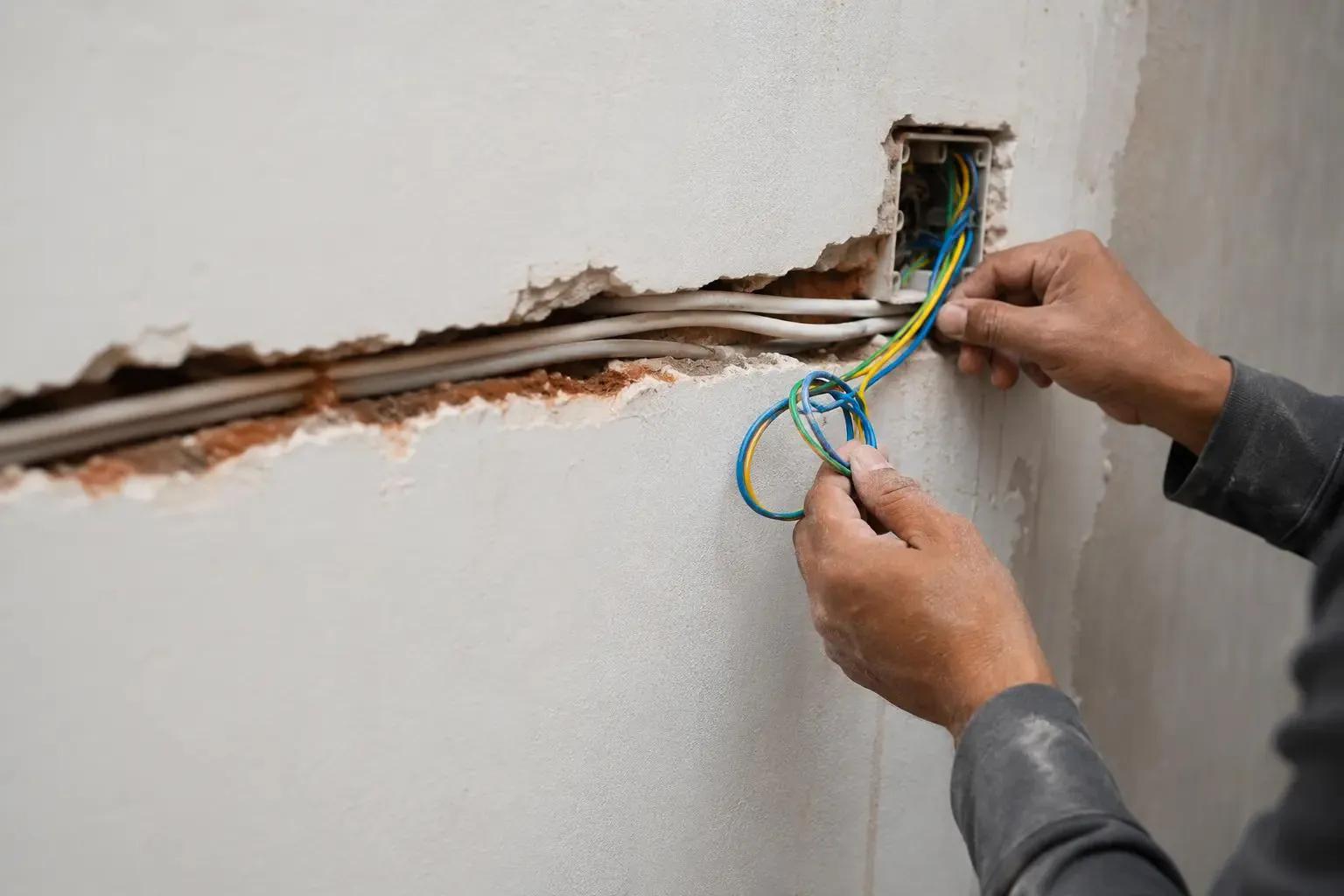
How Electrical Rewiring Affects Walls
Planning to rewire your home but worried about what it means for your walls? You’re not alone. One of the most common concerns homeowners have is whether electrical rewiring will leave behind damaged walls, dust, and expensive repairs.
The good news is that while some wall disruption is usually part of the process, it’s done with a purpose. When carried out by experienced professionals, the damage is controlled, repaired properly, and restored to blend seamlessly with the rest of your home.
Why Does Electrical Rewiring Affect Walls?
In most modern homes, electrical wiring runs behind walls rather than along the surface. To replace old or damaged wiring, electricians often need to create narrow channels in the walls, a process commonly known as wall chasing. These channels allow new wires and conduits to be installed safely while keeping the wiring concealed.
Depending on the age and layout of your home, electricians may also need to open small sections around switchboards, sockets, or ceilings to access existing wiring. While this can leave temporary grooves or holes, it’s a normal and necessary part of a safe electrical rewiring project.
The amount of wall work depends on factors such as the condition of the existing wiring, the number of new electrical points being added, and whether the home already has concealed wiring.
What Happens to Your Walls During and After Rewiring?
During electrical rewiring, you can expect some dust, debris, and cosmetic wall damage. Sections of plaster may need to be removed so electricians can safely replace old wiring and install new cables.
Once the electrical work is complete and the wiring has been tested, the restoration process begins. The wall channels are filled with suitable repair material, replastered where necessary, sanded smooth, and prepared for painting. When done correctly, the repaired areas blend naturally with the surrounding wall.
In many cases, homeowners choose to repaint the affected room after rewiring. This helps create a consistent finish, especially if older paint has faded over time. If you’re already planning a home renovation, it’s usually more practical to complete electrical rewiring before painting or other wall finishes.
Although rewiring can seem messy during the project, the goal is always to restore both the safety of your electrical system and the appearance of your walls.
How to Minimise Wall Damage During Electrical Rewiring
While some wall work is unavoidable, careful planning can significantly reduce unnecessary damage.
Start by hiring experienced electricians who understand how to minimise cutting while still ensuring the wiring meets safety standards. Discuss the routing of cables in advance so access points are planned efficiently.
If you’re renovating your home, schedule electrical rewiring before painting, wallpapering, or decorative wall treatments. This avoids redoing finished surfaces later and helps save time and money.
Protect nearby furniture and flooring before work begins, and ask whether dust control measures will be used during the project. Once the electrical work is finished, ensure the walls are professionally repaired, sanded, and finished before repainting. Proper restoration not only improves appearance but also helps prevent future cracks or uneven surfaces.
Final Word
Electrical rewiring does affect walls, but the impact is usually temporary and manageable. Small wall openings, plaster repairs, and repainting are often necessary to safely replace outdated wiring and keep the electrical safety system concealed. When completed by skilled professionals, these repairs restore your walls while improving the safety and reliability of your home’s electrical system.
At Clean Fanatics, we understand that rewiring is only part of the job. Our civil work, wall repair, and painting services help restore your walls after electrical work, leaving your home looking as good as new while ensuring every project is completed with care and attention to detail.
FAQs
Some cosmetic wall damage is usually unavoidable because electricians need access to concealed wiring. However, the affected areas are repaired and restored once the electrical work is complete.
In some cases, surface wiring can reduce wall work, but most concealed rewiring projects require limited wall openings to install new cables safely.
Electricians create narrow channels to remove old wiring, install new electrical cables, and position them safely behind the finished wall.
Repainting isn’t always mandatory, but it’s often recommended after wall repairs to achieve a smooth, uniform finish.
After the wiring is tested, wall channels are filled, replastered if needed, sanded smooth, and prepared for painting so they blend with the existing wall surface.