
How to Clean Hard-to-Reach Areas Without Damaging Them
You can vacuum the floor, wipe the counters and scrub the bathroom, yet somehow the house still doesn’t feel completely clean. The culprit may be hiding in the places your regular cleaning routine cannot easily reach.
Dust settles on ceiling fans, grime collects in window tracks, and crumbs find their way behind appliances. These areas are easy to overlook because they are awkward to access, not because they are unimportant. The trick is to use the right tool for the space and the right method for the surface.
What Are the Hardest Areas to Clean at Home?
Some of the most commonly missed spots are high, narrow, hidden or simply awkward to reach. Think of:
- Ceiling fans, light fixtures and high corners
- Tops of kitchen cabinets and tall furniture
- Window tracks and narrow gaps
- Areas behind or underneath beds, sofas and appliances
- Shower tracks, faucets and other bathroom fixtures
- Vents, grilles and other recessed surfaces
These areas can collect dust, hair, grease, moisture and grime over time. Window tracks, for example, can trap dirt in spaces too narrow for a standard vacuum attachment, while cabinet tops can accumulate layers of dust because they are rarely in your direct line of sight.
The goal isn’t to clean every hidden corner every day. It is to make these overlooked areas part of your regular deep-cleaning routine.
How Do You Clean High and Narrow Spaces Safely?
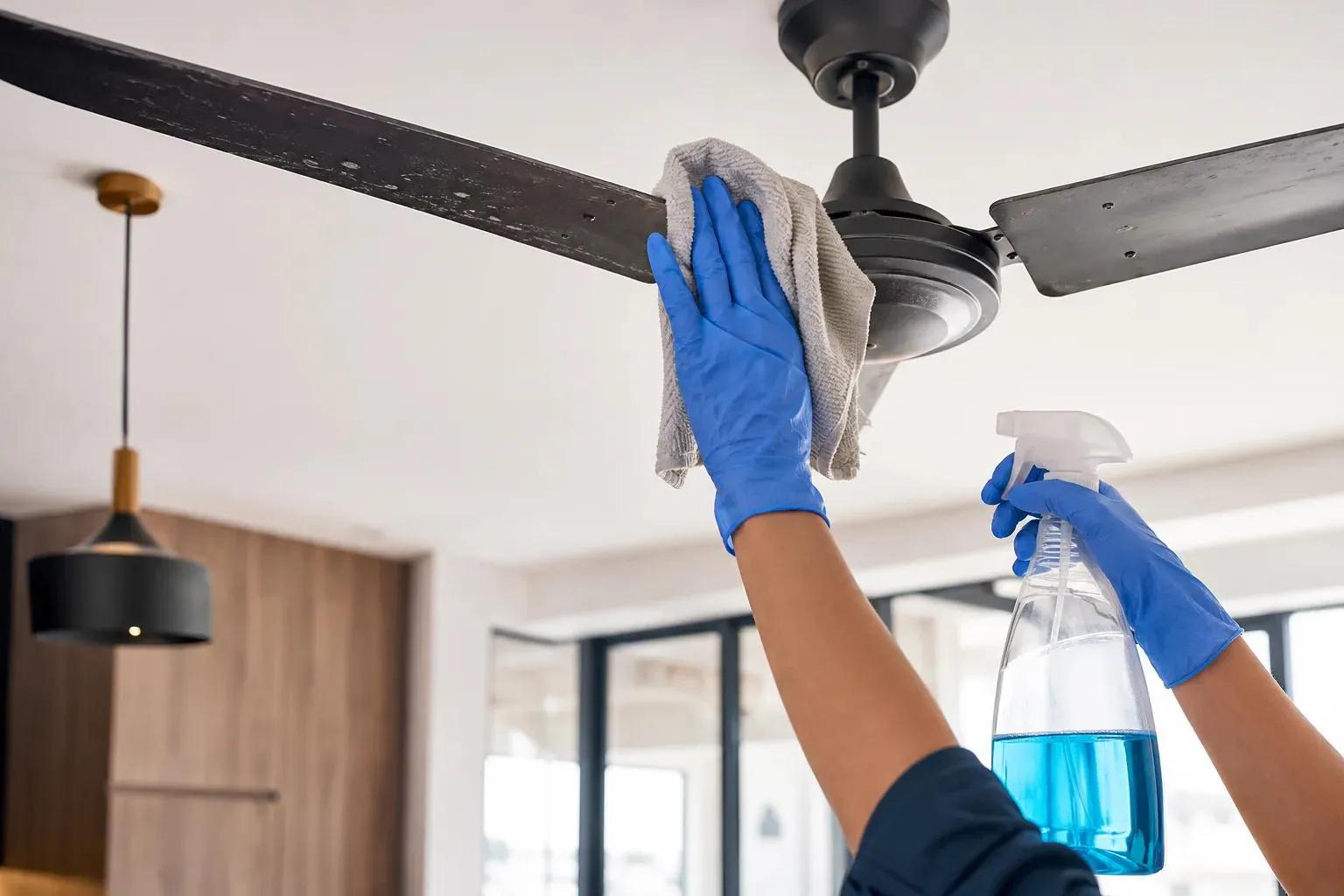
For high areas such as ceiling fans, light fixtures and cabinet tops, an extendable microfiber duster can help you clean without repeatedly climbing up and down. If a ladder is genuinely necessary, place it on a stable, level surface and avoid stretching sideways to reach a spot.
Electrical fixtures need extra care. Turn off the power before cleaning them, keep liquids away from electrical components and use only a lightly damp cloth where appropriate. For delicate light fixtures, gentle dusting is often safer than spraying cleaner directly onto the surface.
For narrow spaces such as window tracks and gaps between appliances, use a vacuum with a crevice attachment, a soft narrow brush or a flexible cleaning tool. A useful principle is simple: if the tool is too large for the gap, don’t force it in. You could scratch the surface or damage the tool itself.
How Do You Clean Behind Furniture, Appliances and Fixtures?
Hidden areas behind sofas, beds, refrigerators and washing machines can become dust traps. Before moving anything heavy, check whether it can be moved safely and whether you have enough space to do so without damaging the floor.
For lighter furniture, vacuum underneath and around the edges first, then use a microfiber mop or cloth where appropriate. For appliances, follow the manufacturer’s instructions before moving or dismantling anything.
Bathroom fixtures also need attention. A soft toothbrush or small detailing brush can help reach around faucet bases, shower tracks and other tight joints. For vents and grilles, start with dry dusting or vacuuming rather than immediately introducing moisture.
The same rule applies everywhere: match the cleaning method to the surface. Painted surfaces, polished finishes, wood and delicate fixtures may react poorly to abrasive brushes or excessive water.
How Can You Clean Without Damaging Surfaces?
Hard-to-reach does not mean you need a stronger cleaner. In fact, using too much force or the wrong product is one of the easiest ways to damage a surface.
Use microfiber cloths and soft brushes for delicate finishes, and test an unfamiliar cleaning product on a small, inconspicuous area first. Avoid abrasive scrubbers on polished surfaces and don’t spray liquid into vents, switches or electrical fixtures. When cleaning wooden surfaces, use as little moisture as necessary and dry them afterwards.
Also, don’t turn a cleaning task into a safety risk. Balancing on chairs, stretching from unstable ladders or trying to move a heavy appliance alone is not worth it.
If an area requires specialised equipment, involves significant height, or cannot be accessed safely, professional cleaning is the better option. Tools designed for high-reach and difficult spaces can make these jobs safer and more thorough.
Final Word
Cleaning hard-to-reach areas is less about finding clever hacks and more about using the right tool, taking your time and understanding the surface you’re cleaning. Add hidden spots to your deep-cleaning routine before dust and grime have a chance to build up.
And remember, if reaching the dirt puts you or your home at risk, it is perfectly reasonable to leave the job to professionals.
FAQs
Identify the type of space and surface first, then use an appropriate tool such as a microfiber duster, crevice vacuum attachment, soft brush or extendable cleaning wand.
Microfiber dusters, extension wands, crevice attachments, flexible brushes and small detailing brushes are useful for different difficult areas.
Use a tool that fits comfortably into the gap. Never force a brush, vacuum attachment or other tool into a space that is too small.
Use an extendable tool where possible. If you need a ladder, make sure it is stable and avoid overreaching. For particularly high or inaccessible areas, professional cleaning is safer.
It depends on the area and how quickly it collects dust or grime. Hidden areas such as those behind furniture and appliances can be incorporated into a periodic deep-cleaning routine rather than daily cleaning.