
Should You Clean, Repair, or Replace? A Smart Guide to Saving Money (and Avoiding Regret)
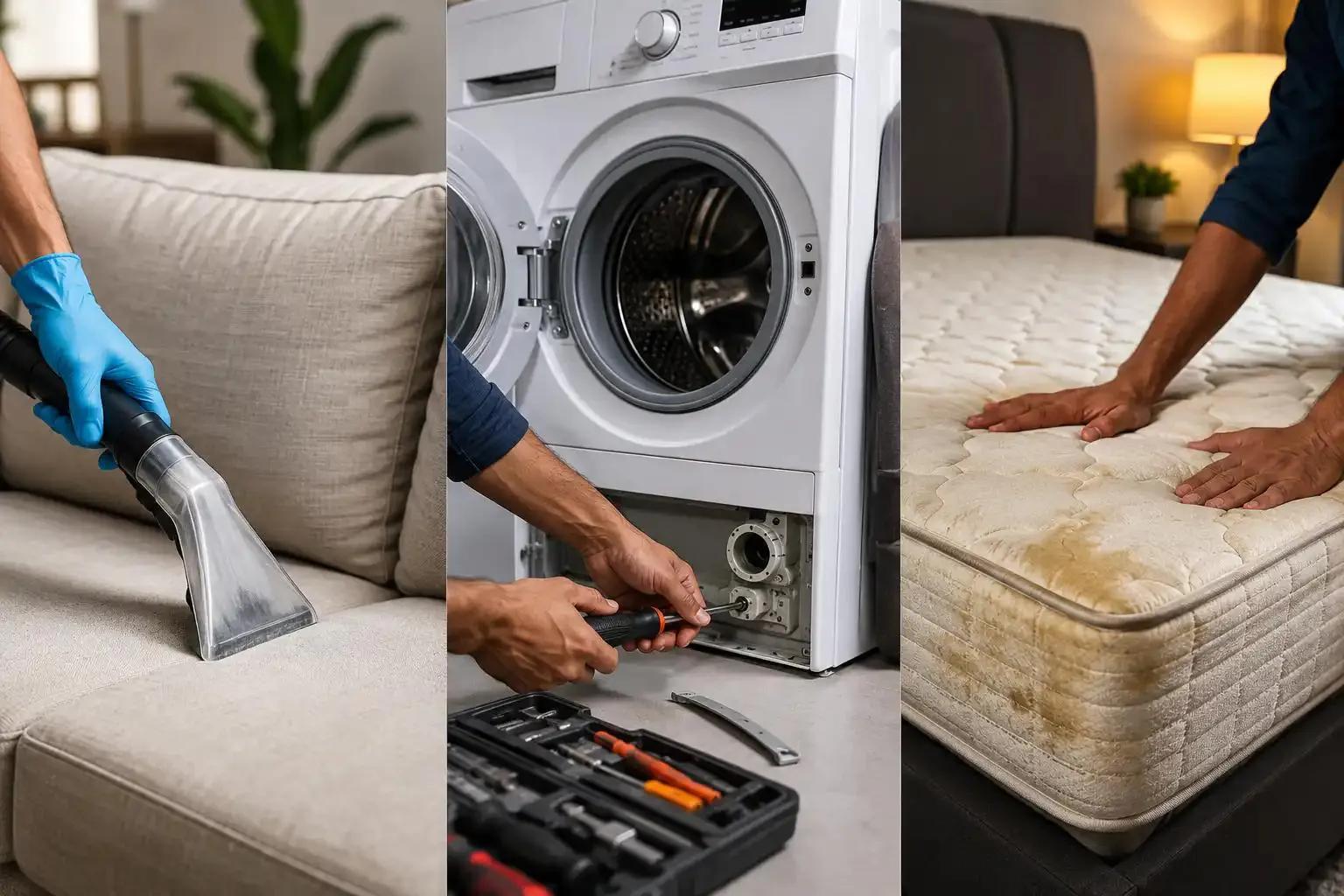
You look at something worn out in your home – maybe your sofa, mattress, or washing machine – and the same question hits: is this fixable, or is it time to replace it?
Most people jump straight to replacing. That’s often the most expensive mistake.
This guide breaks it down simply so you can make the right call without overthinking or overspending.
Clean, Repair, or Replace – What’s the Right Choice?
If you want a quick answer, use this:
- Clean it if the issue is surface-level – stains, odour, buildup, dullness
- Repair it if a specific part is damaged but the rest still works well
- Replace it if the item is unsafe, repeatedly failing, or too costly to fix
This matches how most people search online:
- “Can cleaning fix this or do I need to replace it?”
- “Should I repair or replace my appliance?”
- “When is something not worth repairing?”
The key is not guessing. It’s understanding what stage your item is actually in.
When Is It Cheaper to Clean or Repair Instead of Replace?
This is where most decisions go wrong – people don’t compare costs properly.
A simple rule to follow:
- If repair costs are less than 50% of replacement cost, repair is usually worth it
- If professional cleaning can restore function or appearance, it’s almost always the cheapest option
- If costs keep repeating, replacement becomes smarter long-term
Here’s how it typically plays out:
Scenario
Cost Range
Better Choice
Deep cleaning a sofa or carpet
Low
Clean
Fixing a washing machine motor
Medium
Repair
Replacing an old, inefficient appliance
High upfront but lower long-term
Replace
Many people search things like:
- “Is it cheaper to repair or replace?”
- “How much repair cost is too much?”
The answer depends on total cost over time, not just today’s expense.
How Do You Decide Between Repair and Replacement? (Simple Rules That Work)
Instead of guessing, use these practical decision rules:
The 50% Rule
If repair costs more than half the price of a new item, replacing is usually smarter.
The Lifespan Rule
If the item is near the end of its expected life, repairs may only delay the inevitable.
- Appliances like washing machines – 8 to 12 years
- Mattresses – 7 to 10 years
- Sofas – 7 to 15 years
The Frequency Rule
If you’ve repaired it multiple times already, it’s a signal to stop investing in it.
The Safety Rule
If it’s unsafe – electrical issues, structural damage, mould – don’t risk it. Replace.
These directly answer high-intent searches like:
- “When should you replace instead of repair?”
- “How many times should you repair before replacing?”
Can Cleaning Actually Delay Replacement?
This is the most underrated step, and often the smartest one.
People usually think in two extremes – repair or replace. Cleaning sits in the middle and often solves the problem early.
Professional cleaning can:
- Remove deep stains and bacteria
- Restore appearance and texture
- Extend lifespan by years
- Prevent damage from worsening
For example:
- A stained mattress might just need deep cleaning, not replacement
- A dull sofa can look new again after proper treatment
- Built-up grime in appliances can affect performance more than you think
This is why many users search:
- “Is deep cleaning better than replacing?”
- “Does cleaning extend lifespan?”
In many cases, cleaning buys you time – and saves you a significant amount of money.
Final Word – Make the Smart Choice, Not the Fast One
The best decision is rarely the fastest one.
Replacing feels like a clean solution, but it’s often unnecessary. Cleaning and repairing, when done at the right time, can save you money, extend the life of your belongings, and reduce waste.
A simple way to think about it:
- Try cleaning first if the issue is surface-level
- Repair if the structure is still strong
- Replace only when it truly makes sense
Taking a few minutes to evaluate properly can save you thousands in the long run.
FAQs
If the repair cost is under 50% of a new one and the appliance is not too old, repair is usually worth it.
When it keeps breaking, costs are high, or it’s near the end of its lifespan.
Yes. In many cases, cleaning restores both function and appearance, especially for furniture, carpets, and surfaces.
It depends on frequency and cost. Repeated repairs often cost more over time than replacing once.
Start with cleaning if possible. It’s the lowest cost option and helps you assess the real condition before making a bigger decision.